
AI Clone Yourself and Skip the Camera
What Does It Mean to AI Clone Yourself?
To AI clone yourself is to create a digital stand-in that carries your face and your voice, so a written script can be delivered as video without you being on camera. In Leadde the two halves are built separately. A photo becomes an avatar under My Avatars, a short recording becomes a voice under My Voices, and a project pairs them.
Trusted by the world's leading brands







Videos Delivered by a Cloned Presenter

ملف الموظف
يسلط الضوء على المسيرة الشخصية والإنجازات والتطور الوظيفي للموظفين البارزين، مشاركًا قصص نجاحهم وموقفهم في العمل.

مبادئ التنفيذ
اكتشف ثلاث تحولات إنتاجية للمؤسسين: ركز على النتائج لا الكمال، تعمق في مهمة واحدة بدلاً من تعدد المهام، وحدد أهدافك بوضوح للحفاظ على الزخم.

مبادئ التعاون

برنامج الشراكة
نقدم برنامج الشراكة بالامتياز التجاري لـ Verdant Leaf Tea، مسلطين الضوء على قيم العلامة التجارية، وحرفية الشاي، وتجارب المجتمع، وفرص الشراكة طويلة الأمد.
Why Leadde Is a Safe Way to Clone Yourself
Start from a single photo
Your clone stays in your account
Rewrites cost you nothing
Change the script, not the shoot
How to Clone Yourself with AI
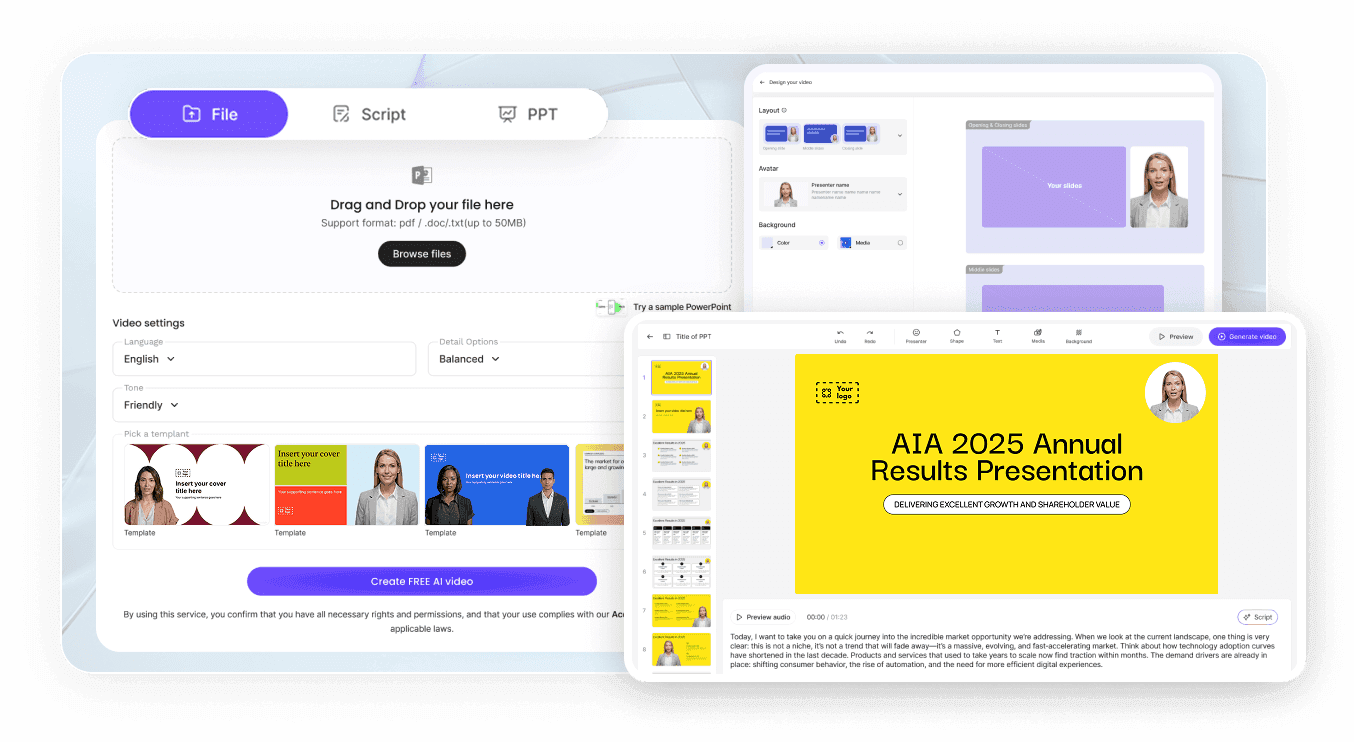
Step 1: Upload your photo
Step 2: Add your voice
Step 3: Pair them and generate
AI Clone Use Cases
Send weekly updates yourself
Leaders who owe the company a regular update can write it in ten minutes and let the clone deliver it, instead of postponing until a filming slot opens.
Teach a course without re-recording
Lesson content changes. A clone lets you revise one module in the script editor instead of re-shooting a chapter that was otherwise fine.
Personalize sales outreach
Duplicate a project, swap the prospect name and the opening line, and each recipient gets a message that looks recorded for them.
Keep publishing while travelling
Filming needs a room, a light and quiet. A clone needs a script, which is the only part of the job that still needs you.

Before You Clone Your Face and Voice
Clone yourself, not other people
Know where the files sit
Company clones live elsewhere
Tell viewers when it matters
AI Clone Yourself Ideas
Founder introduction on your site
Conference follow-up messages
Onboarding welcome from the manager
Recurring investor or board updates
Course lessons in several languages
Internal answers to repeated questions
Frequently asked questions
It means building a digital presenter that carries your appearance and your voice, then using it to deliver scripts as video. In Leadde the avatar comes from a photo and the voice comes from a short audio sample, and you pair them in a project.
One clear photo is enough to create a Photo Avatar. A Studio Avatar, which mirrors your actual movements and expressions from a video clip, is set up by the Leadde team after you email support@leadde.ai.
Either. Preset voices are available immediately, and a voice cloned from a short recording of your own will resemble your tone instead. You choose which of the two the clone uses in the script area.
Your avatar and voice stay under My Avatars and My Voices rather than in the shared preset libraries. On an Enterprise Team Workspace those resources are pooled for the team instead, so who can reach them follows that team's member list and roles.
Only with their explicit permission, recorded before you upload anything. Leadde requires creators to hold the rights to any likeness they build, because creating an avatar of someone without authorization can infringe portrait and copyright law. That applies to colleagues as much as to public figures.
You can start on the Free plan without paying. Building the avatar and cloning the voice both draw on credits, and so does every video the clone appears in. Because all three share one balance, your cost scales with how much you publish rather than with the setup itself.
Use a high-definition photo that reflects how you look now. Skip group photos, hats, sunglasses, pets, heavy filters, low-resolution images and screenshots. For the voice, record a short clean sample with one speaker and no background noise.
Requirements depend on the platform and the context, so check the rules where you publish. A brief note in the description or the opening scene is a common approach for internal, educational and marketing videos.
Build your clone and write the first script