
How Much Does a Marketing Video Cost? Pricing Guide, Budget Tiers & ROI (2026)

Marketing video has become one of the most powerful tools brands use to attract attention, explain value, and drive conversions across the entire funnel—from awareness and consideration to sales and retention. Whether it’s a short social ad, a product explainer, or a brand campaign video, marketing videos now play a central role in how businesses communicate and compete.
What’s changed in recent years is how marketing videos are created. Instead of relying solely on long production cycles and fixed-format videos, many teams now build marketing content using more flexible, AI-driven workflows. With an AI video creation tool like Leadde, existing scripts, documents, or campaign briefs can be turned into structured marketing videos in minutes—making it easier to produce, update, and scale video content without repeated reshoots.

At the same time, one question continues to surface for marketers and founders alike: how much does a marketing video cost?
The answer is rarely straightforward. Depending on strategy, format, and production approach, the cost of a marketing video can range from a few hundred dollars to $50,000 or more. Two videos may look similar on the surface, yet differ dramatically in price—leaving many teams unsure how to set a realistic budget.
Understanding marketing video cost is no longer just a budgeting exercise. It affects how often teams can publish new content, how easily videos can be updated, and how much long-term value each asset delivers. Over-invest, and iteration slows down. Under-invest, and the video may fail to support real marketing outcomes.
This guide provides a clear, practical breakdown of marketing video pricing—without vague estimates or hidden assumptions. By the end of this article, you’ll understand:
- How much a marketing video typically costs across different production levels
- What factors drive marketing video costs, from production style to distribution needs
- What you can realistically expect at different budget ranges, and how to choose the right approach for your goals
Whether you’re planning your first marketing video or refining an existing strategy, this guide will help you make informed decisions based on both cost efficiency and marketing impact.
How Much Does a Marketing Video Cost? (Quick Answer)
Quick Answer: A marketing video typically costs between $500 and $50,000+, depending on the production approach, video style, and level of creative complexity.
- Low-budget marketing video: $500 – $2,000
- Mid-range marketing video: $2,000 – $10,000
- High-end marketing video: $10,000 – $50,000+
For most businesses, the final cost is driven less by video length alone and more by how the video is produced, how often it needs to be updated, and how it will be reused across marketing channels.
Marketing Video Cost Table
| Budget range | Typical use cases | What you usually get |
| $500 – $2,000 | Social ads, short promos, MVP tests | DIY or AI-assisted production, templates, limited customization |
| $2,000 – $10,000 | Explainers, website videos, campaign assets | Professional editing or animation, light strategy & scripting |
| $10,000 – $50,000+ | Brand videos, product launches, major campaigns | Full creative team, custom visuals, high production value |
Why this range matters
Two marketing videos can look similar but fall into completely different price tiers based on planning, production method, and post-production work. That’s why understanding what drives marketing video cost is just as important as knowing the average price.
In the sections below, we’ll break down what affects pricing, how costs add up across production stages, and what level of results you can realistically expect at each budget level.
Marketing Video Cost by Production Method
One of the biggest reasons marketing video costs vary so widely is how the video is produced. The production method determines who is involved, how much customization is possible, and how easily the video can be updated or reused over time.
Below is a breakdown of the most common marketing video production methods, including typical costs and best-fit use cases.
DIY / AI-Based Marketing Videos
Cost range: Software subscription or <$1,000 per video
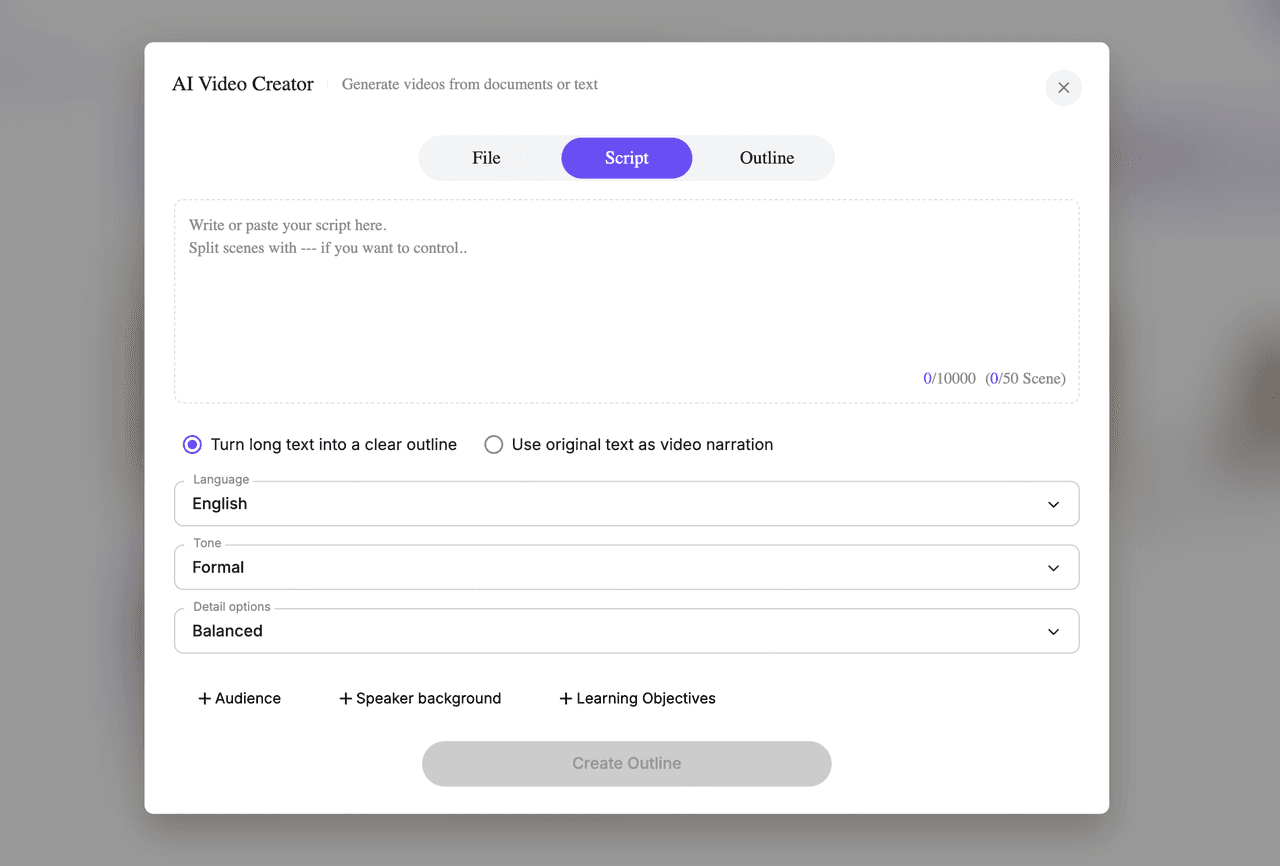
DIY and AI-based tools allow teams to create marketing videos using templates, pre-built scenes, and automated editing. Costs are usually limited to a monthly or annual software subscription, making this the most affordable option.
Pros
- Very low cost
- Fast turnaround
- Easy to update or repurpose
Cons
- Limited creative flexibility
- Less differentiated visuals
- Not ideal for high-impact brand storytelling
Best for
- Social media ads
- Internal marketing or enablement videos
- MVP testing and early-stage campaigns
This approach works well when speed, scale, and iteration matter more than cinematic quality.
Freelancers & Small Production Teams
Cost range: $1,500 – $6,000 per video
Hiring freelancers or a small production team provides more creative flexibility without the full cost of an agency. Pricing typically depends on video length, animation style, and revision scope.
Pros
- More customization than DIY tools
- Better visual quality
- Flexible pricing
Cons
- Quality varies by creator
- Limited strategic support
- Ongoing updates may require additional fees
Best for
- Short marketing videos
- Social ads and promos
- Website explainer videos
This option is common for startups and growing teams that want professional output without committing to large agency budgets.
Marketing Video Production Agencies
Cost range: $3,000 – $50,000+ per video
Agencies provide end-to-end marketing video production, including strategy, scripting, design, and post-production. Costs increase with creative complexity, video length, and campaign scope.
Pros
- High production quality
- Strategic guidance and creative direction
- Consistent brand execution
Cons
- Higher upfront cost
- Longer production timelines
- Updates may require new production cycles
Best for
- Brand marketing videos
- Product launch campaigns
- Core assets for multi-channel marketing
This method is best suited for marketing videos that need to perform as flagship content and support long-term brand positioning.
Enterprise / Broadcast-Level Marketing Videos
Cost range: $50,000 – $200,000+
Enterprise-level marketing videos involve large crews, multiple shoot locations, professional actors, and advanced post-production. These projects resemble commercial advertising rather than typical digital marketing content.
Pros
- Maximum production value
- Strong brand impact
- Suitable for large-scale distribution
Cons
- Very high cost
- Slow to update
- Limited scalability for frequent content needs
Best for
- National or international brand campaigns
- Television or broadcast advertising
- Major brand moments
Because of the investment required, these videos are typically reserved for organizations with large marketing budgets and long campaign cycles.
What Affects the Cost of a Marketing Video?
There is no single fixed price for a marketing video because cost is shaped by how the video is planned, produced, and used within a marketing strategy. While video length plays a role, the biggest cost differences usually come from creative scope, production choices, and post-production requirements.
Below are the key factors that most directly influence marketing video cost.
Video Type & Marketing Goal
The type of marketing video you create—and what it’s meant to achieve—has a major impact on cost.
- Explainer videos focus on clarity and structure, often requiring scripting and motion graphics
- Product demo videos prioritize accuracy, screen capture, and iteration
- Brand videos emphasize storytelling, visuals, and emotional impact
- Ad creatives need multiple versions optimized for performance and platforms
Marketing videos designed for awareness or brand positioning typically require more creative development, while performance-driven ads often prioritize speed and scalability.
Video Length
Marketing video cost generally increases with length, but not always in a linear way.
- 30 seconds: Common for paid ads and social campaigns
- 60 seconds: Standard for explainers and homepage videos
- 90 seconds+: Used for brand stories or in-depth product overviews
- Long-form: Training, webinars, or educational marketing content
Longer videos require more scripting, visuals, and editing time, which directly affects production and post-production costs.
Pre-Production Complexity
Pre-production is where strategy turns into execution, and it plays a major role in cost.
This stage may include:
- Audience research and messaging strategy
- Scriptwriting and revisions
- Storyboards and visual planning
- Creative alignment across teams
A marketing video with clear goals and a well-defined brief is often more efficient to produce than one that evolves during production.
Production Style
The visual approach you choose significantly affects budget.
- Live-action videos involve filming, locations, equipment, and crews
- Animated videos require design, illustration, and motion work
- Hybrid videos combine live footage with motion graphics or animation
Live-action production tends to have higher upfront costs, while animation offers more flexibility for updates and long-term reuse.
Talent & Voiceover
On-screen talent and audio elements can quickly increase marketing video cost.
Common additions include:
- Professional actors or presenters
- Voiceover artists
- Multi-language narration
- Licensed music or sound effects
Each additional language or talent role adds not just cost, but also coordination and revision time.
Post-Production & Revisions
Post-production is where marketing videos are polished and adapted for performance.
Costs increase with:
- Motion graphics and transitions
- Subtitles and captions
- Multiple edits or revision rounds
- Platform-specific cuts
Marketing videos often require several formats and versions, especially for paid campaigns or multi-channel distribution.
Distribution & Repurposing Needs
How and where your marketing video will be used also affects cost.
A single video may need:
- Horizontal, square, and vertical versions
- Platform-specific edits (YouTube, Meta, TikTok)
- Different CTAs for funnel stages
Videos designed for reuse across channels usually require more upfront planning but deliver greater long-term value.
Marketing Video Production Cost Breakdown by Stage
(Pre-Production vs Production vs Post-Production)
Marketing video costs are best understood when broken down by production stage. Instead of viewing pricing as a single number, this approach explains where the budget actually goes—and why certain videos cost more than others.
While exact percentages vary by project, most marketing videos follow a similar cost distribution.
Pre-Production (10–20% of Total Cost)
Pre-production lays the foundation for an effective marketing video. Strong planning at this stage often reduces waste and revisions later.
Typical pre-production costs include:
- Creative brief and messaging alignment
- Scriptwriting and copy revisions
- Marketing strategy and audience planning
- Storyboards or visual references
Marketing videos with clear goals and well-defined messaging usually move faster through production and deliver more consistent results.
Production (40–60%)
Production is where the core visual content is created and typically represents the largest portion of the budget.
Costs at this stage may include:
- Filming or animation production
- Equipment, software, or studio setup
- Crew, animators, or technical specialists
Live-action marketing videos often skew toward the higher end of this range due to crews and equipment, while animation-based videos tend to offer more control and predictability.
Post-Production (20–30%)
Post-production turns raw footage or animations into polished marketing assets.
This stage commonly covers:
- Video editing and pacing
- Motion graphics and visual enhancements
- Sound design, music, and audio cleanup
- Final formatting for different platforms

Marketing videos intended for multi-channel use often require additional edits, captions, or variations—raising post-production costs but increasing overall value.
How to Reduce Marketing Video Costs Without Sacrificing Quality
Reducing marketing video costs doesn’t mean lowering quality. In practice, it’s about designing videos that are easier to reuse, update, and scale across channels.
Here are the most effective ways to lower marketing video costs:
- Repurpose one marketing video across channels Create one core video and adapt it for YouTube, Meta, TikTok, landing pages, and ads instead of producing separate assets.
- Use templates and modular structures Reusable intros, outros, and scene blocks reduce design time and make updates faster.
- Replace reshoots with AI-based updates Updating scripts, visuals, or CTAs without refilming dramatically reduces long-term costs.
- Plan revisions early Clear messaging and defined revision limits prevent late-stage changes that drive up budgets.
Well-planned marketing videos cost less over time because they remain flexible, reusable, and relevant across multiple campaigns.
Is a Marketing Video Worth the Cost? (ROI Perspective)
For most teams, the real question isn’t whether marketing videos work—it’s whether the return justifies the cost compared to other content formats.
Marketing Video vs. Static Content ROI
Marketing videos generally outperform static content in engagement and conversion, especially in competitive channels. Video communicates value faster, holds attention longer, and reduces friction in decision-making. While static content may be cheaper to produce, it often requires more volume and repetition to achieve comparable results.
In many cases, one well-produced marketing video can replace multiple static assets across campaigns.
Long-Term Asset vs. One-Time Cost
Unlike disposable ads or one-off creatives, a strong marketing video functions as a long-term marketing asset.
A single video can support:
- Brand awareness campaigns
- Product education and demos
- Sales enablement and onboarding
When a video is designed for durability and easy updates, its value compounds over time—making the effective cost per use significantly lower than it appears upfront.
Reusability Across Funnel Stages
Marketing videos deliver the highest ROI when they can be reused across the funnel.
The same core video can be adapted for:
- Awareness (short social cuts)
- Consideration (explainer or product-focused versions)
- Conversion (landing pages, ads, sales decks)
This reusability allows teams to extend reach, reduce production volume, and maintain consistency without repeatedly increasing spend.
FAQs about Marketing Video Cost
How much does a 60-second marketing video cost?
A 60-second marketing video typically costs between $2,000 and $10,000. Lower-cost videos usually rely on templates, limited animation, or small teams, while higher-cost videos include custom visuals, professional scripting, and multiple revisions. The exact cost depends more on production method and complexity than duration alone.
What is the average cost of a marketing video?
The average cost of a marketing video falls between $2,500 and $7,500. Most businesses operate in this range when producing explainer videos, website videos, or paid ad creatives that balance quality and scalability.
Is animation cheaper than live-action?
In many cases, yes—animation is cheaper and more flexible than live-action. Animated marketing videos avoid location shoots, actors, and reshoots, making them easier to update and reuse. Live-action videos tend to have higher upfront costs and are harder to modify once filmed.
Can small businesses afford marketing videos?
Yes. Many small businesses create effective marketing videos with budgets under $2,000 by using AI-based tools, templates, or lightweight production workflows. Affordable marketing videos are especially effective for social media ads, short promos, and early-stage campaigns where speed and iteration matter.
How often should marketing videos be updated?
Marketing videos should be reviewed and updated every 6–12 months, or whenever messaging, products, or branding change. Videos built with modular structures or AI-based workflows are significantly easier and cheaper to update than traditional, fixed-format videos.
Conclusion
There is no single “standard price” for a marketing video. The right budget isn’t defined by how much you spend, but by how well the video supports your marketing goals.
A clear objective, the right production method, and a structure designed for reuse matter far more than a high upfront budget. In many cases, a well-planned mid-range marketing video delivers better long-term results than a costly one-off production.
When evaluating marketing video cost, focus on fit, flexibility, and long-term value. Videos that are easier to update, adapt, and reuse across channels tend to perform better—not just creatively, but financially.
The most effective marketing videos aren’t the most expensive ones. They’re the ones built with purpose.