
Commercial Video Templates: Faster Ways to Create Training and Onboarding Videos

Commercial video templates work best when they support high-performing commercial videos—ones built around a focused message, clear structure, and intentional pacing, rather than heavy production or creative excess. The most effective commercial videos don’t try to impress viewers with complexity; they explain value quickly, show relevance, and guide audiences toward a clear next step. In fast-moving digital channels, this clarity often determines whether a viewer scrolls past or takes action.
With an AI video creation tool like Leadde, teams can turn existing scripts, documents, or outlines into structured commercial videos in minutes—complete with scene-based layouts, consistent pacing, optional narration, and brand-safe customization. This approach reduces production overhead while preserving the elements that make commercial videos effective.

Commercial video has become one of the most reliable formats for brands to communicate value, promote products, and drive action across digital channels. From short social ads to product launches and brand campaigns, a well-crafted commercial video delivers a clear message in a format audiences are already primed to engage with. Despite ongoing changes in platforms and algorithms, commercial video continues to deliver strong ROI—especially when paired with proven structures and reusable commercial video templates that prioritize clarity, structure, and consistency over production complexity.
What Is a Commercial Video?
A commercial video is a type of video content created specifically to promote a product, service, or brand with a clear business goal—such as driving sales, increasing awareness, or encouraging a specific action. Unlike casual or informational videos, commercial videos are designed to communicate value quickly and persuasively within a limited time frame.
Commercial Video vs. Advertising Video vs. Promotional Video
- Commercial video Focuses on business outcomes and messaging structure. It defines what is being communicated and why.
- Advertising video Refers to how the commercial video is distributed—usually through paid placements on platforms like social media, search, or streaming services.
- Promotional video A broader category that includes announcements, brand highlights, or awareness-focused content without a strong conversion goal.
In practice, commercial video provides the strategic foundation, while advertising and promotional videos describe the delivery and context.
Common Use Cases for Commercial Videos
- Digital ads Short-form videos optimized for attention, clarity, and action across platforms like TikTok, Meta, and YouTube.
- Product launches Videos that highlight features, benefits, and positioning to introduce new products or updates.
- Brand campaigns Commercial videos designed to communicate brand values, identity, and long-term messaging at scale.
Why Commercial Videos Matter for Modern Businesses
Drive sales and conversions
Commercial videos communicate value with clarity. By showing how a product or service works, why it matters, and what to do next, they help audiences understand benefits faster and make decisions with greater confidence than text or static images.
Retain attention in crowded feeds
In fast-moving digital feeds, commercial videos surface key messages early and use motion to guide attention. Clear pacing and visual hierarchy keep viewers engaged long enough to absorb the core message—even when scrolling quickly.
Increase brand recall and reach
Consistent visuals and messaging make commercial videos easier to recognize and remember. Repeated exposure across platforms builds familiarity over time, supporting stronger recall and broader organic reach.
Commercial Video Templates: What They Are and Why They Work
A commercial video template is a pre-built video structure designed for business use, including defined sections for messaging, visuals, timing, and calls to action. Instead of starting from a blank timeline, templates provide a proven framework that guides how information is presented and consumed. Commercial video templates are typically customizable—allowing teams to replace text, visuals, branding, and media while preserving an effective underlying structure.
Why Commercial Video Templates Are More Effective Than Starting From Scratch
Templates reduce decision fatigue by removing the need to plan pacing, transitions, and layout from the ground up. They are built around patterns that already work in commercial contexts, such as short hooks, clear value statements, and structured endings. Using templates improves consistency across videos, making it easier for audiences to recognize and trust a brand over time.
Why it matters: templates shift the focus from “how to build a video” to “what message the video should deliver.”
Who Commercial Video Templates Are For
- Marketers Need fast, repeatable ways to produce campaign-ready videos across multiple platforms without sacrificing clarity or brand alignment.
- Small businesses Benefit from professional structure without requiring specialized production skills or large budgets.
- Content creators Use templates to standardize output, maintain quality, and spend more time refining ideas instead of rebuilding formats.
- In-house teams Rely on templates to scale video production, ensure internal consistency, and streamline collaboration across departments.
Key Features of High-Converting Commercial Video Templates
Editable structure (text, visuals, timing)
High-converting commercial video templates are built around an editable structure that controls how information flows. They allow teams to easily replace text, visuals, and media while keeping timing and sequence intact. This ensures that key messages appear when viewers are most likely to pay attention, rather than being crowded or overlooked.
Why it works: flexible editing preserves strong structure while adapting content to different messages.
Platform-ready formats (TikTok, YouTube, Meta)
Effective templates are designed with platform requirements in mind. They support native aspect ratios, durations, and layout constraints for channels like TikTok, YouTube, and Meta platforms. This avoids manual resizing or re-editing while ensuring videos feel native rather than repurposed.
Why it works: platform-specific formatting improves engagement and delivery without extra production effort.
Built-in pacing and CTA placement
High-performing templates account for pacing—when to introduce the message, when to build context, and when to present a call to action. Built-in CTA placement ensures that viewers see the next step clearly, without feeling interrupted or overwhelmed by excessive messaging.
Why it works: structured pacing guides viewers from attention to action naturally.
Brand-safe customization
Strong commercial video templates support customization without compromising brand consistency. They allow teams to apply brand colors, fonts, logos, and tone while maintaining a cohesive visual identity across videos. This balance prevents fragmentation when multiple creators or teams work with the same templates.
Why it works: consistent branding builds recognition and trust across repeated exposure.
How to Create a Commercial Video Using Templates (Step-by-Step)
Step 1: Define your goal and audience
Start by clarifying what the commercial video needs to achieve—such as driving clicks, explaining a product, or building brand awareness. Define who the video is for and where it will be shown. This information determines tone, length, and how structured the content should be.
Step 2: Choose the right commercial video template
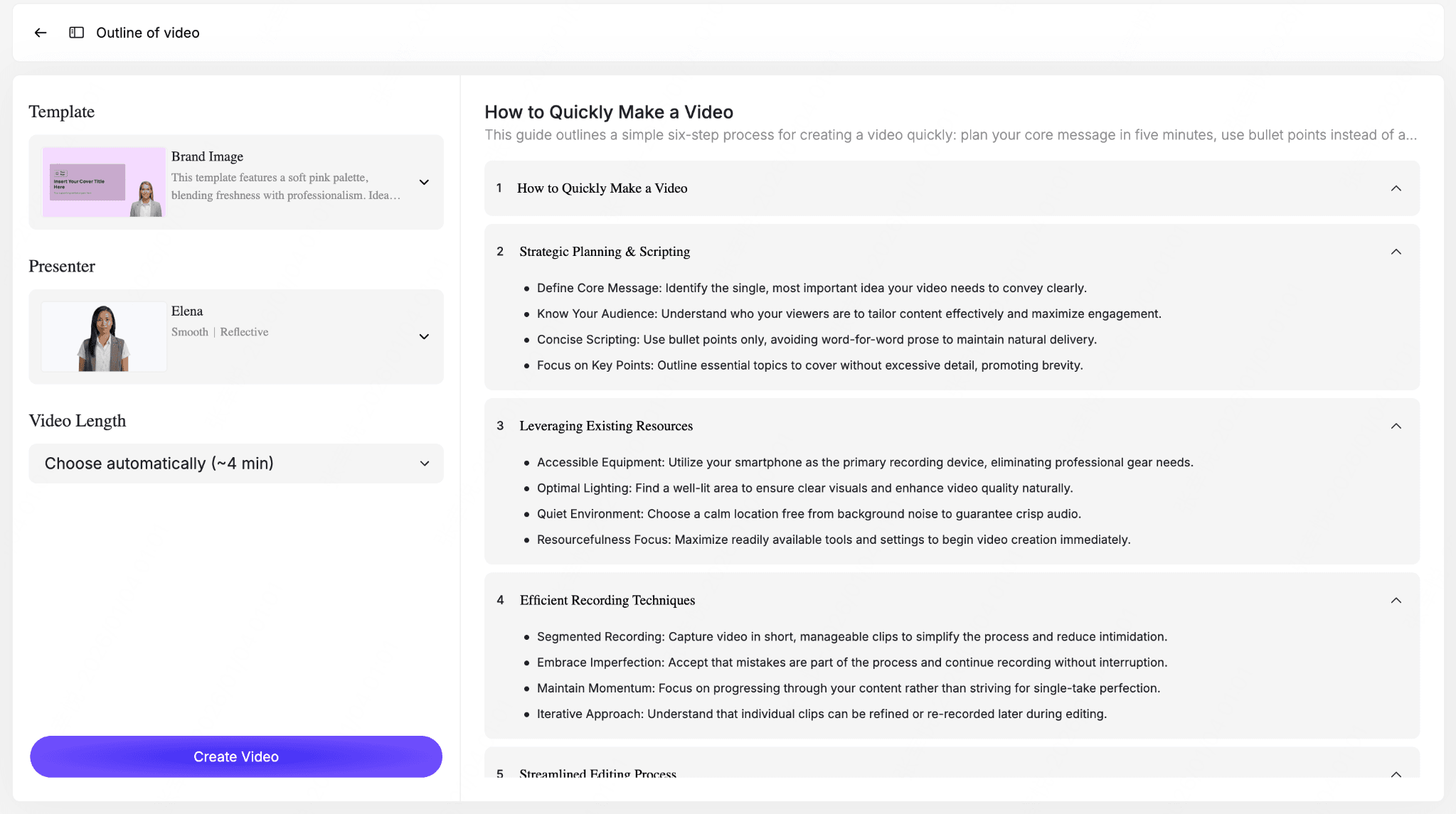
Select a template that matches your goal and distribution channel. Some templates are optimized for short social ads, while others work better for product explainers or brand messaging. In AI-assisted workflows, templates often control scene structure, pacing, and transitions automatically.
Step 3: Replace visuals, text, and branding
Customize the template by updating text, visuals, and brand elements such as colors, fonts, and logos. Many modern tools allow teams to start from scripts, documents, or outlines, then automatically map content into scenes—reducing manual layout work while keeping messaging consistent.

Step 4: Add music, animation, or voice-over
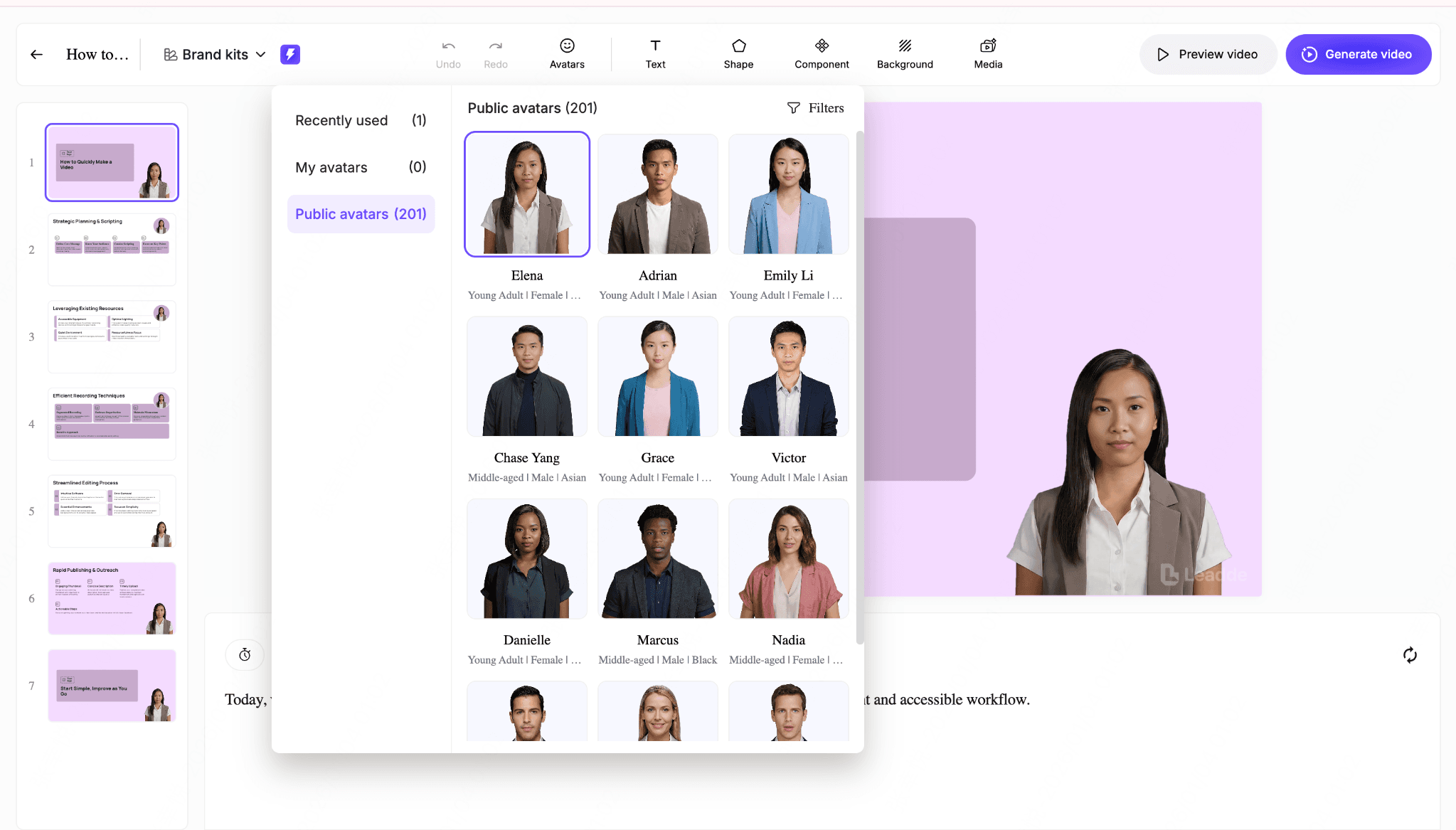
Enhance the video with background music, subtle animations, or narration if needed. Some platforms support tone-of-voice selection, multilingual output, and optional AI presenters, which helps adapt commercial videos to different audiences without re-recording.
Step 5: Export and publish
Preview the video to check pacing, clarity, and timing before exporting. Choose platform-appropriate formats and resolutions, then publish across your intended channels. Titles and descriptions can be generated automatically and refined to match campaign goals.

Best Practices for Using Commercial Video Templates Effectively
Keep messages short and scannable
Commercial video templates work best when messaging is concise and easy to process. Viewers often encounter videos while multitasking or scrolling quickly, which makes long explanations ineffective. Breaking information into short phrases and clear visual segments helps ensure that the core message is understood even with limited attention.
Why it works: scannable messaging increases comprehension within the first few seconds of viewing.
Design for silent viewing
Many commercial videos are watched without sound, especially on social and mobile platforms. Effective templates account for this by relying on on-screen text, clear visuals, and visual cues rather than narration alone. Subtitles, captions, and strong visual hierarchy ensure the message remains accessible regardless of audio settings.
Why it works: silent-friendly design prevents message loss and widens audience reach.
Customize templates to match your brand
Templates provide structure, but performance depends on thoughtful customization. Applying consistent brand colors, typography, and tone ensures that videos feel cohesive rather than generic. Even small adjustments—such as pacing or visual emphasis—can help align the template with an established brand identity.
Why it works: brand alignment strengthens recognition without sacrificing efficiency.
End with a clear call-to-action
Every commercial video should guide viewers toward a next step. Templates that reserve space for a single, clear call-to-action—such as visiting a page, learning more, or completing a sign-up—reduce ambiguity. Avoiding multiple competing CTAs helps maintain focus and improves response rates.
Why it works: clarity at the end of the video turns attention into action.
Common Questions About Commercial Videos (FAQs)
What is the ideal length for a commercial video?
The ideal length depends on the platform and goal, but most commercial videos perform best between 6 and 30 seconds. Shorter videos work well for social feeds and ads where attention is limited, while slightly longer formats may be appropriate for product pages or brand storytelling.
Are commercial video templates suitable for small businesses?
Yes. Commercial video templates are especially useful for small businesses because they provide a professional structure without requiring specialized production skills or large budgets. Templates allow small teams to create consistent, high-quality videos quickly and adapt them as needs change.
Do commercial video templates affect performance or ROI?
When used correctly, templates improve consistency and speed without reducing effectiveness. Performance depends more on messaging clarity and structure than on whether a video was created from scratch.
Can commercial videos be used across platforms?
Commercial videos can be used across platforms, but they should be adapted to platform-specific formats and viewing behaviors. Aspect ratio, pacing, and text placement often need adjustment to ensure the video feels native on channels such as social media, video platforms, and websites.
Do commercial videos need a voice-over?
No. Many commercial videos are designed to work without voice-over, especially for mobile and social viewing where sound is often muted. Clear visuals, on-screen text, and captions can communicate the message effectively, with voice-over used only when it adds clarity or context.
Conclusion: Choosing the Right Commercial Video Approach
Effective commercial video creation is not defined by large budgets or complex production setups. High-performing commercial videos are built on clarity—delivering a focused message that viewers can quickly understand and act on.
Templates play an important role in this process. When used correctly, commercial video templates do not limit quality; they provide structure. That structure supports consistent pacing, clearer messaging, and repeatable results across different campaigns and platforms.
Ultimately, successful commercial videos depend on three fundamentals: clarity in what is being communicated, structure in how the message is delivered, and consistency in how the brand is presented over time. Teams that prioritize these principles can create commercial videos that perform reliably—regardless of tools, formats, or scale.