
How to Make Corporate Culture Videos People Actually Watch
Most corporate culture videos fail for one reason: they try to sell culture instead of showing real work, real people, and real interactions.
After analyzing hundreds of discussions across hiring, employer branding, internal communications, videography, and marketing communities, one pattern became clear: people do not want polished corporate propaganda. They want proof.
The highest-performing corporate culture videos tend to have five things in common:
- Real employees instead of scripted actors
- Shorter formats with faster pacing
- Specific stories instead of generic company values
- Behind-the-scenes moments instead of staged office footage
- Honest communication instead of exaggerated positivity
Companies that get this right use culture videos and other recruitment video ideas to reduce hiring friction, improve candidate trust, strengthen remote collaboration, and increase engagement across recruiting and internal communication channels.
This guide breaks down exactly how to make corporate culture videos people actually watch — using real-world employer branding strategies, audience behavior data, internal communications insights, and production frameworks that consistently perform better in practice.
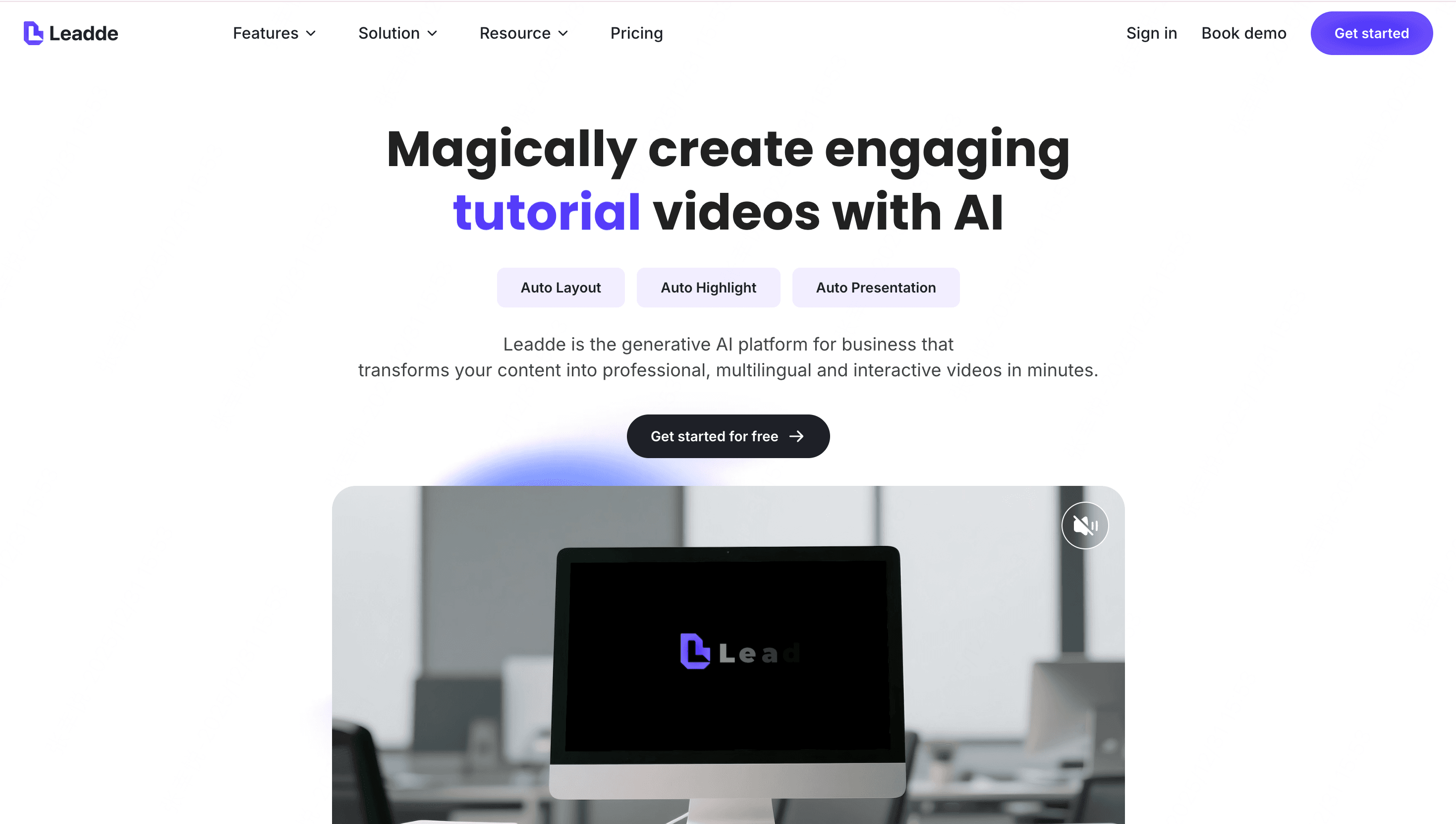
Today, many teams use AI-powered video tools such as Leadde to turn existing materials—documents, slides, or training content—into structured corporate videos quickly, complete with clear narration, visuals, and a consistent presenter.
What Is a Corporate Culture Video?
A corporate culture video is a type of corporate video (often detailed in a broader corporate video guide) that showcases a company’s values, work environment, and people rather than its products or services. Its purpose is to communicate _how it feels to work at the company_—from day-to-day collaboration to long-term growth and shared principles.
Unlike standard promotional content (if you're wondering what is a promotional video in this context, it usually drives sales), culture videos are closely tied to employer branding and hiring. They help candidates understand whether the company’s values, expectations, and working style align with their own before applying. For existing employees, corporate culture videos also play a role in reinforcing internal culture, complementing materials on how to create onboarding videos in 5 minutes, and creating a sense of belonging across teams.
What sets corporate culture videos apart from other corporate video types is intent. They are not designed to sell features or drive conversions. Instead, they focus on authenticity, real experiences, and human stories—using employees, leaders, and real workplace moments to express culture in a way written statements cannot.
Why Corporate Culture Videos Matter for Modern Companies
Corporate culture videos matter because they communicate meaning beyond job descriptions, mission statements, or polished brand messaging. When done well, they clarify expectations, reduce hiring mismatches, and build trust—both internally and externally.
They attract candidates who fit the culture. By showing how people work and collaborate, culture videos help candidates assess alignment before applying, saving time for both hiring teams and applicants.
They build trust with customers and partners. Real employees and real environments humanize the organization, making the company feel more transparent and credible beyond products or pricing.
They align teams and humanize the brand. Culture videos reinforce shared values for employees while turning abstract brand claims into relatable human stories.
They scale culture across distributed teams. For remote and global organizations, culture videos provide a consistent way to share values, expectations, and rituals across locations and time zones.
Why Most Corporate Culture Videos Fail
The biggest mistake companies make is assuming that high production quality automatically creates trust.
It does not.
In most cases, overly polished corporate culture videos create the opposite reaction:
- They feel scripted
- They feel emotionally distant
- They look like advertisements
- They fail to reflect the actual employee experience
During my research into employer branding and internal communications workflows, one complaint repeatedly surfaced:
“The video looks expensive, but it doesn’t feel real.”
This disconnect is especially damaging in recruiting.
Modern candidates already expect marketing polish. What they are evaluating is authenticity.
When candidates watch a culture video, they are subconsciously asking:
- Would I actually enjoy working with these people?
- Does this environment feel emotionally safe?
- Are employees behaving naturally?
- Does leadership sound believable?
- Is this company hiding something?
If your video cannot answer those questions authentically, production value becomes irrelevant.
This is why many heavily scripted culture videos underperform despite large budgets.
What People Actually Want From Corporate Culture Videos
The best corporate culture videos do not “promote culture.”
They reduce uncertainty.
After reviewing discussions from HR leaders, employer branding specialists, video producers, remote-work teams, and internal communications professionals, several audience expectations consistently appeared.
People want to see:
Real Employees
Viewers trust employees more than executives or narrators.
Natural conversations outperform scripted testimonials because they feel emotionally credible.
Instead of:
- “Our company values innovation and teamwork…”
Effective videos show:
- teammates collaborating
- engineers solving problems
- managers giving feedback
- casual interactions during real work
The more specific the interaction, the more believable the culture feels.
Real Work Environments
One major reason corporate culture videos fail is the overuse of generic B-roll.
Audiences immediately recognize:
- fake laughter
- staged meetings
- empty office cinematics
- stock footage
The highest-trust videos instead show:
- actual workflows
- real Slack or collaboration processes
- hybrid work routines
- customer interactions
- team problem-solving
This creates what employer branding teams call “pre-hire transparency.”
That transparency matters because it reduces candidate mismatch later in the hiring process.
Shorter, Faster-Paced Content
Internal communications teams consistently report low completion rates for long-form corporate videos.
One recurring insight from video training professionals was especially important:
A 30-second animation can teach more effectively than a five-minute talking-head explanation.
That reflects a larger behavioral shift.
Employees and candidates now consume information in:
- TikTok-style formats
- short-form video
- chapter-based learning
- fast-scrolling interfaces
Modern audiences expect:
- faster pacing
- visual transitions
- concise storytelling
- immediate relevance
If your culture video takes 45 seconds to “get started,” most viewers are already gone.
How to Make Corporate Culture Videos That Feel Authentic
Authenticity is now the core performance metric for employer branding video.
Not cinematic quality.
Not camera gear.
Not editing complexity.
The most effective culture videos are designed around credibility.
Here is the framework that consistently works better.
1. Start With Real Employee Stories
The strongest culture videos are story-driven, not slogan-driven.
Instead of opening with mission statements, begin with:
- a challenge
- a customer problem
- a workday moment
- a personal career story
For example:
Bad opening:
“We are passionate about innovation.”
Better opening:
“When I joined the company, I expected a traditional corporate environment. Instead, my manager asked me to redesign the onboarding workflow in my first week.”
Specificity creates trust.
Generic language destroys it.
2. Replace Scripted Interviews With Guided Conversations
One major production mistake is over-scripting employees.
This creates:
- robotic delivery
- unnatural phrasing
- visible discomfort
Instead of memorized answers, use guided prompts:
- “What surprised you most after joining?”
- “Describe a typical workday.”
- “What makes this team different?”
- “What problem are you solving right now?”
This approach produces more natural speech patterns and emotionally believable footage.
It also reduces camera anxiety significantly.
Many companies struggle because employees do not want to appear on camera permanently online. Guided conversations help employees feel less “performative” and more conversational.
3. Show Real Collaboration Instead of Office Aesthetics
One of the clearest patterns from employer branding research is this:
People care less about office perks than team dynamics.
Audiences are trying to evaluate:
- communication quality
- leadership accessibility
- collaboration style
- emotional tone
That means:
- whiteboard sessions outperform drone shots
- problem-solving beats office tours
- team interaction beats architecture
The most effective culture videos function almost like mini-documentaries.
4. Keep the Video Under 2 Minutes
Shorter videos consistently outperform longer formats in both recruiting and internal communication contexts.
Most viewers decide within the first 15–30 seconds whether they will continue watching.
For employer branding:
- 60–90 seconds is often ideal
For internal communication:
- under 2 minutes typically performs better
For social distribution:
- 30–60 second cutdowns work best
Long introductions are one of the biggest engagement killers.
How Employer Branding Teams Use Culture Videos to Improve Hiring
One of the strongest business use cases for corporate culture videos is reducing hiring friction.
Employer branding teams increasingly use culture content to:
- improve candidate quality
- increase trust before interviews
- reduce expectation mismatch
- accelerate hiring conversations
In one employer branding workflow analysis, teams reported measurable improvements in:
- candidate-to-interview conversion quality
- hiring efficiency
- time-to-hire reduction
The key insight was simple:
Candidates who understand company culture earlier require less persuasion later.
This is especially important in competitive hiring markets.
How to Create a Corporate Culture Video (Step-by-Step)
If you are learning how to create a company culture video quickly and effortlessly, creating a corporate culture video doesn’t require a large production team or a complex setup. In practice, the most effective teams follow a lightweight, repeatable workflow that keeps the focus on people and culture—while making updates easy as the company evolves.
Below is one practical approach many teams use today, often supported by AI video tools such as Leadde, to streamline production without sacrificing authenticity.
Step 1. Define your goal and audience
Before recording anything, clarify the purpose of the video and who it’s meant for. Some corporate culture videos are designed to support hiring, while others focus on onboarding or internal alignment.
Ask two questions:
- Who should this video speak to?
- What should they understand about our culture after watching?
Clear answers help define scope and prevent the video from trying to represent everything at once.
Step 2. Choose the right culture video format
Next, decide how culture should be expressed. Employee testimonials, slice-of-life footage, or leadership messages each highlight culture differently.
This decision influences the entire production flow—from who appears on camera to how scenes are structured. Teams using AI video workflows often choose formats that are easy to modularize, making future updates or localization simpler.
Step 3. Involve employees, not actors
Corporate culture videos are most credible when real employees are involved. Instead of scripted performances, employees should speak in their own words about how they work, collaborate, and make decisions.
Using the best AI avatar creators for onboarding videos and culture content, AI-assisted tools can help standardize delivery—such as using a consistent presenter style—while keeping the content itself grounded in real experiences.
Step 4. Keep scripts minimal and structure modularly
Rather than writing full scripts, use short prompts or themes to guide each section. Clear structure matters more than polished dialogue.
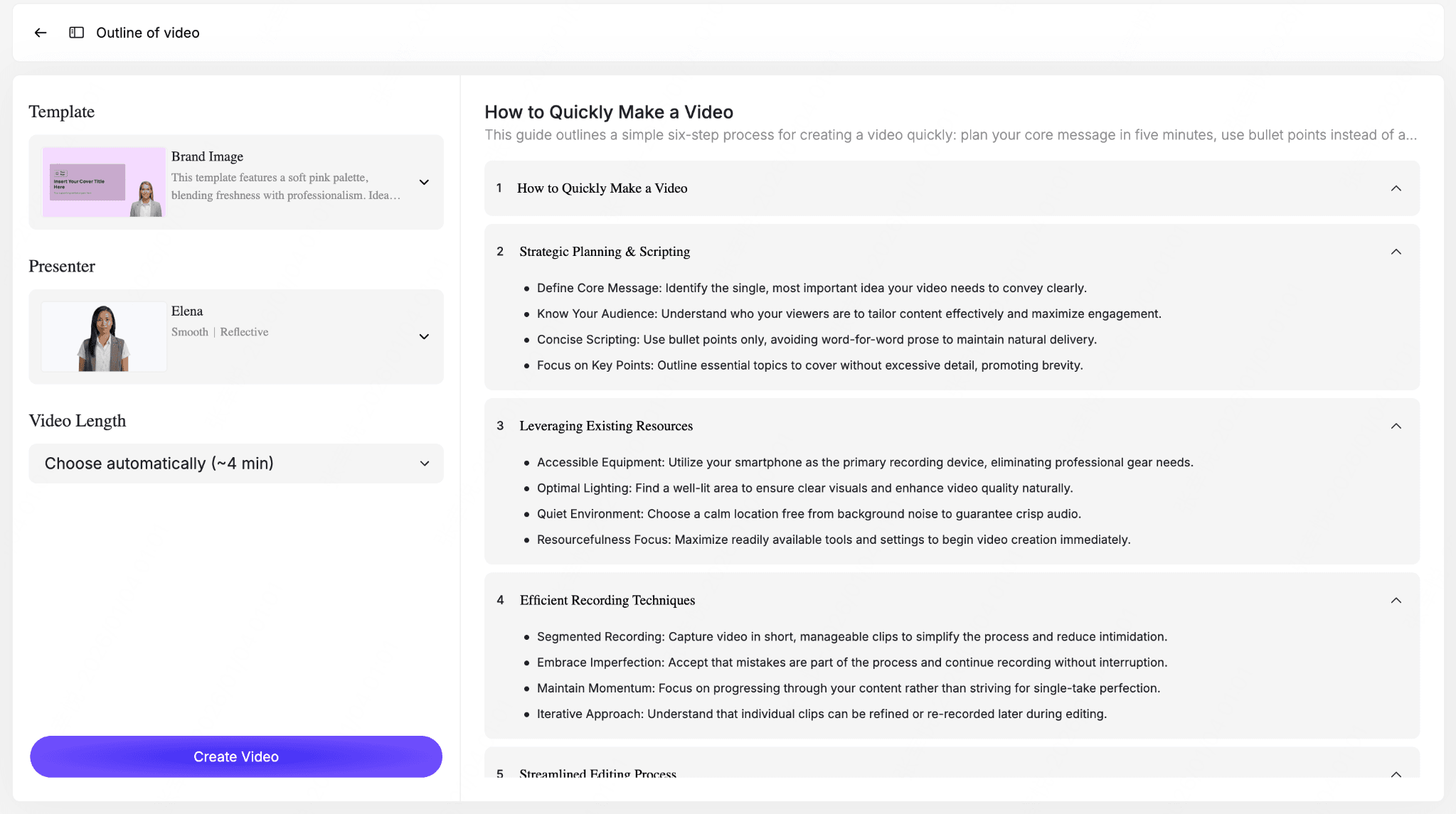
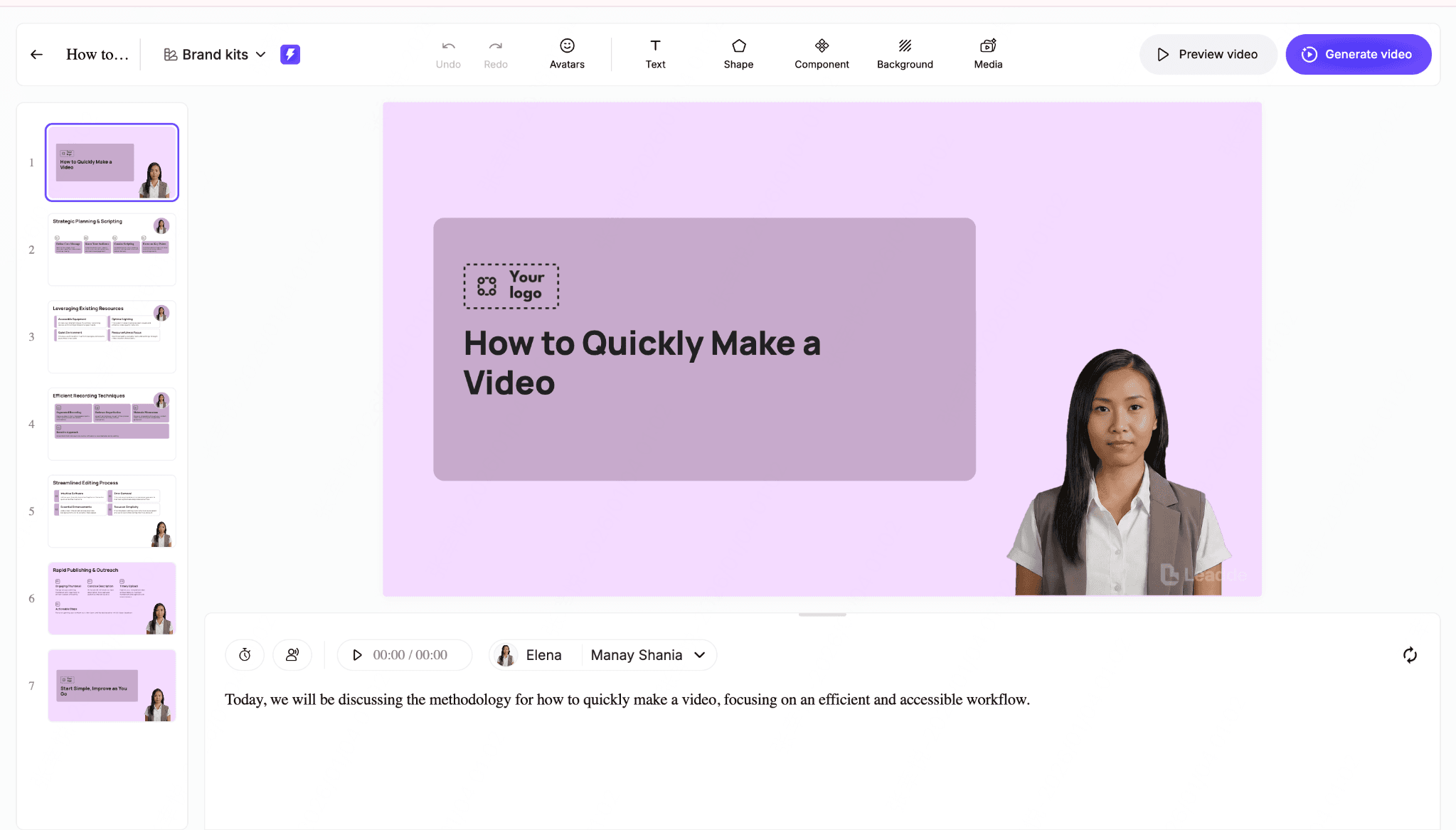
In tools like Leadde, teams often build videos using modular outlines:
- a presenter introduces the context,
- supporting visuals or clips carry the explanation,
- sections can be reordered or replaced without redoing the entire video.
This approach keeps culture videos easier to update, reuse, and scale.
Step 5. Edit for clarity, not perfection
When editing, prioritize clarity and pacing over visual polish. Remove repetition, keep scenes focused, and ensure audio is easy to follow.
Simple, consistent delivery—neutral tone, steady pacing, and clean visuals—often communicates culture more effectively than highly produced edits. The goal is understanding, not performance.
Step 6. Publish and reuse across hiring and branding channels
Once finished, deploy the video across career pages, job listings, onboarding materials, and employer branding campaigns.
Because culture videos are often reused over time, teams increasingly rely on AI-based workflows to adapt the same core video for different audiences, languages, or hiring needs without starting from scratch.
Case Study: LinkedIn Employer Branding Growth
A particularly interesting employer branding strategy involved integrating culture content directly into LinkedIn recruiting systems.
One company reported that:
- their company following grew into the hundreds of thousands
- nearly 50% of job applicants opted to follow the company page during the application process
This created a compounding branding effect:
- recruiting generated audience growth
- audience growth improved brand familiarity
- familiarity increased candidate trust
The important lesson is that culture videos are not isolated content assets.
They are part of a larger employer branding ecosystem.
Why “Fun Corporate Videos” Usually Fail
Humor is one of the hardest things to execute in corporate video production.
Many companies attempt:
- forced jokes
- exaggerated enthusiasm
- trend-chasing content
This often backfires because audiences can sense performative behavior immediately.
The problem is not humor itself.
The problem is artificiality.
The most successful “fun” culture videos use:
- self-awareness
- subtle humor
- natural employee personalities
- behind-the-scenes imperfections
Interestingly, some of the most respected corporate video examples are successful precisely because they avoid trying too hard.
The humor feels incidental rather than engineered.
The Best Corporate Culture Videos Feel Like Documentaries
This was one of the clearest conclusions from my research.
The highest-trust culture videos are observational, not promotional.
They resemble:
- mini-documentaries
- behind-the-scenes films
- team journals
- creator-style storytelling
Instead of:
- “Here’s why our company is amazing…”
They show:
- how decisions are made
- how teams communicate
- how employees solve problems
- how leadership behaves under pressure
This format works because audiences trust evidence more than messaging.
Frequently Asked Questions About Corporate Culture Videos
What makes a good corporate culture video?
A good corporate culture video feels authentic, specific, and emotionally believable. It focuses on real employees, real workflows, and real interactions instead of scripted branding language.
How long should a corporate culture video be?
Most high-performing culture videos are between 60 and 120 seconds. Social-first versions are often 30–60 seconds.
Should culture videos focus on recruiting or internal communication?
The strongest videos usually have a primary audience. Trying to combine recruiting, onboarding, and executive messaging into one video often weakens clarity.
Why do corporate culture videos feel fake?
They often rely on scripted interviews, generic messaging, staged office footage, and exaggerated positivity instead of observable employee behavior.
How do you make employees comfortable on camera?
Use guided conversations instead of scripts. Film employees in familiar work environments and focus on natural interactions rather than performances.
Are expensive corporate videos more effective?
Not necessarily. Authenticity consistently outperforms production polish when building trust with candidates and employees.
What should you avoid in employer branding videos?
Avoid:
- stock footage
- generic mission statements
- over-scripted interviews
- fake enthusiasm
- long executive monologues
Do candidates actually watch company culture videos?
Yes — especially during consideration stages. Culture videos help candidates evaluate trust, team dynamics, and work environment before interviews.
What metrics matter for corporate culture videos?
Key metrics include:
- watch time
- completion rate
- engagement rate
- drop-off points
- candidate conversion quality
- hiring efficiency improvements
Should you use actors or real employees?
Real employees generally perform better because audiences value credibility and emotional realism over polished delivery.
Final Thoughts
The future of corporate culture videos is not cinematic branding.
It is transparent storytelling.
The companies creating the most effective culture content are not trying to “look impressive.” They are trying to reduce uncertainty, build trust, and help people imagine themselves inside the organization.
That is why authenticity consistently beats polish.
And why the best corporate culture videos no longer feel corporate at all.