
How to Make Testimonial Videos That Convert (Step-by-Step Guide + Examples)

Testimonial videos are most effective when they focus on real customer experiences, highlight concrete outcomes, and keep the message clear and believable. The strongest testimonial videos don’t rely on polished scripts or brand-led persuasion. Instead, they let genuine users describe what changed, why it mattered, and how it felt—making testimonial videos one of the most persuasive formats in video marketing.
At the decision-making stage, testimonial videos play a critical role in building trust and driving conversions. Seeing and hearing real people talk about results helps reduce uncertainty, reinforce social proof, and influence purchase decisions more effectively than written reviews or heavily produced brand videos alone.
With an AI video creation tool like Leadde, teams can turn scripts, prompts, or customer insights into high-quality testimonial videos in minutes instead of weeks. By generating structured scenes with natural delivery and consistent pacing, Leadde makes it possible to create testimonial videos at scale—without traditional filming or complex editing. In this guide, we explain why testimonial videos work, show how to make a testimonial videos step by step, and explore production methods, examples, and modern tools to help you choose the right approach.

What Makes Testimonial Videos So Effective?
Testimonial videos are effective because they replace brand-led messaging with real customer perspectives. Hearing users describe their experiences in their own words feels more credible than promotional claims, especially for audiences evaluating a product for the first time.
Video also adds emotional context that text alone cannot convey. Facial expressions, tone of voice, and body language help viewers interpret sincerity and confidence, making testimonial videos feel more trustworthy and relatable.
Finally, testimonial videos work as powerful social proof during the buying process. Seeing others describe real outcomes reduces uncertainty, validates purchasing decisions, and reassures prospects that they are making a safe and informed choice.
How to Ask Customers for Testimonial Videos (Step-by-Step)
Getting high-quality testimonial videos starts with how you ask. A clear, thoughtful request makes customers more comfortable participating and greatly improves response rates.
Step 1 – Choose the Right Moment
Ask for a testimonial when customers have just achieved a positive result, completed onboarding, or shared favorable feedback. This is when their experience is freshest and enthusiasm is highest.
Step 2 – Personalize the Ask
Reference specific outcomes or milestones the customer achieved. Mentioning concrete results shows that your request is genuine and relevant, not a generic marketing outreach.
Step 3 – Show an Example
Sharing a simple example testimonial helps customers understand what’s expected. Examples reduce uncertainty and make it easier for them to visualize how their video might look.
Step 4 – Make It Easy to Record
Remove pressure by emphasizing that testimonial videos don’t need to be polished or perfect. Encourage natural, conversational responses and make recording as simple as possible.
Step 5 – Follow Up Politely
If there’s no response, send a short, friendly reminder. A respectful follow-up often increases participation without making customers feel uncomfortable.
How to Make Testimonial Videos (Production Methods)
AI video creation tools streamline testimonial production by turning structured input into complete videos—without filming. Instead of managing shoots or raw footage, teams can follow a guided, repeatable workflow designed for speed and scale.
Step 1 — Start with a script or outline
Testimonial videos can begin with a written script, a short outline, or structured talking points. Scripts help focus the testimonial on real outcomes, while outline-based input allows each scene to address a specific problem, solution, or result.
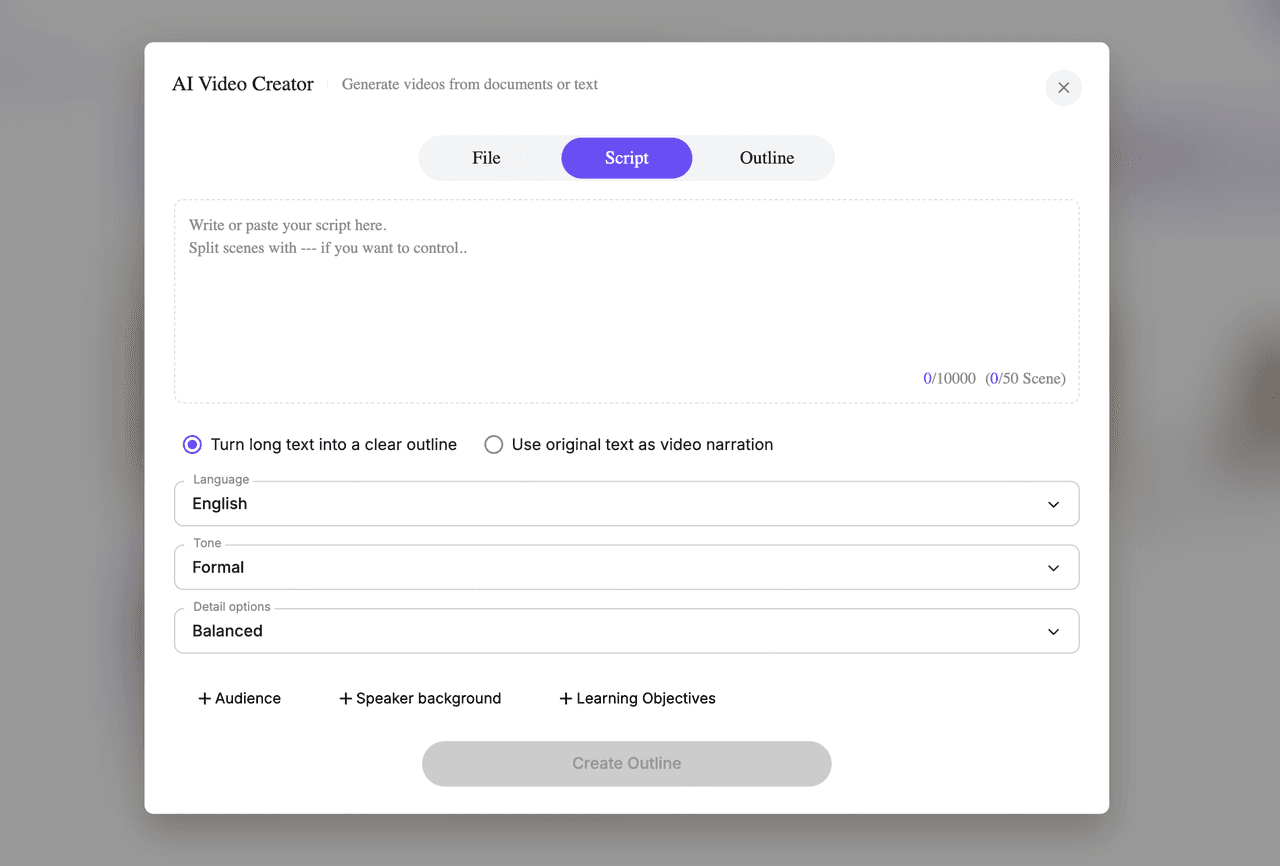
Step 2 — Choose the video language
AI tools support multiple languages, making it easy to create testimonial videos for global audiences without re-recording. This is especially useful when the same testimonial needs to be localized across regions.
Step 3 — Define tone and delivery style
Testimonial videos benefit from controlled tone rather than improvisation. AI workflows allow teams to select styles such as friendly, conversational, persuasive, or storytelling—helping testimonials sound natural while staying on message.
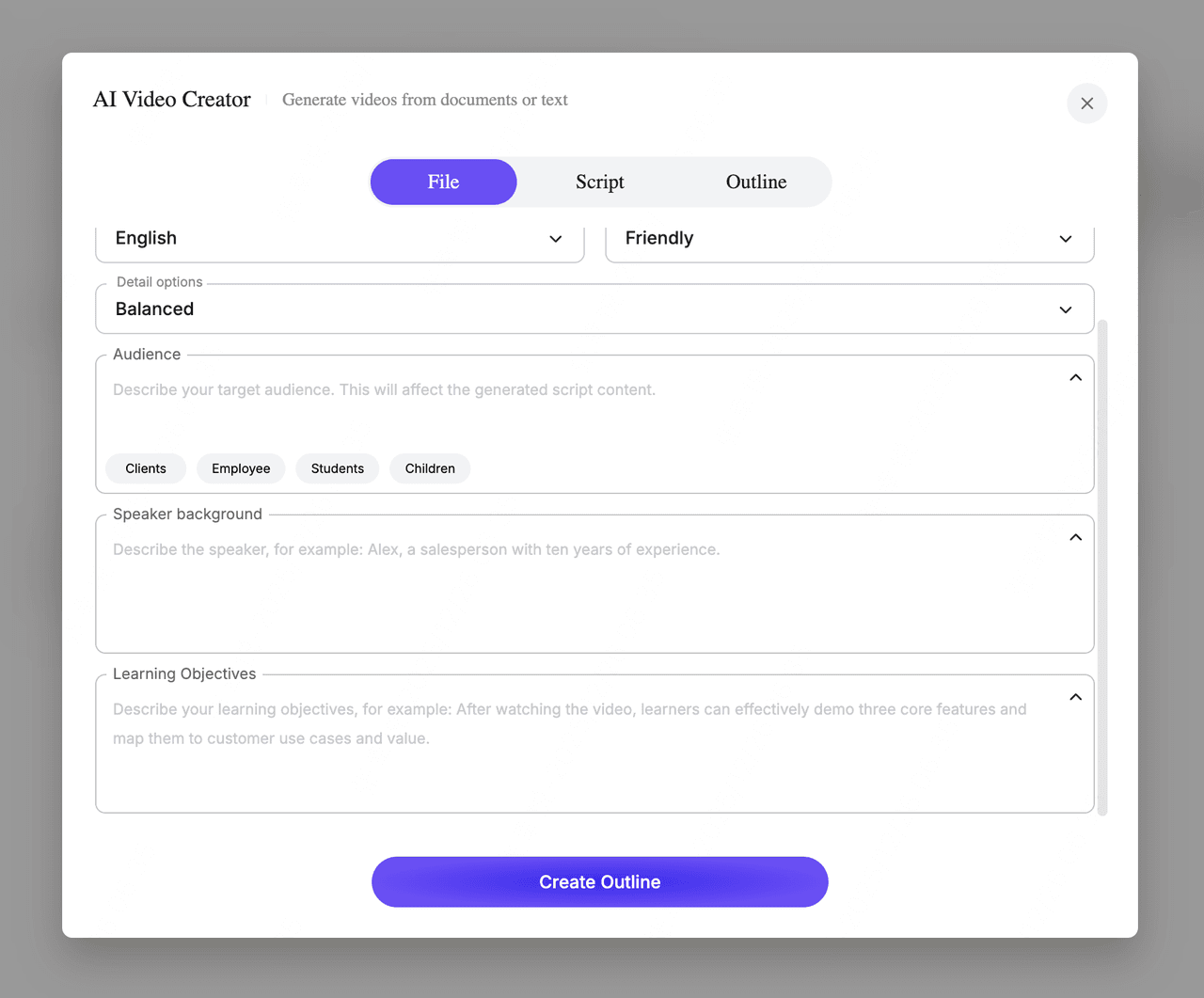
Step 4 — Control detail level and context
Adjusting content depth ensures testimonials remain concise. Optional context—such as audience type or customer background—helps the AI generate more relevant and believable testimonial narratives.
Step 5 — Generate a structured testimonial outline
AI automatically creates a scene-based structure, typically covering the customer’s challenge, solution, and result. Teams can review, reorder, or refine sections before final video generation.
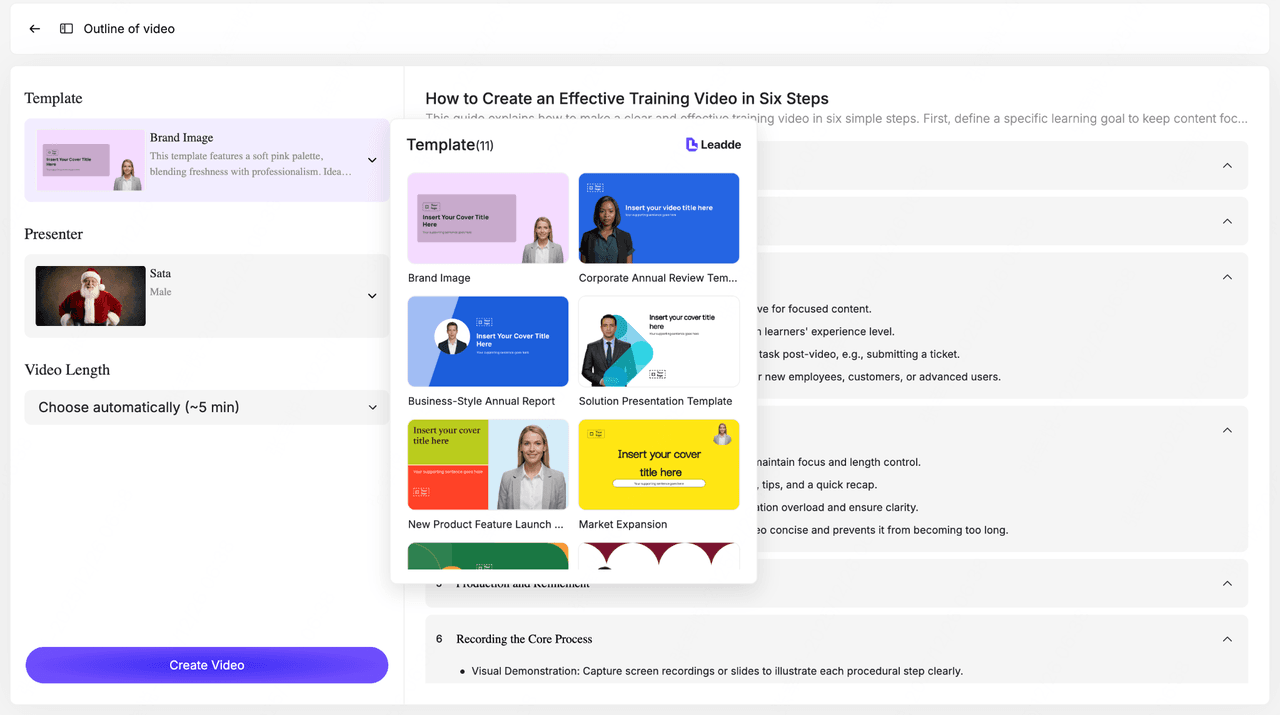
Step 6 — Apply a consistent video template
Pre-designed templates ensure testimonial videos follow consistent layouts, branding, and pacing. This avoids the visual inconsistency common in self-recorded testimonials.
Step 7 — Select a presenter or AI avatar
AI presenters narrate testimonial scripts with controlled delivery, allowing brands to maintain a unified look and feel across testimonial libraries.
Step 8 — Generate, preview, and refine
The AI produces the full testimonial video—complete with narration, visuals, transitions, and on-screen text. A preview mode allows teams to adjust pacing, wording, or structure before final export.
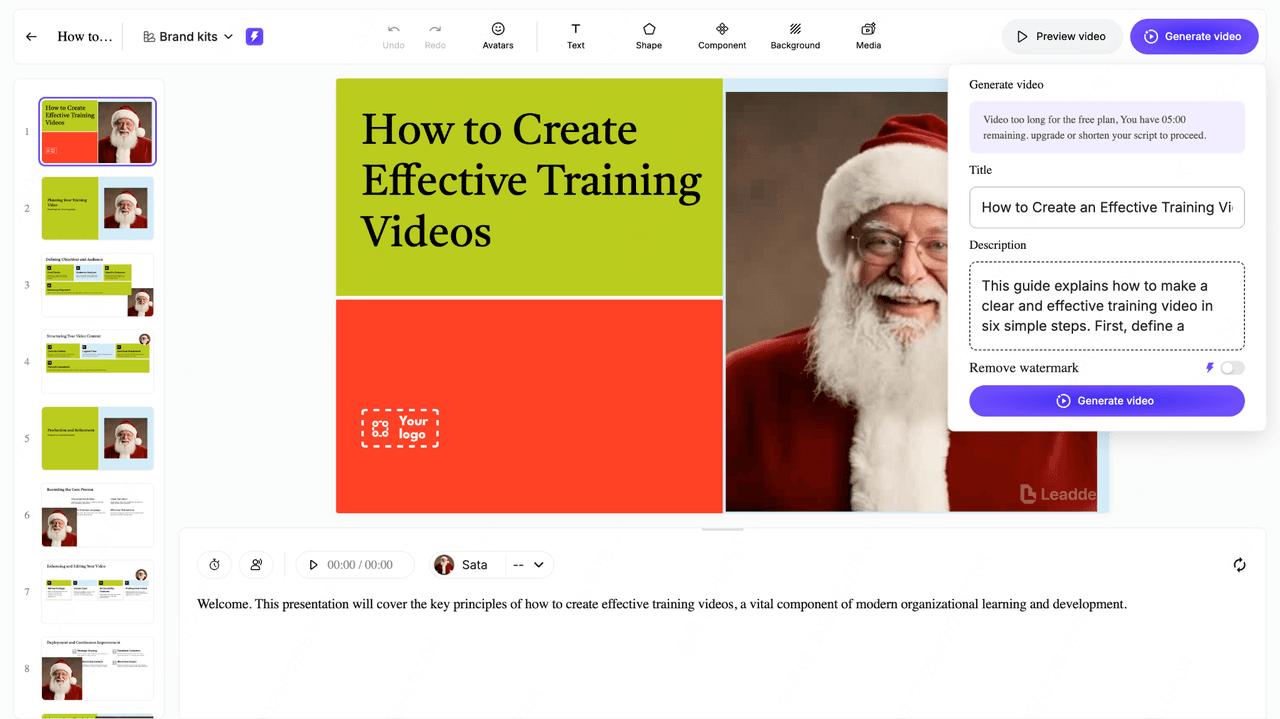
Step 9 — Finalize and reuse
Once generated, testimonial videos are ready for reuse across ads, landing pages, emails, and websites. Because content is generated rather than recorded, creating variants or updates requires minimal effort.
Why this AI-based method matters
By replacing filming with structured AI workflows, testimonial videos become repeatable, scalable assets. This approach allows teams to test variations, localize content, and maintain quality—turning testimonial videos into an ongoing growth system rather than isolated campaigns.
Best Practices for High-Converting Testimonial Videos
High-converting testimonial videos follow a few consistent principles that prioritize clarity, authenticity, and relevance. Small production choices can significantly affect how trustworthy and persuasive a testimonial feels.
Keep it natural, not overly scripted Avoid memorized scripts or staged delivery. Prompt customers with guiding questions, then let them respond in their own words. Natural language and small imperfections often make testimonial videos more believable.
Keep testimonial videos short and focused Aim for a length of 1–2 minutes. Shorter videos hold attention better and make it easier to reuse testimonials across landing pages, ads, and social channels.
Follow a clear story structure Strong testimonial videos move through a simple narrative: the problem the customer faced, the solution they used, and the result they achieved. This structure helps viewers quickly understand value without feeling overwhelmed.
Highlight specific, concrete outcomes Whenever possible, focus on measurable results or clear improvements. Specific details make testimonial videos more credible than vague praise and help potential customers connect the testimonial to their own needs.
Real-World Testimonial Video Examples
Testimonial videos can take many forms depending on where they are used and how much context they need to provide. Below are four common real-world formats that consistently perform well across channels.
Short social testimonial Brief, informal testimonials designed for social feeds. These videos focus on a single result or benefit and work especially well for ads and organic posts on platforms like Instagram, TikTok, and YouTube Shorts.
Interview-style testimonial A conversational format where a customer answers guided questions. Interview-style testimonials feel natural while still allowing brands to shape the narrative around key points.
Case-study testimonial Longer testimonials that walk through the customer’s challenge, solution, and results in more detail. These videos are ideal for websites, sales pages, and B2B decision-making.
Before-and-after testimonial Testimonials that highlight change by contrasting a customer’s situation before and after using a product or service. This format clearly demonstrates impact and helps viewers visualize outcomes.
Common Mistakes to Avoid When Making Testimonial Videos
Even small missteps can make testimonial videos feel inauthentic or ineffective. Avoiding these common mistakes helps preserve credibility and improve conversion performance.
Over-scripting the testimonial Heavily scripted responses often make testimonial videos sound like advertisements. Light guidance works better than memorized lines, allowing customers to speak naturally.
Poor audio quality Viewers are more likely to forgive imperfect visuals than unclear sound. Background noise, echo, or low volume can quickly undermine trust in the message.
Focusing on praise instead of results Generic compliments lack credibility. Testimonial videos should highlight specific outcomes or improvements rather than broad statements about liking a product.
Making videos too long Long testimonials lose attention and dilute the message. Keeping videos concise ensures the core story remains clear and impactful.
How to Create Testimonial Videos Faster With Modern Tools
Modern tools have significantly changed how testimonial videos are created. Choosing the right approach depends on budget, speed, and how scalable your testimonial strategy needs to be.
Traditional filming for high-budget use cases Professional shoots are best suited for a small number of flagship testimonials where production quality is the top priority. While visually polished, this approach is time-consuming, expensive, and difficult to repeat frequently.
Self-recorded videos and video calls for lightweight content Customer self-recordings or video call testimonials offer faster turnaround and strong authenticity. They work well for lightweight use cases but can be inconsistent in quality and harder to scale across campaigns.
AI video tools for scale and experimentation AI video creation tools make it possible to generate testimonial videos quickly from scripts or prompts. This approach supports rapid iteration, multi-language versions, and ongoing testing—making it ideal for teams that need testimonial videos at scale rather than as one-off assets.
Conclusion
There is no single right way to create testimonial videos. What matters most is building trust, communicating clearly, and having a process that can be repeated at scale. With the right approach, testimonial videos can evolve from one-off content into a long-term growth asset.