
How to Streamline E-Commerce Content Creation with AI Avatars
AI avatars streamline e-commerce content creation by automating product videos, tutorials, onboarding content, and multilingual assets from a single source of truth. Instead of manually producing and localizing content for every market and channel, teams can use AI avatars to generate consistent, personalized, and scalable video content faster while reducing costs and production bottlenecks.
Based on my research across real-world e-commerce workflows and AI video production teams, the biggest advantage is not replacing humans entirely. The real value comes from building a faster, more scalable content engine that combines AI automation with human oversight.
For teams managing large catalogs, international audiences, and frequent product launches, AI avatars are becoming a practical operational tool rather than just an experimental marketing trend.
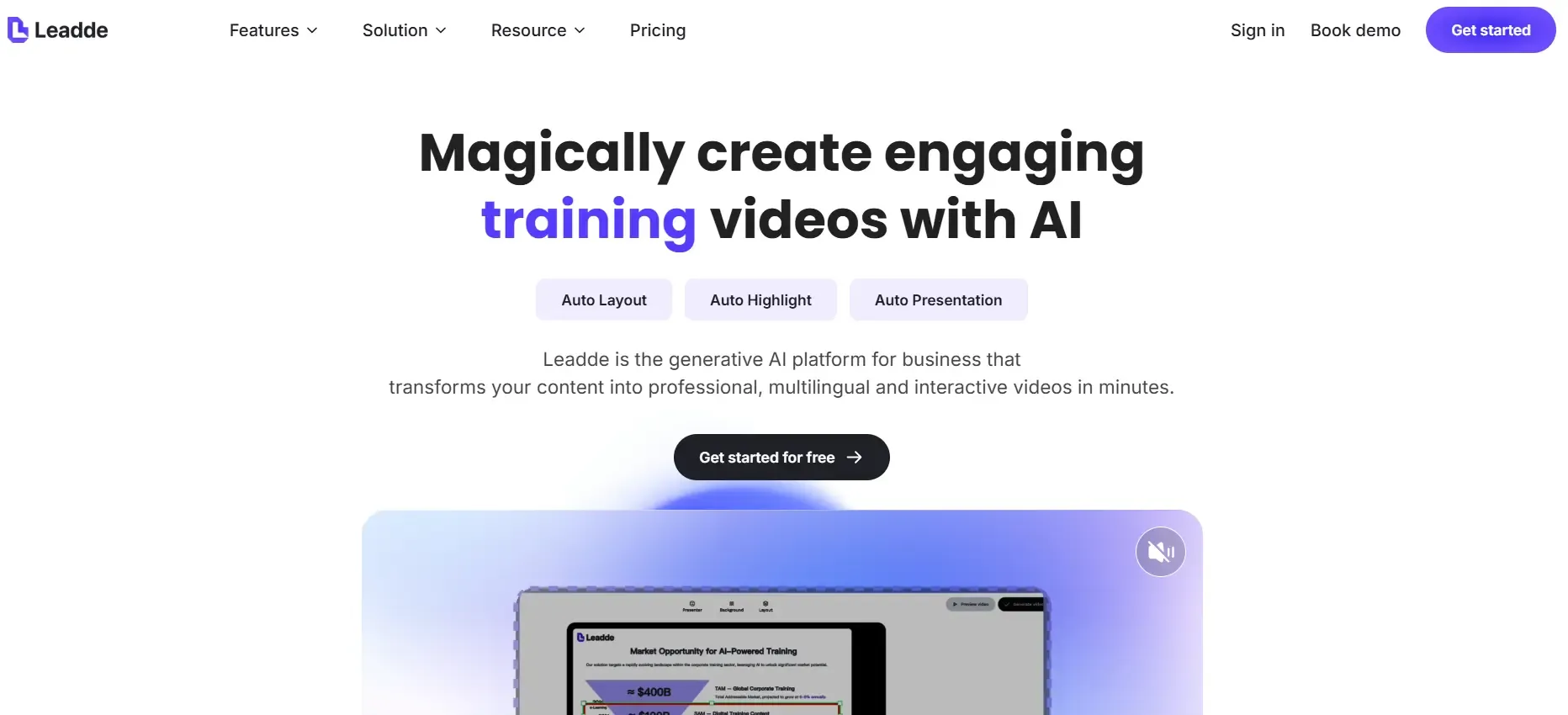
To make this process even more efficient at scale, Leadde enables e-commerce teams to turn product documents, guides, and updates into professional AI avatar videos that are easy to localize, manage, and refresh as content changes.
What Are AI Avatars in E-Commerce Content Creation?
AI avatars are AI-generated digital presenters that can explain products, narrate tutorials, deliver onboarding flows, and create video content using text, voice, or uploaded documents.
In e-commerce, top AI avatar generators are increasingly used for:
- Product demo videos
- UGC-style ad creatives
- Product onboarding tutorials
- FAQ explainers
- Multilingual product education
- Customer support videos
- Seasonal campaign content
- Marketplace product videos
Unlike traditional video production, AI avatar workflows allow teams to update scripts, pricing, policies, or product information without reshooting content from scratch.
This becomes especially valuable for brands operating across:
- Shopify stores
- Amazon catalogs
- TikTok Shop
- Global marketplaces
- DTC brands with frequent SKU changes
Why E-Commerce Teams Are Adopting AI Avatars Faster Than Other Industries
E-commerce content production has become one of the biggest operational bottlenecks for modern brands.
Most teams now need:
- Engaging product videos for every SKU
- Vertical videos for TikTok and Reels
- UGC creatives for Meta ads
- Multilingual localization
- Educational onboarding content
- Frequent campaign refreshes
Traditional production workflows cannot scale efficiently when catalogs grow.
In several e-commerce workflow studies I analyzed, teams repeatedly described the same challenge:
A single product launch often requires:
- Multiple ad variations
- Different aspect ratios
- Region-specific versions
- Localized voiceovers
- Platform-specific edits
Without automation, content production quickly becomes expensive and slow.
One brand workflow analysis showed that human creators charged approximately $300–$500 per UGC clip while teams needed 20+ creative variations every month for testing. After switching part of the workflow to AI avatars, production costs dropped to roughly $15 per variation while allowing scripts to be updated instantly instead of scheduling new shoots.
That shift fundamentally changes how quickly brands can test and scale creative output.
Types of AI Avatars Used in E-Commerce Content
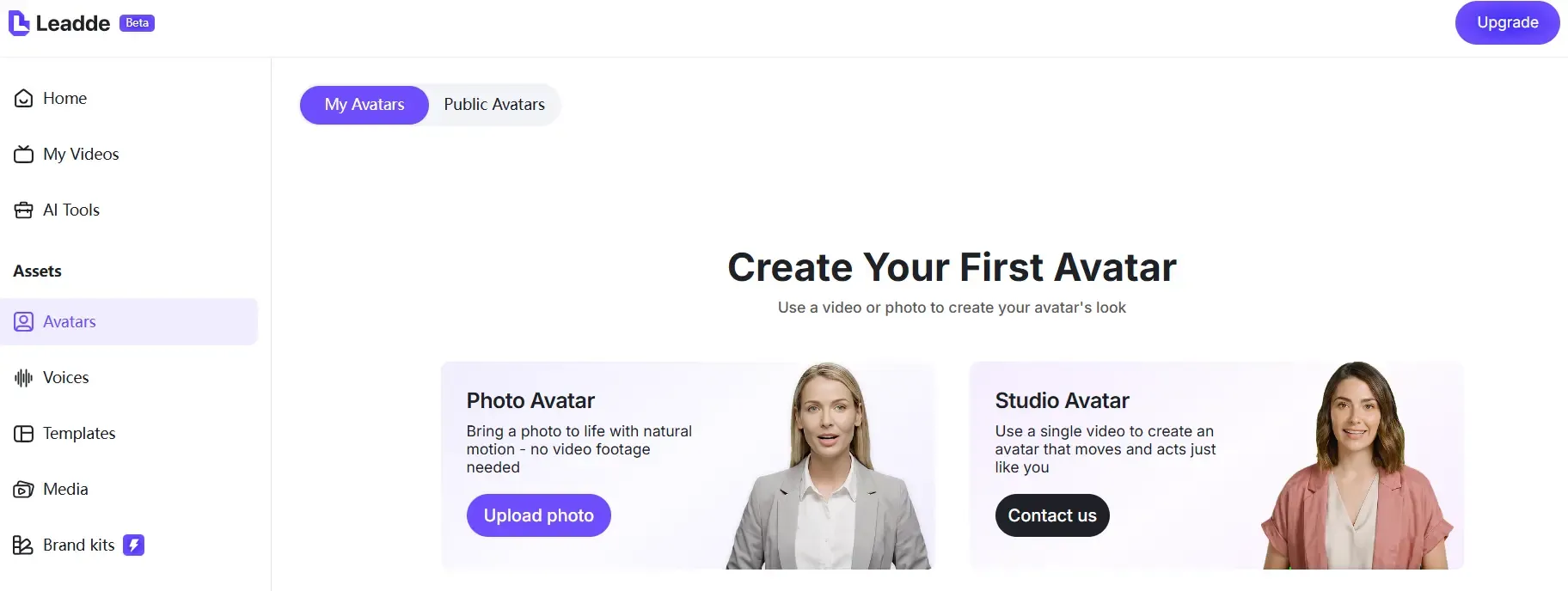
2D AI Avatars for Fast Product Content Production
2D AI avatars are lightweight animated presenters commonly used for:
- Product explainers
- FAQ videos
- Landing page content
- Promotional snippets (learning what is a promotional video helps optimize these formats)
- Marketplace listings
These avatars are inexpensive to generate and ideal for high-volume catalogs where speed matters more than cinematic realism.
For many Shopify and Amazon sellers, 2D avatars are often sufficient because the goal is clarity and rapid production rather than immersive storytelling.
3D AI Avatars for Premium Shopping Experiences
3D avatars are more immersive and visually expressive.
They are commonly used for:
- Interactive product demos
- Luxury product presentations
- Virtual shopping assistants
- Brand storytelling
- Interactive storefronts
These workflows require more production effort but can improve engagement for premium brands where presentation quality directly affects perceived value.
Voice-Based AI Avatars for Conversational Shopping Experiences
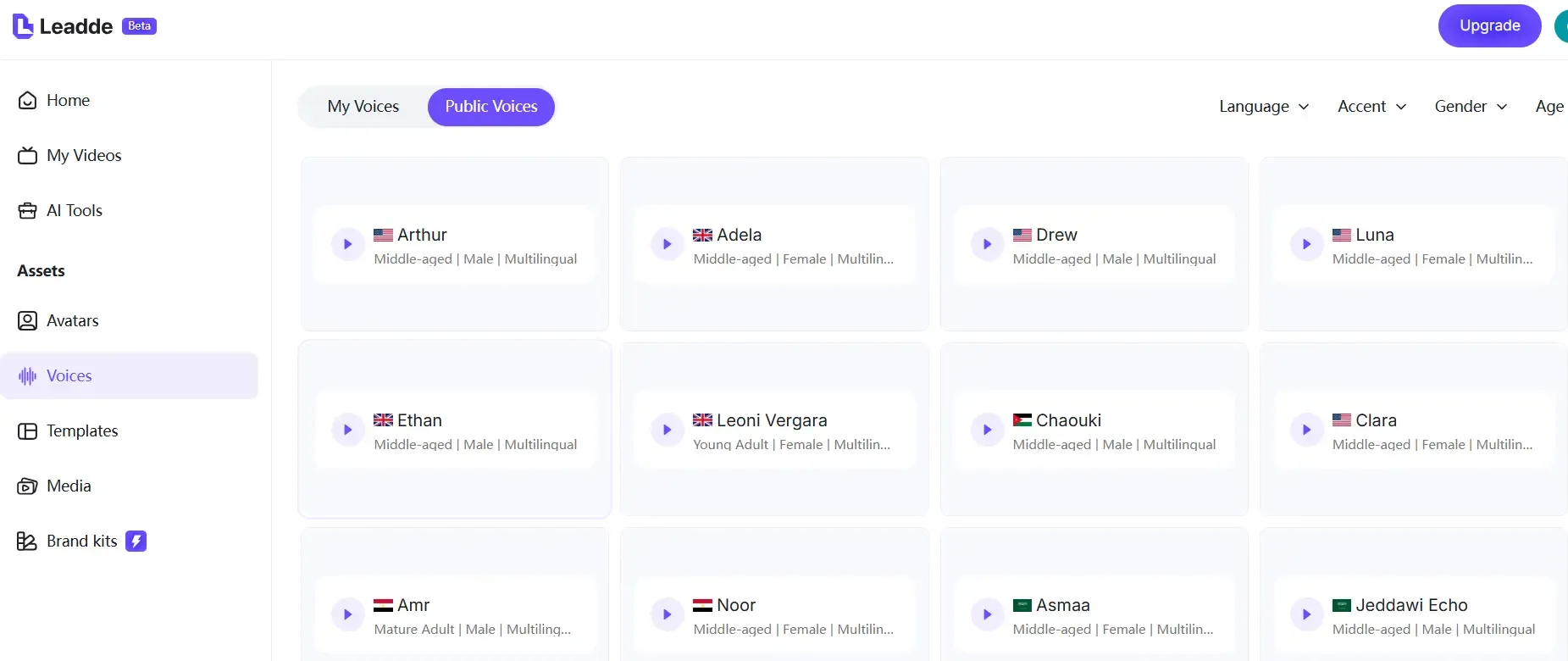
Voice-enabled AI avatars combine AI narration with interactive workflows.
Common use cases include:
- Guided shopping experiences
- Voice-assisted product discovery
- Accessibility-focused navigation
- Hands-free browsing
As mobile commerce grows, voice-based AI content is becoming increasingly important for accessibility and engagement.
How AI Avatars Reduce E-Commerce Video Production Costs
One of the biggest operational benefits of AI avatars is the reduction in repetitive production work.
Traditional product video production cost and workflows often require:
- Studio filming
- Creators or actors
- Camera setup
- Editing
- Voice recording
- Localization
- Re-shoots after product updates
AI avatars remove many of these steps.
In several production workflow comparisons I analyzed, teams found that the largest savings came from eliminating re-filming whenever:
- Pricing changed
- Product specs changed
- Packaging changed
- Promotions changed
- Localization was needed
Instead of recreating videos manually, teams simply updated the script and regenerated the content.
One e-commerce advertising workflow reduced costs from approximately $300–$500 per creator-produced ad to around $15 per AI-generated variation.
The cost reduction was significant, but the bigger operational advantage was speed.
AI Avatars vs Traditional UGC Creators for E-Commerce
AI-generated UGC is one of the fastest-growing areas in e-commerce advertising, but performance depends heavily on the type of content being created.
Based on the workflows and campaign analyses I reviewed, AI avatars perform best in:
- Product explainers
- Demonstration videos
- Hook testing
- Top-of-funnel ads
- Educational creatives
- Multilingual campaigns
Human creators still outperform AI avatars in:
- Emotional testimonials
- Trust-heavy products
- Luxury branding
- Founder-led storytelling
- Community-driven brands
One recurring pattern across multiple campaigns was that AI-generated testimonials often felt overly scripted when brands attempted to imitate authentic customer experiences too aggressively.
However, brands saw stronger results when AI avatars were used transparently for:
- Product education
- Feature explanations
- Demonstration workflows
- Comparison videos
The strongest-performing workflows were hybrid systems:
- Real testimonial videos and reviews
- Real product footage
- AI voiceovers
- AI localization
- AI-generated variations
Rather than fully replacing creators, successful brands used AI avatars to scale production while preserving authenticity where trust mattered most.
Best E-Commerce Content Types to Automate With AI Avatars
Not all e-commerce content benefits equally from AI automation.
The highest ROI content categories include:
Product Demo Videos
AI avatars are highly effective for:
- Feature explanations
- Product walkthroughs
- How-to demonstrations
- Setup instructions
These videos are structured, repeatable, and easy to automate.
FAQ and Support Videos
Many support tickets involve repetitive questions.
AI avatars can automate:
- Shipping explanations
- Return policy videos
- Warranty walkthroughs
- Installation guidance
This reduces support workload while improving customer experience.
Multilingual Product Education
Localization is one of the biggest operational challenges for global e-commerce teams.
AI avatars allow:
- Voice translation
- Subtitle generation
- Region-specific messaging
- Localized onboarding
Without needing separate production teams for every market.
UGC-Style Ad Variations
Performance marketers use avatars to create video marketing content on a budget for:
- Hook testing
- CTA testing
- Different ad angles
- Audience segmentation
- Creative iteration
This allows teams to test significantly more creative concepts without proportional production costs.
How AI Avatars Streamline E-Commerce Content Creation
Automating Product Video Production
AI avatars can turn product descriptions, specifications, PDFs, or presentations into structured videos automatically. This removes the need for repeated filming, editing, and voice recording whenever a product changes.
Teams can update content once and regenerate videos instantly.
Scaling Content Across Languages and Regions
Multilingual AI avatars allow e-commerce brands to build video localization for a global audience without hiring large translation or video production teams. A single script can be converted into videos across multiple languages while maintaining consistent messaging.
This is critical for global stores targeting international markets.
Creating Consistent Brand Messaging
AI avatars follow predefined scripts, tone, and visual standards. This ensures that every product video, tutorial, or onboarding experience aligns with brand guidelines, regardless of how many assets are produced.
Consistency becomes easier as content volume grows.
Accelerating Onboarding and Education Content
New users often struggle to navigate platforms, understand features, or complete their first purchase. AI avatars can deliver step-by-step onboarding videos and tutorials that guide users visually, reducing friction and drop-off.
How AI Avatars Improve Product Page Conversion Rates
Product page videos improve conversion because they reduce uncertainty.
AI avatars help brands scale these videos across large catalogs where manual production would otherwise be too expensive.
The biggest conversion improvements typically come from:
- Faster product understanding
- Reduced hesitation
- Better mobile engagement
- Improved feature visualization
- Clearer onboarding
Several teams also reported that short AI-assisted product explainers improved:
- Time on page
- Engagement
- Product comprehension
For handmade and premium products, even simple rotating product videos created significant engagement improvements compared to static images alone.
One workflow comparison showed:
- Traditional outsourced product clips cost around $100 for a 10-second video
- DIY rotational workflows reduced costs dramatically while still improving product presentation
Some sellers also reported meaningful increases in order volume after adding video content, although exact attribution varied by product category.
Using AI Avatars for Multilingual E-Commerce Content at Scale
Localization is one of the most powerful use cases for AI avatars when paired with the best AI avatar tools for multilingual marketing campaigns.
Traditional localization workflows require:
- Translators
- Voice actors
- Editors
- Separate production timelines
AI avatars streamline this process by generating:
- Multilingual voiceovers
- Localized subtitles
- Region-specific scripts
- Multi-market product videos
This is especially valuable for:
- Amazon global sellers
- International Shopify brands
- SaaS-enabled commerce platforms
- Cross-border e-commerce teams
The best localization workflows do not simply translate language.
They also adapt:
- Cultural references
- Shopping behaviors
- Tone
- Visual context
- Product positioning
Brands that treat localization as adaptation rather than direct translation generally produce stronger engagement.
AI Avatar Workflows for Large E-Commerce Catalogs
The operational value of AI avatars increases dramatically as catalogs scale.
Large stores often manage:
- Thousands of SKUs
- Frequent updates
- Seasonal inventory changes
- Regional pricing differences
- Marketplace-specific requirements
Manual video workflows cannot scale efficiently at this level.
Modern AI avatar systems help automate:
- Batch content generation
- Script templating
- Version control
- Product feed integration
- Real-time updates
This turns content production into a repeatable operational system rather than a manual creative bottleneck.
For enterprise commerce teams, this operational scalability is often more valuable than the avatars themselves.
How E-Commerce Teams Use AI Avatars for Faster Creative Testing
Performance marketing increasingly depends on rapid creative iteration.
AI avatars allow teams to:
- Test more hooks
- Create more ad angles
- Generate audience-specific creatives
- Refresh stale ads faster
- Experiment with messaging quickly
In multiple advertising workflow studies I reviewed, the biggest advantage was not necessarily better-performing ads immediately.
The advantage was being able to test far more creative variations at dramatically lower cost.
This fundamentally changes:
- Meta ad testing
- TikTok creative iteration
- Product launch speed
- Creative fatigue management
Instead of waiting weeks for creators and editing cycles, marketers can generate and test concepts within hours.
The Biggest Mistakes Brands Make With AI Avatar Content
Treating AI Content as Fully Automated
High-performing teams still use:
- Human review
- Creative direction
- Brand QA
- Product verification
AI accelerates production, but strong content still requires oversight.
Ignoring Product Accuracy
One of the most common issues in AI-generated product videos is visual inconsistency.
This is especially risky for:
- Fashion
- Beauty
- Food
- Consumer electronics
If the AI changes the product appearance, trust drops immediately.
Overusing Scripted Marketing Language
Consumers quickly recognize generic AI copy.
The strongest-performing scripts sound:
- Direct
- Specific
- Conversational
- Problem-oriented
Not overly polished.
Using the Same Avatar Style Everywhere
Different channels require different creative styles.
What works on:
- TikTok
- Amazon
- PDPs
- Meta ads
- Email landing pages
may require completely different presentation approaches.
How to Maintain Brand Trust When Using AI-Generated Shopping Content
Trust is one of the biggest concerns in AI-generated commerce, especially as buyers become more aware of synthetic video and AI-generated truth.
The strongest-performing brands generally follow several principles:
Be Transparent
Consumers increasingly recognize AI-generated content.
Brands build more trust when they focus on:
- usefulness
- clarity
- product education
rather than pretending content is fully human-generated.
Use Hybrid Human + AI Workflows
The most effective systems combine:
- Real customer insights
- Real visuals
- Human creative review
- AI scalability
This preserves authenticity while improving operational efficiency.
Prioritize Product Accuracy Over Visual Novelty
Many flashy AI demos fail commercially because they prioritize visual effects over accurate product representation.
Trust consistently outperforms spectacle in e-commerce conversion environments.
AI Avatar Prompting Strategies for Better Product Videos
Prompt quality strongly affects AI video performance.
The most effective prompting workflows usually specify:
- Camera angle
- Product positioning
- Tone of voice
- CTA structure
- Scene context
- Audience intent
Many creators struggle because they only describe the product itself.
The better approach is describing:
- the customer problem
- the use case
- the emotional context
- the desired conversion action
Strong prompts also explicitly protect:
- packaging consistency
- product dimensions
- branding
- label integrity
to avoid visual hallucinations.
When AI Avatars Should Not Replace Human Creators
AI avatars are not ideal for every type of e-commerce content.
Human creators still outperform AI in:
- Emotional storytelling
- Founder narratives
- Luxury branding
- Community-led products
- Deep trust environments
For high-ticket products or highly emotional purchases, authentic human experiences remain extremely valuable.
The strongest e-commerce brands are not replacing humans entirely.
They are strategically automating scalable content while preserving human authenticity where it matters most.
Choosing the Right AI Avatar Platform for E-Commerce Teams
The best AI avatar platforms for e-commerce should support:
- Document-to-video workflows
- Product feed integration
- Multilingual generation
- Version control
- Real-time updates
- Team collaboration
- Brand consistency
- Enterprise security
For larger organizations, workflow automation matters more than avatar realism alone.
Leadde.ai is designed around this operational workflow, helping teams transform product documents, guides, and presentations into scalable multilingual avatar videos that can be updated instantly as product information changes.
Frequently Asked Questions About AI Avatars for E-Commerce
Do AI-generated UGC ads perform better than human creators?
It depends on the use case. AI avatars often perform well for scalable product explainers, hook testing, and multilingual campaigns. Human creators still tend to outperform in emotional testimonials and trust-heavy branding.
Can customers tell when product videos are AI-generated?
In many cases, yes. However, strong-performing brands focus on usefulness and product clarity rather than trying to disguise AI-generated content completely.
Are AI avatars effective for high-ticket or luxury products?
AI avatars work best for educational and operational content. Luxury and emotionally driven products still benefit heavily from real human storytelling and premium production.
Which AI avatar tools are commonly used for e-commerce content?
Popular tools include:
- HeyGen
- Synthesia
- Arcads
- Creatify
- Topview
- Tagshop AI
Different tools specialize in different workflows such as UGC ads, multilingual avatars, or enterprise training.
How do brands prevent AI product videos from showing incorrect products?
The strongest workflows use:
- Real product photography
- Asset locking
- Human QA review
- Product consistency checks
This is especially important for fashion, food, and physical consumer goods.
Can AI avatars improve product page conversion rates?
Yes. Product videos often improve:
- engagement
- product understanding
- time on page
- mobile experience
especially when explaining complex or unfamiliar products.
Are AI-generated testimonials a good idea?
Fully synthetic testimonials often reduce trust. Educational explainers built from real customer insights generally perform better.
How do e-commerce teams use AI avatars for multilingual content?
AI avatars help automate:
- translation
- dubbing
- subtitles
- localized onboarding
- region-specific product education
allowing faster global expansion without rebuilding production workflows for every market.
What types of e-commerce content should brands automate first?
The highest-ROI content usually includes:
- product demos
- FAQ videos
- onboarding tutorials
- multilingual explainers
- UGC-style ad variations
Can AI avatars replace an entire creative team?
No. The strongest workflows combine:
- human strategy
- creative direction
- product expertise
- AI automation
AI avatars are most effective as a scaling layer, not a full replacement for creative teams.
Final Thoughts
AI avatars are transforming e-commerce content creation from a slow manual process into a scalable operational system.
The biggest advantage is not simply cheaper video production. It is the ability to:
- test faster
- localize globally
- update content instantly
- scale product education
- automate repetitive workflows
The most successful brands are not using AI avatars to eliminate human creativity. They are using them to remove production bottlenecks while keeping authenticity, trust, and product accuracy at the center of the customer experience.
As e-commerce content demands continue growing across marketplaces, ads, product pages, and international channels, AI avatars are becoming one of the most practical ways to scale content without scaling production complexity at the same pace.