
How to Train Sales Teams Faster Using AI Avatars

AI avatars help sales teams train faster by turning sales practice into an on-demand, repeatable system instead of a scheduled event. Instead of relying on live role-play sessions, shadowing calls, or passive onboarding videos, sales teams can use AI-powered buyer simulations to practice discovery calls, objection handling, demos, and negotiation scenarios anytime.
The biggest advantage is not automation alone. It is the ability to scale training with AI avatars to create realistic sales conversations across onboarding, coaching, and continuous enablement while maintaining consistent training quality.
In our research across AI sales coaching workflows, sales enablement teams, instructional designers, and sales engineering communities, the strongest results came from organizations using AI avatars for interactive role-play, targeted objection training, and feedback-driven practice rather than static AI video presentation alone.
The most effective systems combine:
- realistic buyer personas
- repeated role-play practice
- coaching analytics
- objection simulations
- onboarding workflows
- stage-specific sales scenarios
to accelerate sales readiness and improve coaching scalability.
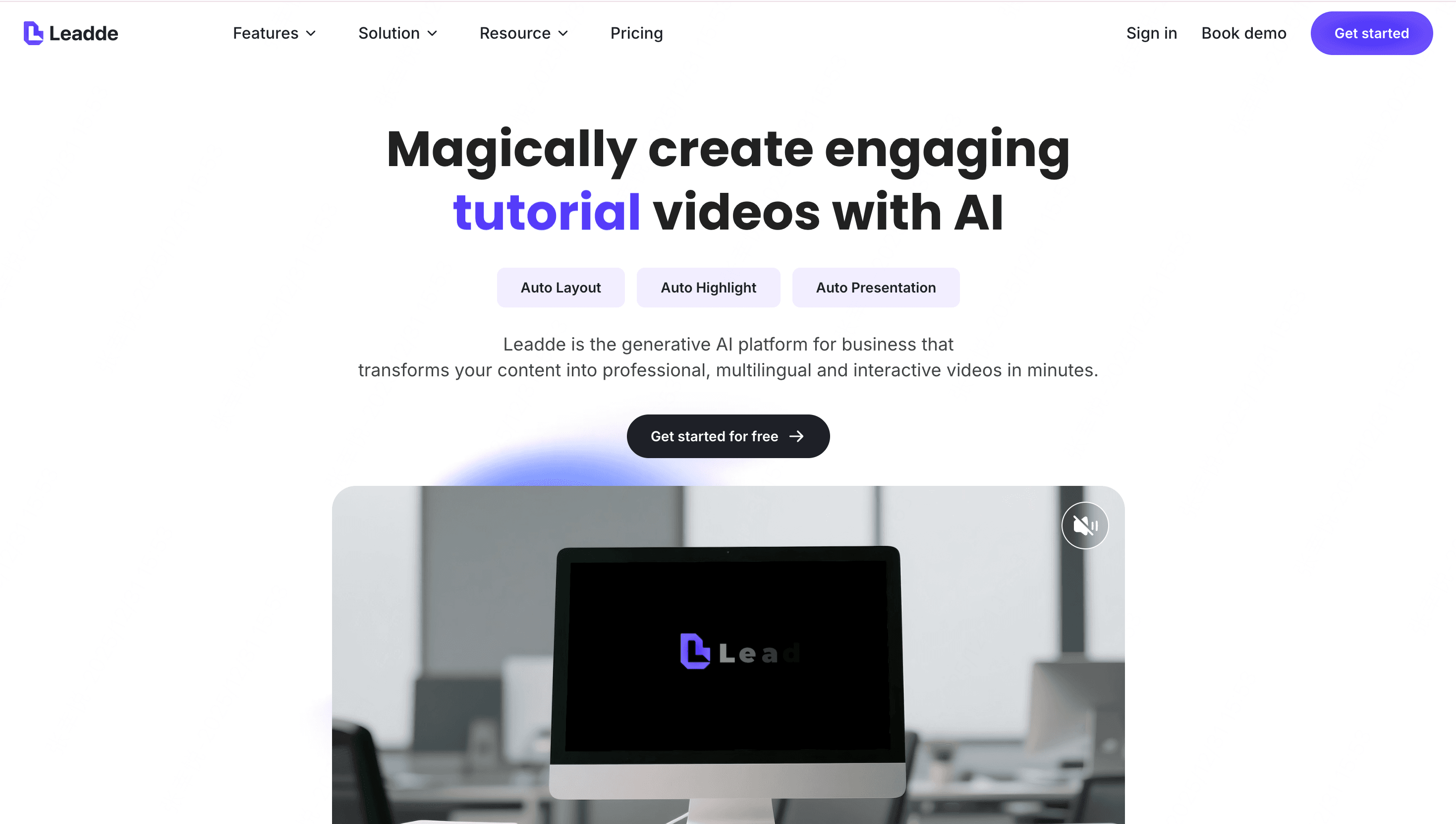
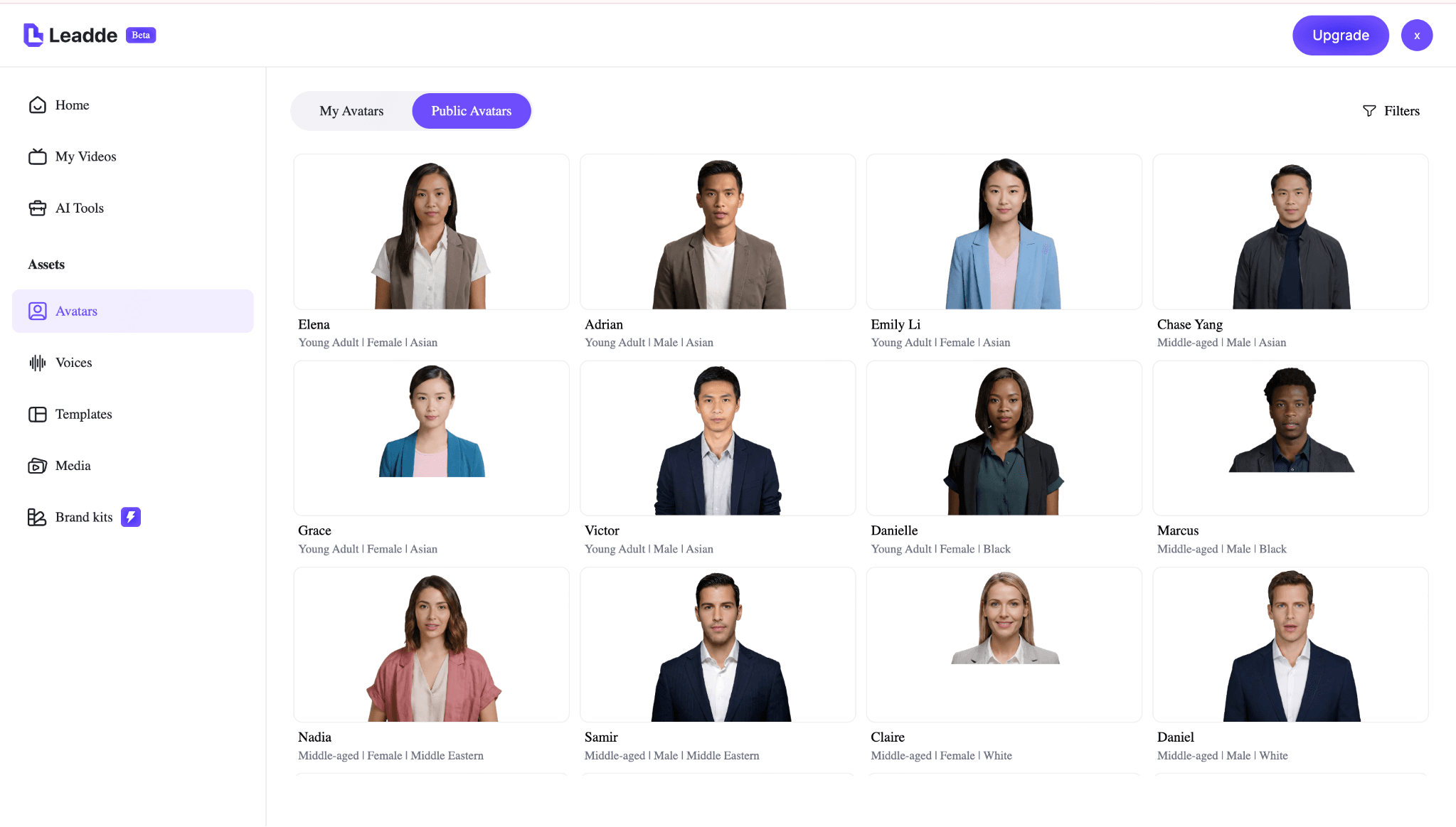
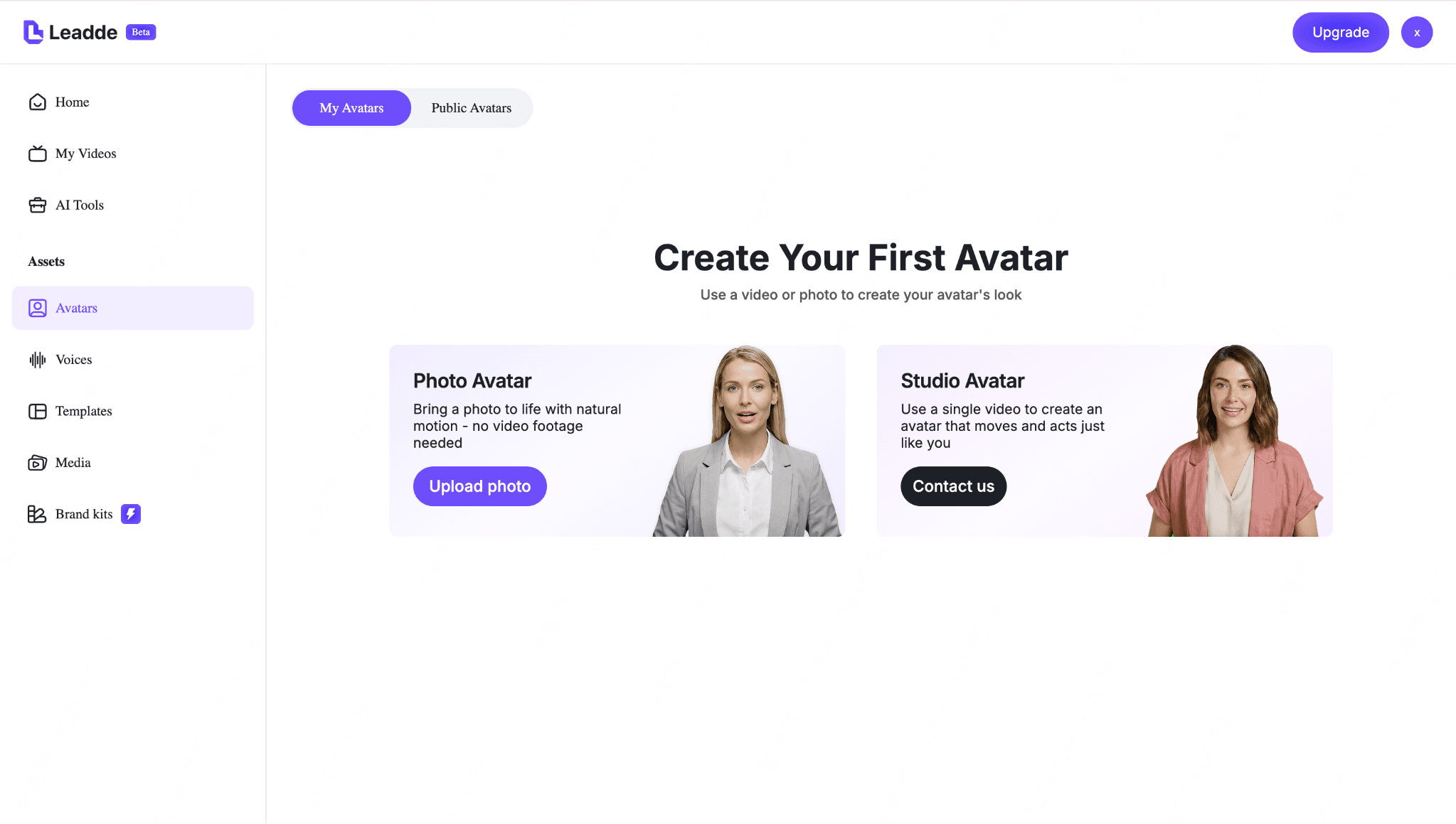
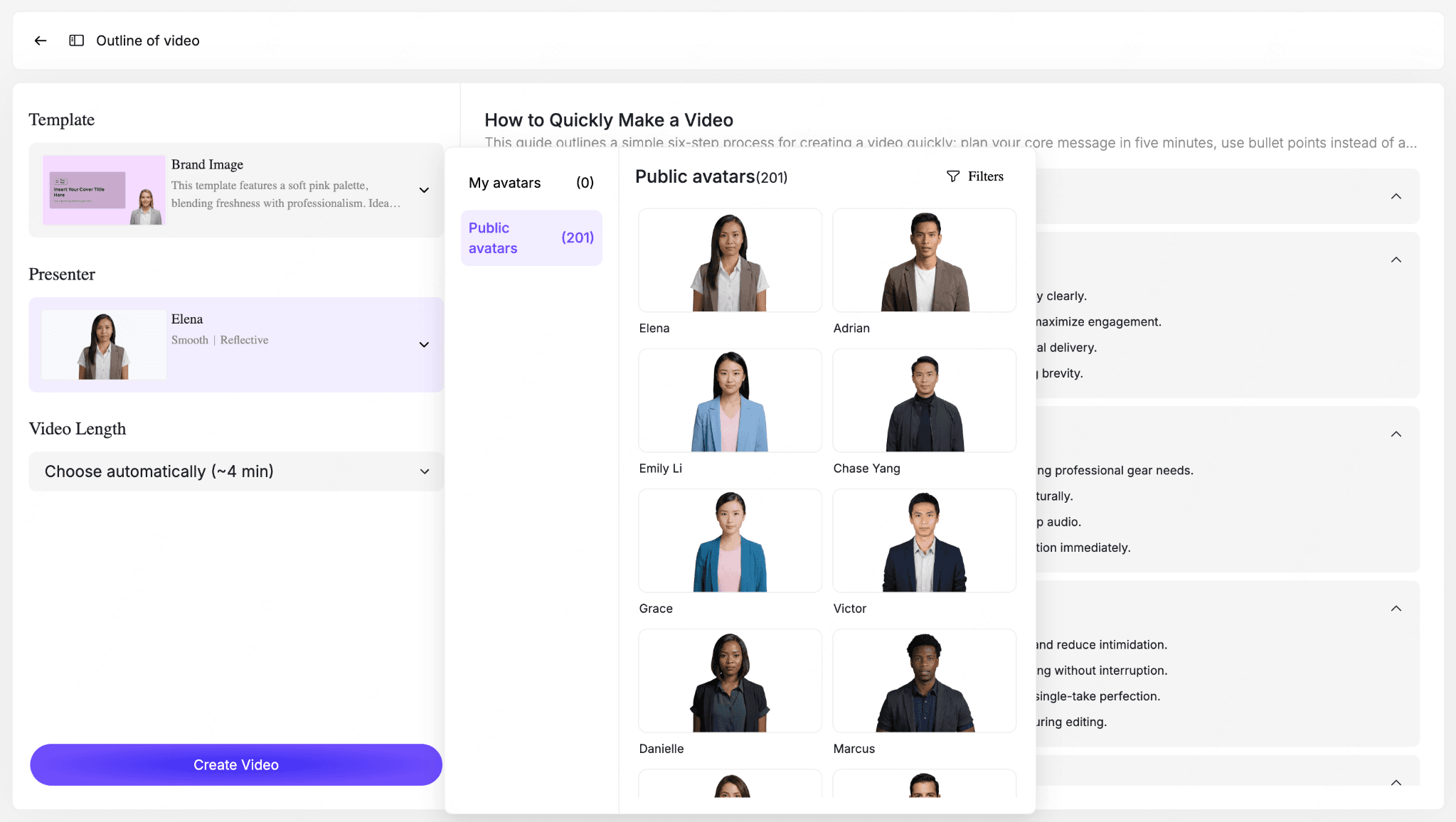
Today, AI video platforms like Leadde enable teams to turn sales scripts and real-world scenarios into avatar-led training videos quickly. With access to a wide range of AI avatars — and the option to create custom AI avatars for product demo videos that reflect specific sales personas — organizations can scale practical sales training without relying on repeated recordings or live role-play sessions.
Why Traditional Sales Training No Longer Scales
Traditional sales training was built for smaller, centralized teams. Modern sales organizations operate very differently.
Remote work, distributed sales teams, global hiring, and faster ramp expectations have exposed several limitations in traditional enablement models:
- live role-play is difficult to schedule
- coaching quality varies by manager
- onboarding becomes inconsistent at scale
- reps get limited practice repetition
- shadowing does not build active selling skills
- training delivery slows during rapid hiring
One pattern appeared consistently across enablement leaders we studied: sales reps often spend more time consuming training than actively practicing conversations.
That creates a major skill gap.
Watching product demos or reading scripts may explain messaging, but it does not prepare reps for:
- skeptical buyers
- interruptions
- pricing pressure
- competitor comparisons
- procurement resistance
- multi-stakeholder conversations
AI avatars solve this problem by making practice continuously available rather than dependent on trainer schedules. Exploring AI avatars in marketing use cases and best practices shows how simulation can bridge gaps in other departments as well.
Instead of waiting for quarterly role-play sessions, reps can train every day through realistic buyer simulations.
This shift from event-based coaching to continuous practice is one of the biggest reasons AI avatars are becoming central to modern sales enablement.
How AI Avatars Improve Sales Skills Training
AI avatars improve sales skills training by combining realism, repetition, and coaching consistency.
The strongest implementations are not simply AI presenters reading scripts. They simulate real conversations that require reps to think, adapt, and respond dynamically.
High-performing sales training programs typically use top AI avatar generators for:
Discovery Call Practice
Reps practice:
- asking better questions
- identifying pain points
- guiding conversations naturally
- uncovering buying intent
Objection Handling Training
AI avatars simulate difficult buyer scenarios involving:
- pricing concerns
- timing objections
- implementation risk
- competitive comparisons
- ROI skepticism
Demo and Product Presentation Rehearsal
Sales reps practice presenting value while adapting to changing buyer reactions. Using the best AI avatars for video creation ensures that the rehearsal environments are visually engaging.
Negotiation Simulations
Advanced buyer avatars simulate procurement pressure, stakeholder disagreement, and budget scrutiny. For enterprise scenarios, utilizing enterprise AI avatar services and virtual assistants can add layers of complexity.
Coaching and Reinforcement
AI systems provide structured feedback on:
- messaging quality
- talk-listen ratio
- filler words
- objection responses
- conversation flow
This creates a repeatable coaching environment that scales across teams and regions.
Why AI Role-Play Training Works Better Than Traditional Role-Play
One of the clearest findings from our research was that AI role-play solves several operational problems traditional sales training cannot handle efficiently.
AI Role-Play Removes Scheduling Bottlenecks
Traditional role-play requires managers, trainers, or peers to participate live.
That becomes difficult when teams are:
- remote
- global
- rapidly growing
- operating across time zones
AI avatars eliminate this dependency by enabling asynchronous practice.
Repetition Improves Sales Performance
Sales conversations improve through repetition, not observation.
Top-performing enablement programs increasingly structure training around repeated practice loops instead of one-time workshops. Incorporating the best AI avatar creators for eLearning and interactive tutorials helps structure these loops smoothly.
AI role-play enables reps to repeat:
- cold call openings
- discovery questions
- objection responses
- pricing conversations
dozens of times without manager involvement.
Coaching Quality Becomes More Consistent
Many organizations struggle with manager-to-manager coaching variation.
Some reps receive highly detailed feedback while others get minimal guidance.
AI coaching frameworks create more standardized evaluation systems across teams.
Several enablement teams reported that standardized role-play scoring improved onboarding consistency significantly because all reps practiced against the same frameworks and expectations.
AI Buyer Personas Create More Realistic Sales Conversations
One major weakness of traditional role-play is unrealistic buyer behavior.
Managers and peers often unintentionally make conversations easier than real customer interactions.
The most effective AI sales simulations solve this by introducing realistic buyer personalities and conversational pressure.
Organizations often find AI avatar services that help build AI buyer personas such as:
Skeptical Enterprise Buyers
These avatars challenge ROI claims, ask detailed questions, and push back aggressively during demos.
Price-Sensitive Prospects
Designed to simulate budget objections and procurement pressure.
Analytical Buyers
Focus heavily on implementation details, risk mitigation, and technical validation.
Relationship-Driven Buyers
Require stronger rapport-building and conversational pacing.
Distracted or Low-Intent Prospects
Simulate difficult discovery calls where engagement is inconsistent.
This diversity matters because sales conversations are never uniform in real life.
One sales engineering workflow we studied used AI role-play scenarios involving multiple buyer personas across different sales stages. Teams practiced demo delivery against skeptical stakeholders, technical evaluators, and procurement-style objections instead of rehearsing generic scripted calls.
The result was more adaptive communication behavior during live customer interactions.
AI Avatars for Objection Handling Training at Scale
Objection handling emerged as one of the highest-value AI avatar use cases across our research.
Many sales reps enter live calls with limited exposure to realistic objections because traditional role-play sessions rarely create authentic pressure.
AI avatars allow organizations to isolate and repeat difficult moments until reps become comfortable navigating them.
High-performing teams increasingly use targeted micro-practice sessions focused entirely on objections such as:
- “Your competitor already does this.”
- “We do not have budget.”
- “This is not a priority right now.”
- “Implementation sounds complicated.”
- “We already have an internal solution.”
- “Your pricing is too expensive.”
Instead of forcing reps to repeat full sales calls repeatedly, organizations isolate specific weaknesses and drill them directly.
One enablement workflow we analyzed used short objection-specific simulations rather than long-form role-play sessions. Managers found this approach significantly more scalable because reps could independently practice weak areas before joining live coaching reviews.
Several sales teams also reported that repeated objection practice improved rep confidence because difficult conversations became familiar rather than unpredictable.
Interactive AI Sales Coaching and Feedback Analytics
Practice alone is not enough. The strongest AI sales training systems combine role-play with feedback analytics.
Modern AI coaching platforms increasingly analyze conversations using metrics such as:
- talk-to-listen ratio
- interruption frequency
- filler word usage
- discovery depth
- objection response quality
- pacing
- buyer engagement indicators
This allows sales managers to identify coaching gaps faster and more consistently.
One recurring operational challenge across enablement teams was inconsistent feedback quality.
Before implementing AI-assisted coaching workflows:
- some managers emphasized scripts
- others prioritized rapport
- others focused heavily on qualification
AI scoring frameworks helped standardize evaluation criteria across teams.
Organizations also increasingly use AI analytics for micro-coaching.
Instead of reviewing entire calls manually, managers focus on specific conversational weaknesses identified by AI systems, such as:
- weak discovery sequencing
- missed buying signals
- poor objection handling
- unclear value articulation
- pricing hesitation
This reduces coaching overhead while improving coaching precision.
AI Avatars Accelerate Sales Onboarding and Ramp Time
Sales onboarding is one of the most resource-intensive functions inside enablement organizations.
New hires typically depend on:
- shadowing senior reps
- live onboarding sessions
- recorded training
- manager-led practice
This creates bottlenecks during rapid hiring periods.
By taking the time to train AI avatars on company content, companies solve this bottleneck by turning onboarding into a repeatable practice system.
Several onboarding programs we studied structured training around modular simulations instead of static learning modules.
New reps practiced:
- discovery conversations
- qualification frameworks
- demo delivery
- pricing discussions
- objection handling
- follow-up conversations
before speaking with real customers.
This created two major operational advantages:
Faster Training Scalability
Organizations could onboard larger hiring cohorts without proportionally increasing manager workload.
More Practice Repetition
New hires practiced more frequently because simulations were available asynchronously rather than only during scheduled sessions.
One additional trend appeared consistently: low-pressure AI practice reduced anxiety for newer reps.
Reps often practiced more willingly with AI buyers than with managers because the environment felt lower risk.
AI Avatar Training for Remote and Global Sales Teams
Distributed sales organizations face major consistency challenges.
Global teams often struggle with:
- coaching accessibility
- how to create multilingual AI avatars for localized enablement
- cultural communication differences
- asynchronous onboarding
- regional messaging adaptation
AI avatars help standardize training delivery while allowing localization where needed.
Several enterprise enablement workflows adjusted AI buyer personas by region to reflect differences in:
- communication style
- pacing
- directness
- negotiation behavior
- relationship-building expectations
For example:
- some regions preferred highly direct conversations
- others expected longer contextual discussion before business topics
AI avatars allowed organizations to maintain consistent sales frameworks while adapting delivery style to local business norms.
This balance between standardization and localization is becoming increasingly important for enterprise sales enablement programs operating internationally.
Real Case Studies: How Teams Use AI Avatars for Sales Training
Case Study 1: Scaling Global Soft Skills and Customer Escalation Training
One corporate training team implemented AI-driven role-play scenarios for:
- customer escalations
- sales objections
- manager communication training
The biggest operational challenge before implementation was scheduling live facilitator-led sessions across global teams.
After introducing AI role-play workflows:
- learners practiced asynchronously
- scenarios became repeatable
- coaching delivery became more standardized
The organization also used conversation analytics to identify communication weaknesses across teams.
The primary benefit was scalability rather than headcount reduction.
Case Study 2: AI Buyer Personas for Sales Engineer Demo Training
A sales engineering workflow used AI buyer personas to simulate:
- skeptical enterprise stakeholders
- technical evaluators
- procurement conversations
- objection-heavy demos
The organization trained reps using multiple persona types instead of generic demo scripts.
One implementation included up to nine different buyer personas for role-play variation.
This allowed teams to practice adapting communication style based on stakeholder behavior instead of memorizing fixed responses.
Case Study 3: Reducing Training Production Time with AI Avatars
One training content workflow analyzed the time required to convert a 30-page whitepaper into a sales training module.
Traditional production using manual authoring tools required approximately 12 hours.
After shifting to an AI-assisted workflow and learning to choose an AI avatar creator for corporate videos, production time decreased to roughly 2 hours for updated training iterations.
The biggest operational gains included:
- faster content updates
- easier localization
- reusable training assets
- lower recording dependency
The workflow also revealed an important insight: AI avatars worked best for communication-heavy training rather than highly data-sensitive visual instruction where chart accuracy was critical.
Common Mistakes When Using AI Avatars for Sales Training
Not all AI sales training programs succeed.
Several recurring implementation mistakes appeared consistently across weaker programs.
Treating AI Avatars as Presentation Tools Only
Passive AI videos rarely improve selling skills alone.
Practice matters more than presentation quality.
Using Unrealistic Buyer Simulations
Overly cooperative or scripted AI buyers fail to prepare reps for real conversations.
Ignoring Feedback Systems
Without analytics and structured review loops, reps repeat mistakes without improvement.
Over-Scripting Conversations
Rigid scripts reduce adaptability and conversational fluency.
Failing to Customize Buyer Personas
Generic simulations often feel disconnected from real customer behavior.
Neglecting Cultural Differences
Global teams require region-aware communication styles and localized conversational norms.
The strongest programs prioritize realism, repetition, feedback, and adaptability simultaneously.
Best Practices for AI Avatar Sales Training
Organizations seeing the strongest results typically follow several patterns consistently.
Use AI Avatars for Practice, Not Replacement
AI avatars work best as skill accelerators rather than substitutes for human coaching.
Build Modular Training Scenarios
Short, focused simulations outperform long scripted training sessions.
Focus on Difficult Conversations
High-pressure objection handling creates stronger skill transfer.
Combine AI Coaching with Human Coaching
AI handles scalable repetition while managers focus on strategic development.
Use Multiple Buyer Personas
Different buyer behaviors create more realistic conversational adaptability.
Reinforce Real Sales Frameworks
AI role-play should align with actual qualification, discovery, and positioning frameworks used by the organization.
FAQ: AI Avatars for Sales Skills Training
Do AI avatars actually improve sales performance?
The strongest improvements typically appear in onboarding consistency, practice frequency, objection handling confidence, and coaching scalability. Organizations using repeated AI role-play often report stronger conversational readiness before live customer interactions.
Can AI avatars replace human sales coaches?
No. The most effective systems combine AI-driven practice with human strategic coaching. AI avatars scale repetition and foundational practice, while managers focus on emotional nuance, negotiation strategy, and leadership development.
What are the best use cases for AI sales avatars?
The most effective use cases include:
- objection handling
- discovery practice
- onboarding
- demo rehearsal
- negotiation simulations
- coaching reinforcement
Are AI buyer simulations realistic enough?
The strongest implementations use customized buyer personas that simulate interruptions, skepticism, procurement pressure, and stakeholder complexity rather than generic chatbot conversations.
How do AI avatars help remote sales teams?
AI avatars enable asynchronous practice across time zones while standardizing onboarding and coaching delivery across distributed teams.
What metrics can AI sales coaching analyze?
Modern systems increasingly analyze:
- talk-listen ratio
- filler words
- objection handling
- pacing
- question quality
- conversational flow
- buyer engagement patterns
Can AI avatars support multilingual sales training?
Yes. Many organizations localize communication style, pacing, and conversational structure while maintaining consistent sales frameworks globally.
What is the biggest mistake companies make with AI sales training?
Treating AI avatars as passive presentation tools instead of interactive practice systems.
Are AI avatars useful for sales onboarding?
Yes. AI role-play allows new hires to practice conversations repeatedly before joining live customer calls, helping organizations scale onboarding more efficiently.
How important are buyer personas in AI role-play?
Very important. Realistic buyer personalities create stronger conversational adaptability and improve preparation for real customer interactions.
Conclusion
AI avatars are changing sales training because they make realistic practice scalable.
The organizations seeing the strongest results are not simply generating AI videos. They are building continuous role-play systems that combine:
- realistic buyer simulations
- objection handling drills
- onboarding workflows
- coaching analytics
- adaptive buyer personas
- structured feedback loops
to improve conversational readiness across the entire sales organization.
As remote selling, global enablement, and continuous onboarding become standard operating models, AI avatars are increasingly becoming one of the most scalable ways to train modern sales teams faster and more consistently.