
Marketing Video Guide: How to Create a Marketing Video That Converts
Effective marketing videos work best when they are built around a clear message, a focused goal, and a structure that guides viewers smoothly from attention to action. The most successful marketing videos don’t try to do everything at once—they communicate value quickly, show relevance to a specific audience, and lead viewers toward a clear next step.
Today, marketing videos consistently outperform other content formats. Video captures attention faster than text or static visuals, keeps audiences engaged longer, and helps brands explain products, services, and ideas more clearly. As search engines, websites, and social platforms increasingly prioritize video, marketing videos have become one of the most reliable tools for driving engagement, conversion, and brand recall across the funnel.
With an AI video creation tool like Leadde, teams can turn scripts, outlines, or existing marketing materials into professional marketing videos in minutes—complete with structured scenes, consistent pacing, optional narration, and brand-safe customization. This approach reduces production time and complexity while keeping the focus on what matters most: clarity, relevance, and results.

In this guide, you’ll learn how to create a marketing video from start to finish—from defining your strategy and choosing the right type of marketing video, to creating effective content, distributing it across the right channels, and optimizing performance over time.
What Is a Marketing Video?
A marketing video is a goal-driven video designed to promote a product, service, or idea by delivering a clear message and guiding viewers toward a specific action. It is a goal-driven video created to communicate a specific marketing message—such as explaining a product, highlighting a value proposition, or encouraging a viewer to take action—across digital channels.
Unlike videos created purely for storytelling or entertainment, marketing videos are designed with intent. They are built to support measurable outcomes, such as increasing brand awareness, generating leads, or driving conversions, and are often optimized for where and how audiences consume video content online.
How Marketing Videos Differ From Other Video Types
While marketing videos often overlap with other video formats, their purpose and structure set them apart.
- Marketing videos vs. brand videos Brand videos focus on long-term perception, values, and identity. Marketing videos are more tactical—they highlight specific messages, campaigns, or offers and guide viewers toward a clear next step.
- Marketing videos vs. product videos Product videos typically demonstrate features or functionality in depth. Marketing videos place those details within a broader context, emphasizing benefits, relevance, and why the product matters to a specific audience.
- Marketing videos vs. ads Ads are usually short, highly promotional, and paid-placement focused. Marketing videos can be promotional, but they are often educational or informative and can live beyond paid campaigns as reusable marketing assets.
Where Marketing Videos Are Used
Marketing videos are flexible and can be adapted for nearly every stage of the marketing funnel. Common use cases include:
- Websites – homepage hero videos, explainer sections, and product pages
- Social media – organic posts, short-form videos, and story formats
- Paid advertising – video ads optimized for specific platforms and audiences
- Email marketing – video thumbnails or embedded clips to increase click-through rates
- Landing pages – conversion-focused videos that support sign-ups or purchases
When used strategically, marketing videos help brands deliver consistent messages across channels while adapting format, length, and pacing to match audience expectations.
How to Define a Marketing Video Strategy
Before creating a marketing video, it’s important to define a clear strategy. Strong marketing videos don’t start with visuals or editing—they start with intention. A well-defined strategy helps ensure your video delivers the right message to the right audience, on the right platform, with a measurable goal in mind.
Set Clear Goals for Your Marketing Video
Every marketing video should support a specific objective. Without a clear goal, even well-produced videos struggle to drive results.
Common marketing video goals align with different stages of the funnel:
- Awareness – introduce your brand, product, or idea to new audiences
- Consideration – explain value, build trust, or educate viewers
- Conversion – encourage sign-ups, demos, or purchases
- Retention – support existing customers with updates or education
Once the goal is clear, match it with a single, focused call to action (CTA). Awareness videos might encourage viewers to learn more, while conversion-focused videos should guide them toward a concrete next step. A clear goal keeps the video message concise and prevents competing signals.
Identify Your Target Audience
Effective marketing videos are audience-specific. Defining who the video is for helps shape tone, length, visuals, and messaging.
Start by answering three questions:
- Who is this video for? Consider role, industry, experience level, or customer stage.
- Where will they watch it? Different platforms encourage different viewing behaviors. Some audiences watch silently on mobile, while others expect longer-form content on desktop.
- What problem does the video solve? Marketing videos perform best when they address a clear need, question, or pain point that matters to the viewer.
When these questions are answered upfront, the video feels more relevant and engaging to its intended audience.
Choose the Right Video Format and Platform
Not all marketing videos need the same structure or length. Choosing the right format and platform ensures your video matches how people actually consume content.
Key considerations include:
- Short-form vs. long-form Short videos work well for social feeds and ads, while longer videos are better suited for websites, product pages, or email campaigns.
- Distribution channel Social media, websites, ads, and email each have different expectations for pacing, length, and style.
- Platform-specific requirements Aspect ratio, captions, sound-on vs. sound-off viewing, and recommended video length all influence performance.
Planning format and platform early helps avoid rework later and ensures your marketing video is optimized for its primary distribution channel from the start.
Types of Marketing Videos (With Use Cases & Examples)
Different marketing goals require different types of marketing videos. Understanding how each format works—and when to use it—helps you choose the right video style and maximize performance across channels.
Below are the most common types of marketing videos, including how they’re used, where they perform best, and when they make the most impact.
Explainer Videos
What it’s used for Explainer videos simplify complex ideas, products, or services. They focus on clarifying what something does, how it works, and why it matters to the viewer.
Where it performs best
- Websites (homepage or product pages)
- Landing pages
- Email campaigns
When to use it Use explainer videos when introducing a new offering, onboarding users, or educating audiences during the awareness and consideration stages.
Product Marketing Videos
What it’s used for Product marketing videos highlight features, benefits, and real-world use cases. They help viewers understand how a product solves specific problems.
Where it performs best
- Product pages
- Sales enablement materials
- Demo pages and webinars
When to use it These videos are most effective during the consideration and conversion stages, when audiences are evaluating options and need clarity before making a decision.
Social Media Marketing Videos
What it’s used for Social media marketing videos are designed to capture attention quickly and encourage engagement, sharing, or clicks within fast-scrolling feeds.
Where it performs best
- Social platforms (organic posts and stories)
- Short-form video feeds
- Paid social campaigns
When to use it Use social media marketing videos to increase reach, boost engagement, or drive traffic to campaigns and promotions, especially in early funnel stages.
Testimonial & Customer Story Videos
What it’s used for Testimonial and customer story videos build trust by showing real experiences and outcomes. They focus on credibility rather than promotion.
Where it performs best
- Websites and landing pages
- Sales presentations
- Retargeting campaigns
When to use it These videos are most effective near the conversion stage, when social proof helps reduce friction and validate purchasing decisions.
Promotional & Campaign Videos
What it’s used for Promotional and campaign videos support time-bound initiatives such as launches, events, or special offers. They emphasize urgency and clear calls to action.
Where it performs best
- Paid advertising
- Email marketing
- Campaign landing pages
When to use it Use these videos for product launches, seasonal promotions, or short-term marketing campaigns where visibility and momentum matter most.
How to Create a Marketing Video: Step-by-Step Guide
Creating an effective marketing video is no longer about complex production setups or one-off creative effort. High-performing teams follow a structured process that starts with clarity and ends with repeatable execution.
Below is a practical, step-by-step approach to creating a marketing video—from defining your message to producing a polished final asset—using modern, AI-assisted workflows where appropriate.
While tools and formats may change, the underlying process for creating effective marketing videos remains consistent.
Step 1: Define the Core Message
Every marketing video should communicate one clear idea. Before writing a script or planning visuals, define:
- The primary message you want viewers to remember
- The problem the video addresses
- The single action you want viewers to take next
Keeping the message focused prevents information overload and helps the video perform across different platforms and formats.
Step 2: Write a Clear Video Script
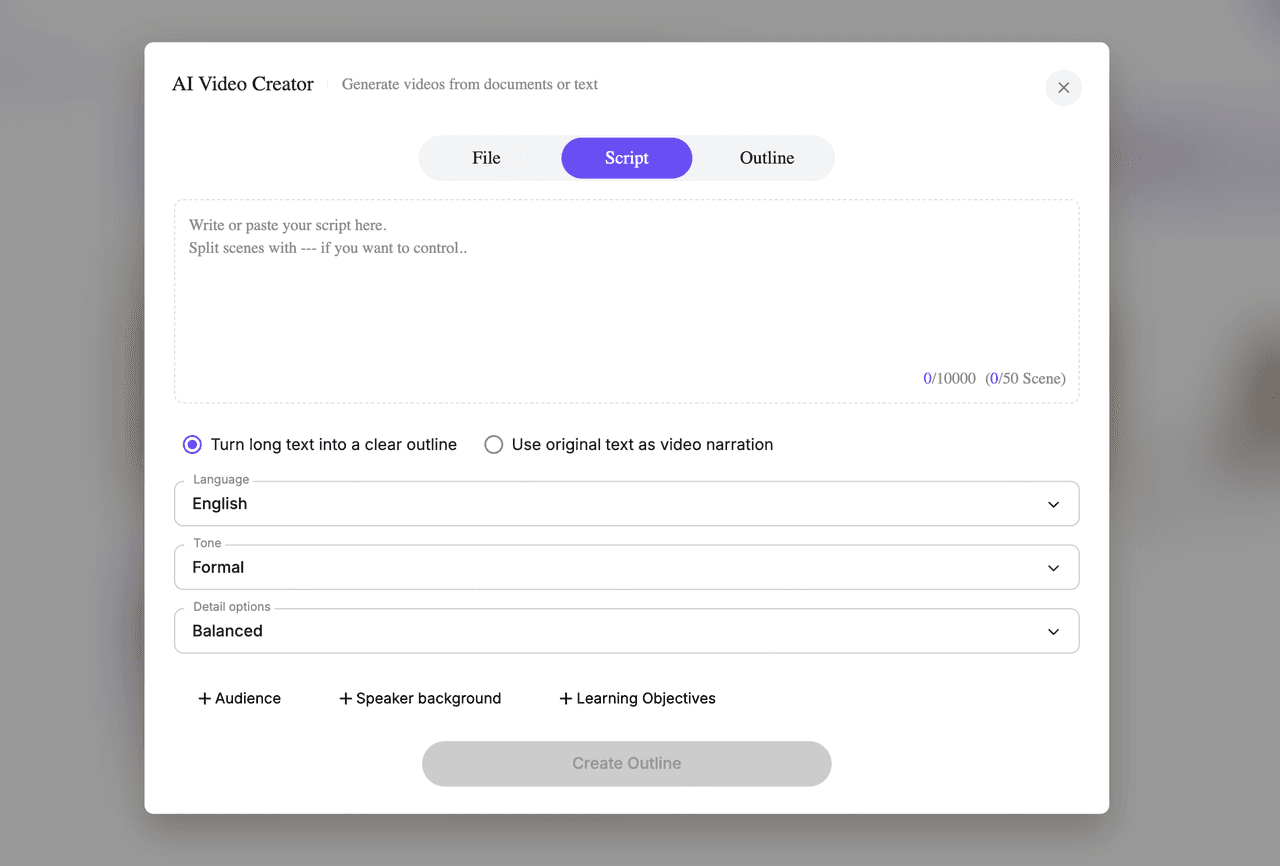
Once the core message is defined, turn it into a clear, conversational script. Strong marketing video scripts are concise, audience-aware, and action-oriented.
Many teams start from existing materials—such as blog posts, outlines, presentations, or product notes—rather than writing from scratch. Using structured inputs (scripts or markdown-style outlines) makes it easier to organize scenes and keep the narrative flow consistent.
Step 3: Plan Visuals and Scenes
Marketing videos work best when visuals support the message instead of competing with it. Planning scenes in advance helps align visuals, narration, and pacing.
At this stage, think in terms of modular scenes:
- One idea per scene
- Clear on-screen text to reinforce key points
- Visual rhythm that matches attention span
Scene-based planning also makes it easier to update or repurpose videos later.
Step 4: Create or Record Video Content
With the script and scenes defined, it’s time to create the video content. This may include:
- Slides or layouts generated from your outline
- On-screen text and supporting visuals
- Voiceover narration or an on-screen presenter
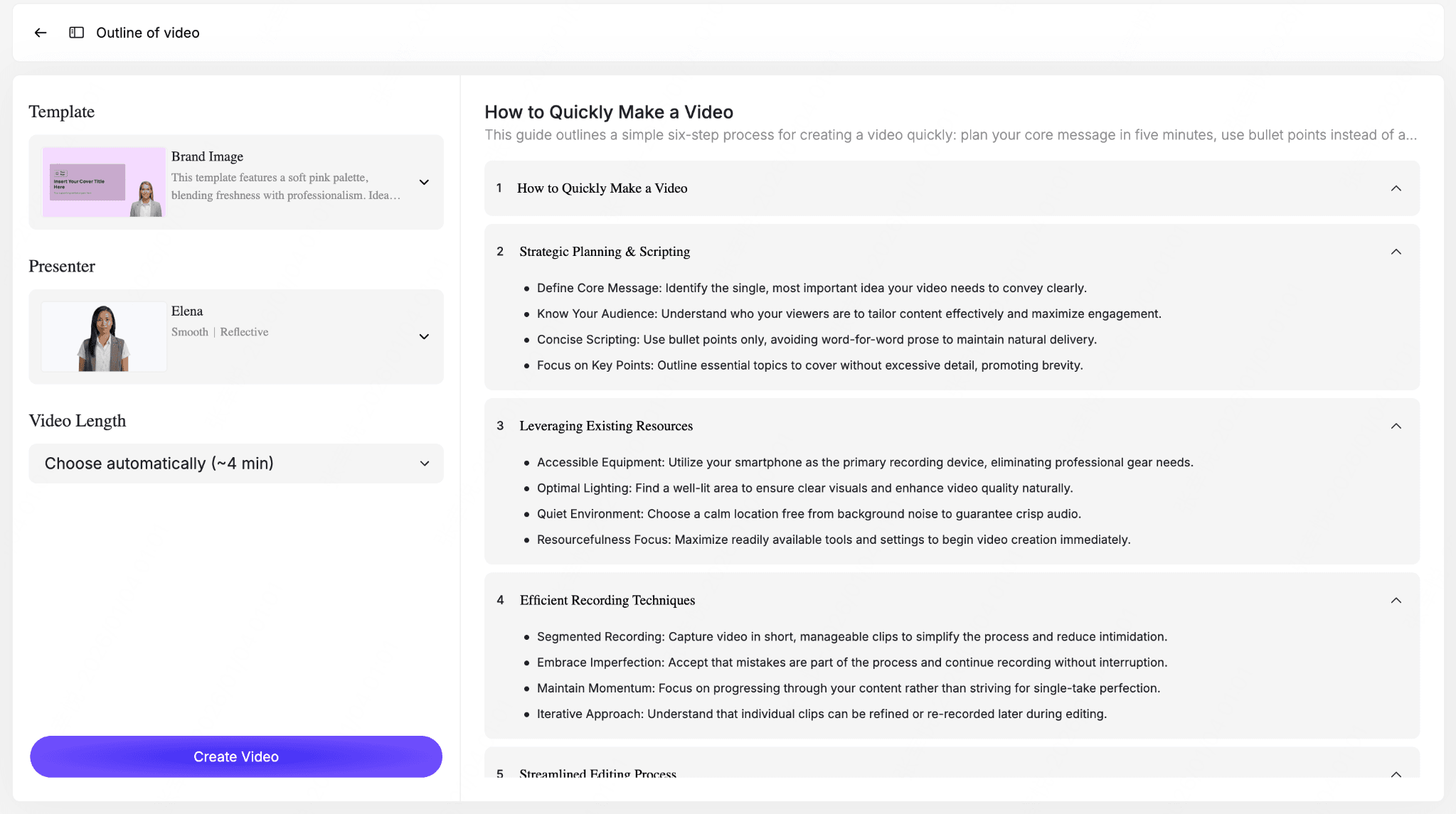
Modern AI video creation tools—such as Leadde—allow teams to transform scripts, documents, or outlines into fully structured marketing videos without filming or manual editing.
Step 5: Edit, Brand, and Optimize
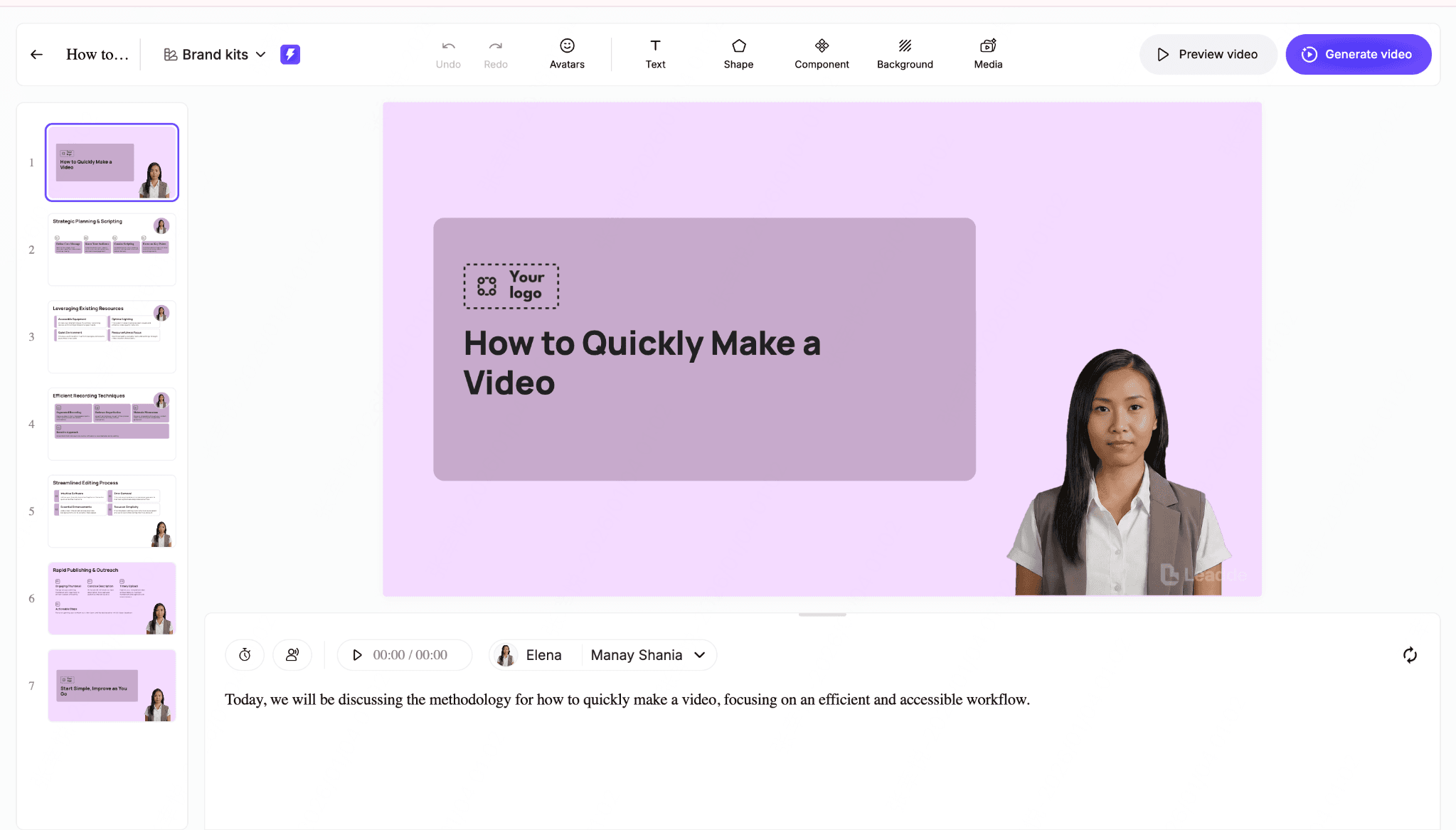
Editing is where clarity and brand consistency come together. This step includes:
- Adjusting pacing and scene length
- Applying brand colors, fonts, and layouts
- Refining tone and level of detail for the audience
Using templates and predefined brand styles helps ensure marketing videos remain visually consistent—especially when scaling production across campaigns or teams.
Step 6: Add Subtitles and a Clear CTA
Subtitles improve accessibility and performance, particularly on platforms where videos are watched without sound. Adding captions ensures your message is understood regardless of viewing environment.
Every marketing video should also include a single, clear call to action (CTA). Whether it’s visiting a page, signing up, or learning more, the CTA should align directly with the video’s original goal and appear naturally within the flow of the content.
Repurpose and Scale Your Marketing Videos
Creating a marketing video doesn’t need to be a one-time effort. High-performing teams treat videos as reusable assets that can be adapted, updated, and scaled across channels. Repurposing marketing videos not only extends their reach, but also improves efficiency and consistency as your content library grows.
Turn One Video Into Multiple Formats
A single marketing video can be repurposed into multiple formats to support different platforms and goals. For example, long-form videos can be broken into shorter clips for social media, while key segments can be reused for ads, email campaigns, or landing pages.
This approach helps you get more value from every video without increasing production effort, while keeping messaging aligned across channels.
Adapt Videos for Different Platforms
Different platforms have different expectations for length, format, and viewing behavior. Repurposing allows you to tailor videos for each platform without starting from scratch.
Common adaptations include:
- Adjusting aspect ratios for vertical, square, or landscape viewing
- Modifying pacing and hooks for short-form feeds
- Adding captions for sound-off environments
- Updating CTAs based on platform intent
By planning adaptations early, marketing videos can be optimized for each channel while maintaining a consistent core message.
Update Videos Without Reshooting
As products, campaigns, or messaging change, videos often need updates. Scaling marketing video production means reducing the need for reshoots whenever possible.
Videos built with structured scenes, modular visuals, and editable text make it easier to update specific sections—such as offers, messaging, or calls to action—without recreating the entire video. This keeps content current while minimizing production costs and delays.
Use Templates to Maintain Consistency at Scale
Templates play a key role in scaling marketing videos. They help ensure consistent branding, structure, and tone across campaigns, even when multiple teams or contributors are involved.
Using templates allows teams to:
- Produce videos faster
- Maintain visual and messaging consistency
- Reduce creative and technical overhead
- Scale output without sacrificing quality
When templates are combined with repeatable workflows, marketing video production becomes easier to manage and more predictable over time.
How to Measure Marketing Video Performance
Measuring performance is essential to understanding whether a marketing video is delivering real business impact. While views alone provide basic visibility, meaningful evaluation requires looking at engagement, behavior, and conversion metrics that align with your original video goal.
The most effective approach is to assess marketing video performance across multiple dimensions.
Views and Watch Time
Views indicate how often a marketing video is seen, but watch time reveals how much attention it actually holds. A high view count with low watch time often suggests the content failed to capture interest early.
Key signals to monitor include:
- Total views across platforms
- Average watch time
- Completion rate
These metrics help assess whether the video’s pacing, structure, and opening hook are effective.
Engagement Rate
Engagement metrics show how viewers interact with a marketing video beyond passive watching. Likes, comments, shares, and saves indicate relevance and resonance.
High engagement often signals that the message connects with the audience, making this metric especially valuable for awareness and consideration-stage videos.
Click-Through Rate (CTR)
Click-through rate measures how effectively a video encourages viewers to take the next step. This typically includes clicks to a landing page, product page, or sign-up form.
CTR is closely tied to:
- CTA clarity
- Placement and timing of the CTA
- Alignment between video message and destination content
A strong CTR suggests the video successfully bridges attention and action.
Conversion Metrics
Conversion metrics assess whether viewers complete a desired outcome after watching a marketing video. These outcomes vary by goal but may include form submissions, purchases, demo requests, or downloads.
Tracking conversions helps connect video performance directly to business results, making these metrics particularly important for conversion-focused campaigns.
Platform-Specific Analytics
Each platform provides unique analytics that reflect how audiences interact with video content in different environments. Reviewing platform-specific data allows you to identify what performs best on each channel.
Examples include:
- Audience retention curves
- Playback locations
- Device and format performance
- Sound-on vs. sound-off viewing behavior
Analyzing these insights supports ongoing optimization and helps refine future marketing video strategies.
FAQs: Marketing Videos
What makes a marketing video effective?
An effective marketing video communicates a clear message, addresses a specific audience need, and guides viewers toward a single, focused action.
Strong marketing videos combine clarity, relevance, and structure. They capture attention early, stay aligned with one clear goal, and avoid unnecessary complexity. Effectiveness is less about production polish and more about how well the video connects message, audience, and intent.
How long should a marketing video be?
The ideal length of a marketing video depends on its goal and where it’s shown, but most perform best between 15 seconds and 2 minutes.
Short-form videos are effective for social feeds and ads, where attention is limited. Longer videos can work well on websites or landing pages when viewers are actively seeking information. Rather than aiming for a fixed length, focus on delivering the message as clearly and efficiently as possible.
How much does it cost to make a marketing video?
The cost of a marketing video can range from almost nothing to several thousand dollars, depending on complexity, production approach, and tools used.
Simple marketing videos created with templates or existing assets may require minimal budget, while custom productions involving filming, actors, and post-production increase costs. Many teams reduce expenses by using repeatable workflows and reusable formats rather than producing every video from scratch.
Can I create marketing videos without professional equipment?
Yes, you can create effective marketing videos without professional equipment by focusing on clear messaging, simple visuals, and good audio quality.
Many marketing videos are created using existing content, screen recordings, stock visuals, or lightweight production tools. As long as the video is easy to follow and aligned with a specific goal, professional cameras or studios are not required.
Conclusion: Creating Marketing Videos That Actually Work
Marketing videos deliver the strongest results when strategy and execution work together. Clear goals, thoughtful structure, and purposeful distribution ensure that each video communicates the right message and drives meaningful action.
The most effective marketing video workflows prioritize simplicity, consistency, and scalability. By focusing on repeatable formats, efficient updates, and performance-driven iteration, teams can create marketing videos that improve over time without increasing complexity.
Start simple, optimize quickly, and scale what performs. When marketing videos are treated as long-term assets rather than one-off productions, they become one of the most reliable tools for sustainable growth.