
Leadde Logo

Atom Animation Maker

Turn complex atomic theory lessons into clear, animated explainer videos in minutes. Leadde's atom animation maker uses AI Motion, narrated scenes, and 200+ presenters to bring protons, neutrons, electrons, atomic models, and radioactivity to life — no animator or video editor needed.

Why Leadde is the Best Atom Animation Maker
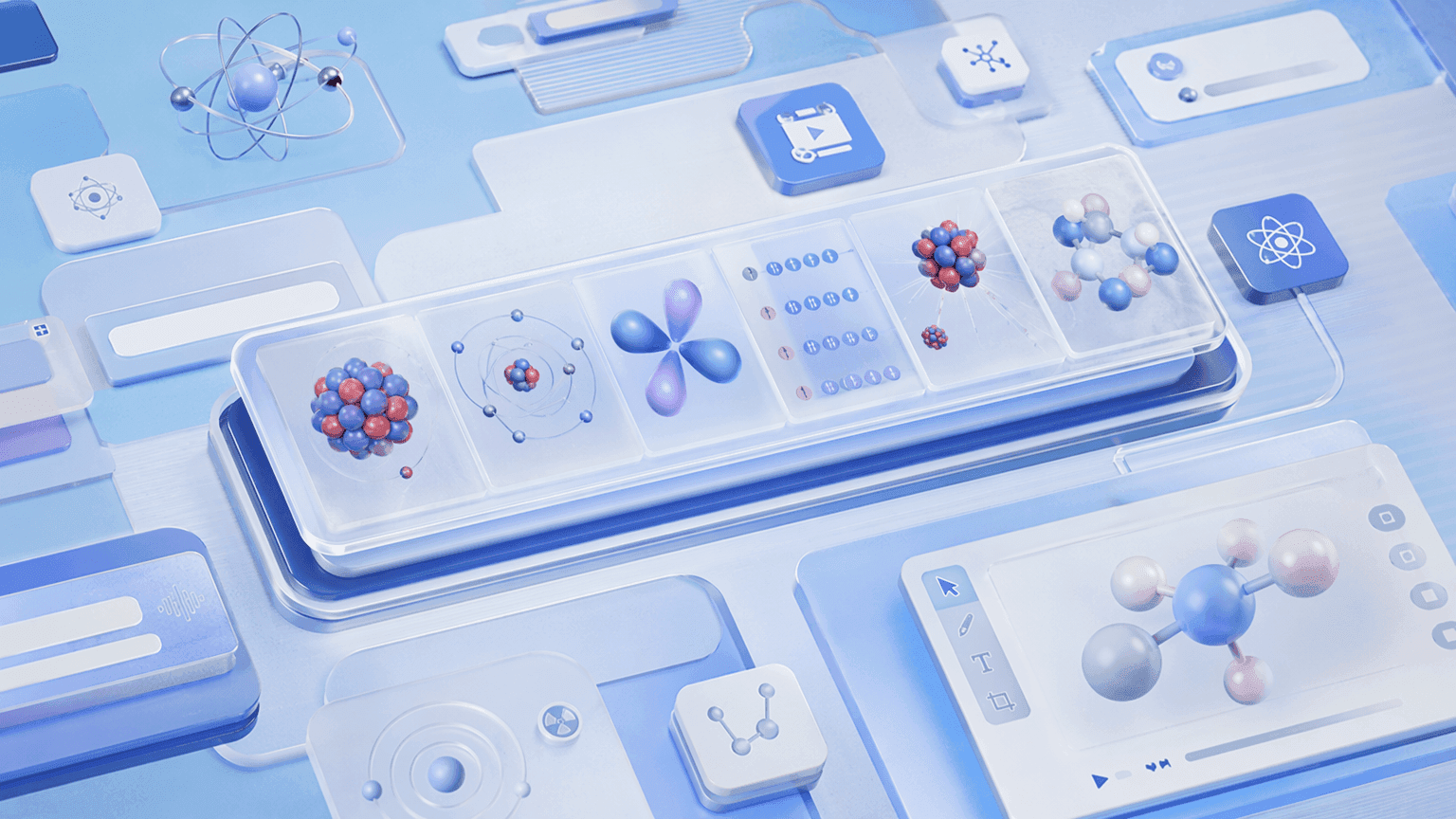
Cover Every Atomic Topic in One Workflow

Cover Every Atomic Topic in One Workflow

From subatomic particle composition and Bohr model electron shells to quantum mechanical orbitals, electron configuration, nuclear reactions, and radioactive decay, Leadde structures any topic or lesson plan into a scene-by-scene atom animation video — covering atomic theory, nuclear physics, and chemical bonding in a single tool.
AI Motion for Electron Shells, Orbitals, and Nuclear Processes

AI Motion for Electron Shells, Orbitals, and Nuclear Processes

Static slides can't show how electrons fill subshells according to Aufbau's principle or how an alpha particle is ejected from an unstable nucleus during radioactive decay. Leadde's Text-to-Motion turns prompts into animated diagrams — showing electrons configuring, nuclei decaying, and atomic models evolving in real time.
Narrated Atom Animation Videos in 88 Languages

Narrated Atom Animation Videos in 88 Languages

Pair every atom animation with a lifelike AI instructor. Choose from 200+ avatars with the Expressive IV Engine, then translate voiceover and on-screen text into 88 languages and 175 dialects — ideal for ESL classrooms and bilingual science programs.
Templates for Lessons, Lab Walkthroughs, and Exam Recap Videos

Templates for Lessons, Lab Walkthroughs, and Exam Recap Videos

Apply your school or department's colors, logo, and font once, then reuse the layout across every chapter — keeping atom animation videos visually consistent from basic atomic structure in term one to advanced nuclear physics and quantum mechanics in the final unit.

How to Create an Atom Animation with AI

Turn an atomic theory topic into a polished animated video in three steps — no animator required.
AI Video Generator Interface

Step 1: Add Your Topic, Notes, or Textbook Chapter

Log into Leadde and paste your lesson notes or upload a textbook chapter, lab handout, or PowerPoint deck. Set your audience and narrative style — the AI builds a scene-by-scene atom animation outline.

Step 2: Generate Animations and Narration

Open Text-to-Motion and generate animated visuals from a prompt like "Bohr model electron shell filling for the first twenty elements" or "alpha decay showing nucleus composition change." Add an AI science presenter, drag in supporting diagrams, and apply your Brand Kit across every scene.

Step 3: Refine, Translate, and Share with Students

Preview pacing, then click "Generate Video." Download the HD MP4 and upload to Google Classroom, Canvas, or YouTube — or translate into 88 languages and share via a password-protected Leadde link.

Atomic Structure & Subatomic Particles Videos

Atomic Structure Animation

Build an atomic structure animation walking through the nucleus containing protons and neutrons, electron shells orbiting outward, and atomic number and mass number labeling — every component labeled on a live animated atom diagram. Perfect for GCSE, AP Chemistry, and introductory undergraduate chemistry and physics courses.

Subatomic Particles Animation

Animate protons, neutrons, and electrons with their relative charges, masses, and locations — a subatomic particles animation comparing particle properties in a table and connecting each particle to its role in atomic behavior. Ideal for GCSE, AP Chemistry, AP Physics, and introductory undergraduate science courses.

Isotopes Animation

Show atoms of the same element with different neutron numbers side by side — an isotopes animation mapping mass number, atomic number, and neutron count and connecting isotope stability to nuclear binding energy and radioactive decay. Perfect for GCSE, AP Chemistry, and undergraduate chemistry courses.

Ions and Ionisation Animation

Animate an atom losing or gaining electrons to form positive and negative ions — an ionisation animation connecting ionisation energy, electron removal, and ion charge to atomic structure and periodic trends. Ideal for GCSE, AP Chemistry, and introductory undergraduate chemistry and physics courses.

Nuclear Physics, Radioactivity & Bonding Videos

Radioactive Decay Animation

Animate alpha particle ejection, beta particle emission, and gamma ray release from an unstable nucleus — a radioactive decay animation mapping nucleus composition change, decay equations, and penetrating power of each radiation type. Perfect for GCSE, A-level, and AP Physics and Chemistry courses.

Nuclear Fission Animation

Show a uranium-235 nucleus absorbing a neutron, splitting into smaller nuclei, and releasing energy and additional neutrons that trigger a chain reaction — a nuclear fission animation connecting mass defect, binding energy release, and reactor or weapon applications. Ideal for A-level and AP Physics courses.

Nuclear Fusion Animation

Animate hydrogen isotopes combining at extreme temperatures to form helium, releasing enormous energy — a nuclear fusion animation connecting mass defect, binding energy per nucleon, and the conditions required for fusion to the sun and tokamak reactor applications. Perfect for A-level and AP Physics courses.

Ionic and Covalent Bonding Animation

Step through electron transfer forming ionic bonds and electron sharing forming covalent bonds — a bonding animation connecting atomic structure to bond type, lattice formation, and molecular shape and linking bonding to physical and chemical properties. Ideal for GCSE, AP Chemistry, and undergraduate courses.

Trusted by Science Teachers, Tutors, and EdTech Creators

One Tool for the Entire Atomic Theory Curriculum

From basic atomic structure in middle school to advanced quantum mechanics and nuclear physics at university, Leadde covers the full atomic theory syllabus in one workspace — build a whole semester of animated lessons without switching tools, hiring animators, or re-recording.

Update Content as Curriculum Changes

Specifications shift, new discoveries emerge, and exam focuses regularly change. Reopen your saved Leadde project, edit the script, and regenerate the atom animation instantly — no re-recording, no re-animating, and no third-party motion-graphics shop ever required.

Interactive Q&A for Every Student

Share each atom animation through a password-protected Leadde hosted link and students can ask follow-up questions in the built-in chat panel — answered instantly from your uploaded notes or textbook content. The video becomes an always-on atomic theory tutor.

Track Engagement and Comprehension

Use Leadde's analytics dashboard to monitor impressions, total views, unique views, average watch time, completion rate, and interaction count for every atom animation — easy to identify which topics need a follow-up video or additional worked example.
compliance background

Atom Animation Ideas & Use Cases

GCSE & AP Chemistry and Physics Lessons

Convert chapter notes on atomic structure, electron configuration, or radioactivity into animated lessons students rewatch before quizzes and exams.

Undergraduate Chemistry & Nuclear Physics

Build animated modules covering atomic orbitals, electron configuration, nuclear decay, fission, fusion, and chemical bonding for university-level science courses.

Online Course Modules

Package atom animation videos as standalone lessons for Udemy, Teachable, or Skillshare — each topic its own narrated, scene-by-scene video.

Tutoring & Exam Prep

Tutors turn weak-spot topics like electron configuration, Bohr model transitions, radioactive decay equations, and nuclear fission into focused review videos students replay before exams.

Museum & Science Communication

Science centers and EdTech brands build short atom explainers on nuclear energy, quantum mechanics, and the periodic table for social posts and public exhibits.

Multilingual Science Classrooms

Generate the lesson once and translate the same atom animation into 88 languages — for ESL classes, international schools, and multilingual university programs.

FAQs

An atom animation maker is software that turns atomic theory concepts — subatomic particles, atomic structure, electron configuration, atomic models, and nuclear physics — into animated, narrated explainer videos. Leadde uses AI to generate Motion graphics from a prompt, structure your topic into scenes, and deliver the lesson through realistic AI presenters in 88 languages.

Yes. Leadde's Free Plan gives you full access to the AI Video Creator, Text-to-Motion generation, the 200+ avatar library, and core editing tools. You can generate your first atom animation video entirely in your browser — no credit card and no software install required.

You can animate any atomic theory topic that fits a scripted lesson — atomic structure, subatomic particles, isotopes, ionisation, Bohr model, electron configuration, atomic orbitals, atomic models timeline, radioactive decay, nuclear fission, nuclear fusion, and ionic and covalent bonding. Use the topic pages above as starting templates, or paste your own lesson notes and let the AI structure the scenes.

Yes. Leadde supports 88 languages and 175 dialects. Create the atom animation once in your source language, then use the Translate tool to regenerate it with localized voiceover, synced lip movements, and on-screen captions for every student in the class.

You can try it yourself by heading to the sidebar and navigating to AI Tools > Create Media, where you’ll find two ways to generate visuals. For a free option, use the Motion tab to animate specific actions or explanations. For full video generation, Text-to-Video lets you create complete video clips from pure text prompts using your account credits.

Ready to try Leadde?

Start creating atom animation videos today. Sign up free — no credit card required, no animation software to learn.
avatar