
Periodic Table Video Maker
Turn complex periodic table lessons into clear, animated explainer videos in minutes. Leadde's periodic table video maker uses AI Motion, narrated scenes, and 300 AI presenters to bring element groups, periodic trends, atomic radius, ionisation energy, and element families to life — no animator or video editor needed.
Why Leadde is the Best Periodic Table Video Maker
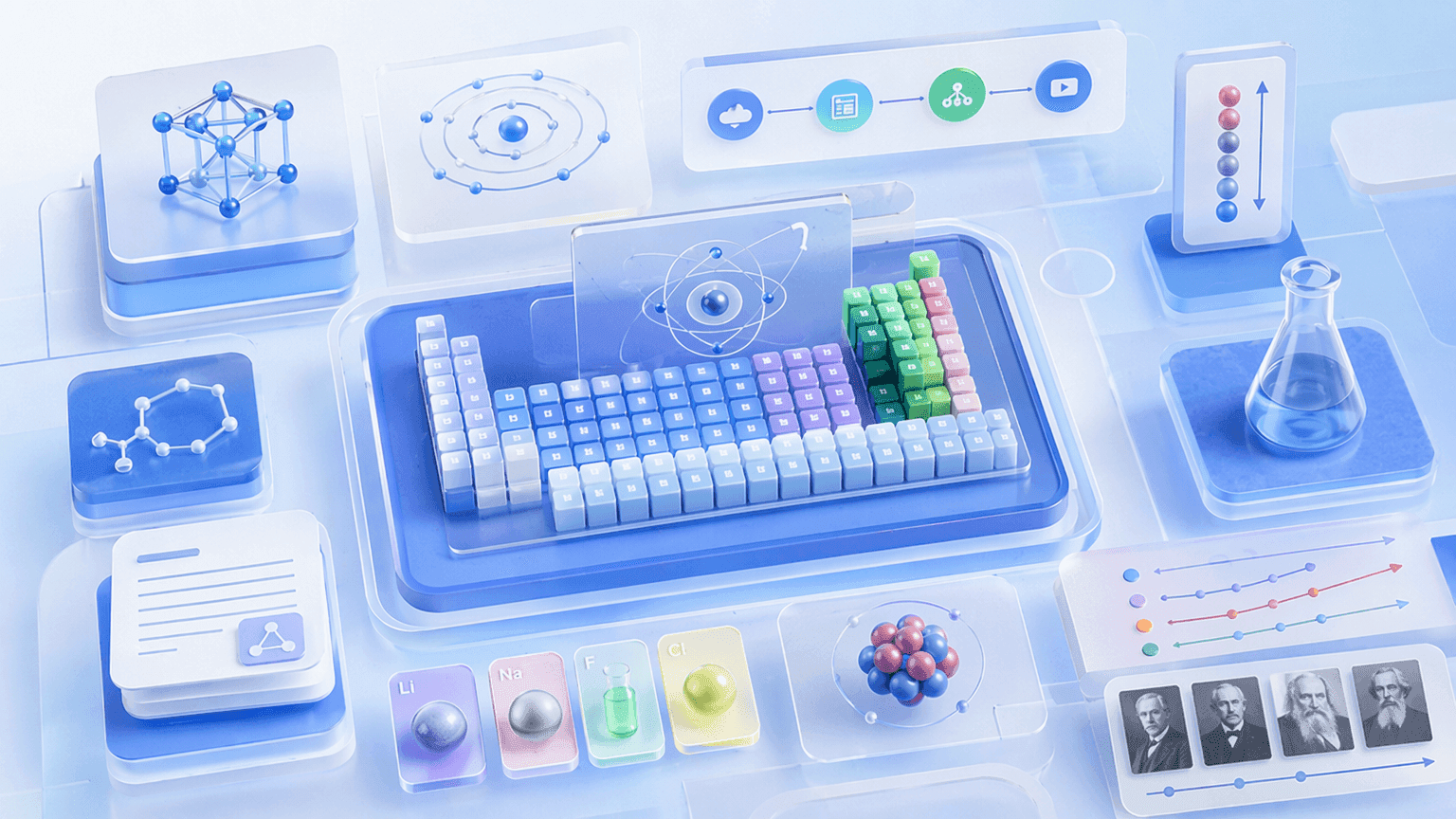
Cover Every Periodic Table Topic in One Workflow
From periodic table structure, periods, and groups to atomic radius, ionisation energy, electronegativity, alkali metals, halogens, and the history of periodic table development, Leadde structures any topic or lesson plan into a scene-by-scene periodic table video — covering element chemistry, atomic theory, and periodic trends in a single tool.

AI Motion for Trends, Element Properties, and Atomic Patterns
Static slides can't show how atomic radius shrinks across a period as nuclear charge increases or how ionisation energy drops sharply at the start of each new period. Leadde's Text-to-Motion turns prompts into animated diagrams — showing trends advancing across the periodic table and element properties changing group by group.

Narrated Periodic Table Videos in 88 Languages
Pair every periodic table video with a lifelike AI instructor. Choose from 300 avatars with the Expressive IV Engine, then translate voiceover and on-screen text into 88 languages and 175 dialects — ideal for ESL classrooms and bilingual chemistry programs.

Templates for Lessons, Lab Walkthroughs, and Exam Recap Videos
Apply your school or department's colors, logo, and font once, then reuse the layout across every chapter — keeping periodic table videos visually consistent from basic element groups in term one to advanced periodic trends and element chemistry in the final unit.
How to Create a Periodic Table Video with AI
Turn a periodic table topic into a polished animated video in three steps — no animator required.

Step 1: Add Your Topic, Notes, or Textbook Chapter
Log into Leadde and paste your lesson notes or upload a textbook chapter, lab handout, or PowerPoint deck. Set your audience and narrative style — the AI builds a scene-by-scene periodic table video outline.
Step 2: Generate Animations and Narration
Open Text-to-Motion and generate animated visuals from a prompt like "atomic radius trend across period 3 and down group 1" or "alkali metal reactivity increasing down group 1 with water." Add an AI chemistry presenter, drag in supporting diagrams, and apply your Brand Kit across every scene.
Step 3: Refine, Translate, and Share with Students
Preview pacing, then click "Generate Video." Download the HD MP4 and upload to Google Classroom, Canvas, or YouTube — or translate into 88 languages and share via a password-protected Leadde link.
Periodic Table Structure & Element Groups Videos
Periodic Table Structure Animation
Build a periodic table structure animation walking through periods, groups, s-block, p-block, d-block, and f-block — every region labeled with electron configuration pattern, element type, and physical properties on a live animated periodic table. Perfect for high school, exam-prep, and introductory undergraduate chemistry courses.
Metals, Non-Metals and Metalloids Animation
Animate the division of the periodic table into metals, non-metals, and metalloids — a classification animation mapping physical properties, conductivity, malleability, and the staircase boundary between metallic and non-metallic character. Ideal for high school, exam-prep, and introductory undergraduate chemistry courses at any level.
Main Group Elements Animation
Show groups 1, 2, and 13 through 18 highlighted in sequence — a main group animation mapping valence electron count, typical oxidation states, and reactivity patterns across the s-block and p-block elements. Perfect for high school, exam-prep, and introductory undergraduate inorganic chemistry courses.
Transition Metals Animation
Step through the d-block transition metals — a transition metals animation mapping variable oxidation states, coloured ions, catalytic activity, and the electronic configuration anomalies of chromium and copper. Ideal for high school, exam-prep, and undergraduate inorganic chemistry courses at any level.
Element Families, Reactions & History Videos
Alkali Metals Animation
Animate lithium, sodium, and potassium reacting with water — an alkali metals animation mapping increasing reactivity down group 1, flame test colours, ionic compound formation, and the electronic configuration driving group 1 chemistry. Perfect for high school, exam-prep, and introductory undergraduate inorganic chemistry courses.