
How to Choose an AI Video Platform for Healthcare Training

To choose an AI video platform for healthcare training, look for a system that can turn approved healthcare documents into short, accurate, reviewable, and trackable training videos without exposing protected health information. The best platform should support SOPs, policies, PDFs, PowerPoints, EHR workflows, onboarding manuals, compliance training, captions, quizzes, multilingual voiceovers, version control, and human review.
In healthcare, the best AI medical video maker is not the one that creates the flashiest avatar or most cinematic animation. It is the one that helps teams train staff faster while protecting accuracy, privacy, consistency, and audit readiness.
In our healthcare AI video workflow research, the strongest demand came from teams trying to replace long PDFs, slide decks, SOP binders, and outdated training videos with shorter, easier-to-update learning assets.
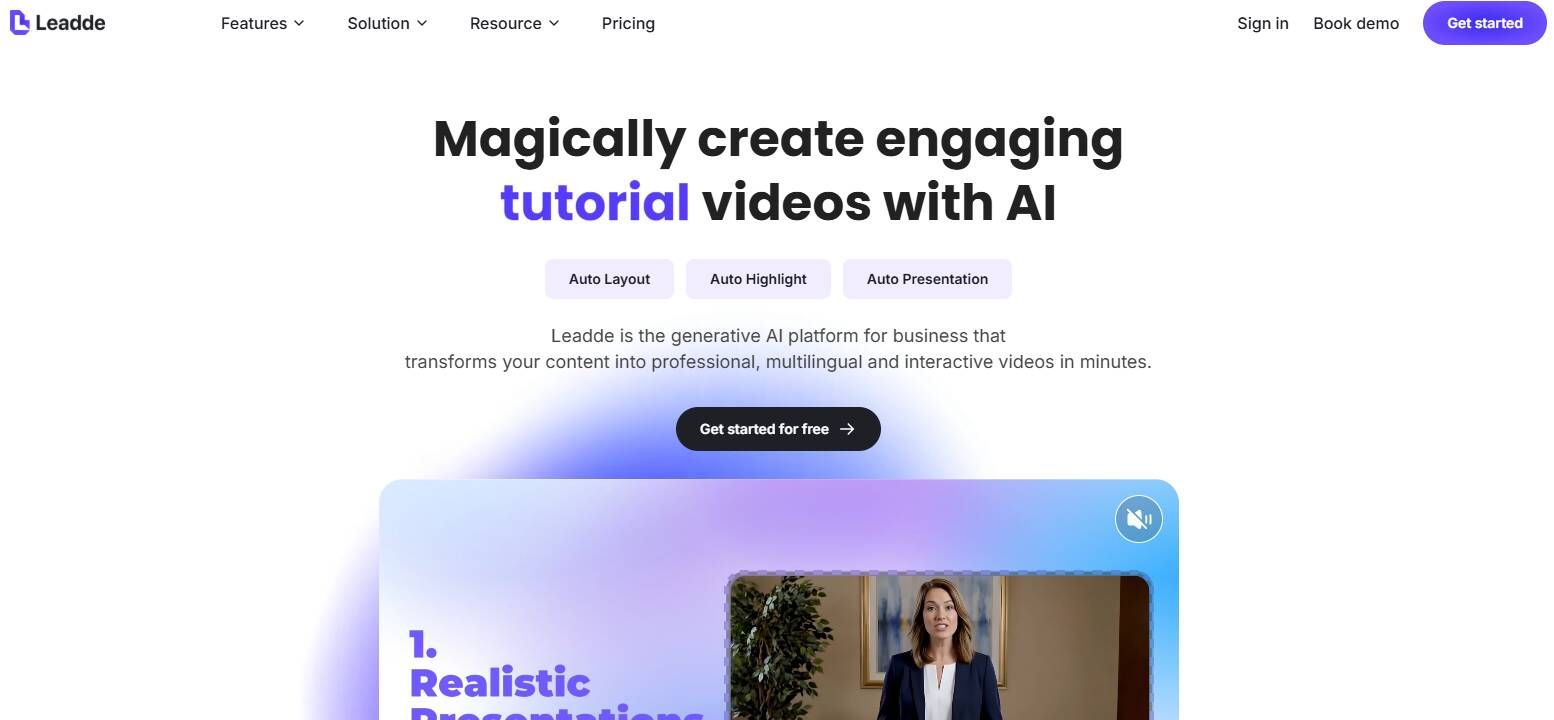
Platforms like Leadde.ai are built for this kind of workflow, helping healthcare teams turn existing documents, policies, SOPs, and training materials into AI-assisted video modules while keeping human review and content updates central to the process.
What an AI Video Platform for Healthcare Training Must Solve
Healthcare training is different from general corporate training. A weak training video can affect privacy, billing, patient safety, infection control, EHR workflows, compliance, and clinical operations.
A generic AI video generator may create a polished video, but that does not mean it is suitable for healthcare training. The platform must solve five practical problems.
First, it must reduce content overload. Healthcare teams often work from SOPs, policies, manuals, compliance binders, EHR guides, slide decks, and onboarding packets.
Second, it must improve retention. Long documents and long videos are easy to ignore. In our field research, healthcare and life sciences staff often described PDFs, slide decks, and long-form training as hard to remember, especially when training had to happen during busy workdays.
Third, it must support frequent updates to keep healthcare training videos updated. Healthcare policies, workflows, software screens, phone scripts, and compliance requirements change often. If every update requires rewriting, recording, editing, and redistributing a full video, the training library becomes outdated quickly.
Fourth, it must reduce PHI risk. AI video workflows should usually start from de-identified SOPs, policies, simulated cases, and approved templates rather than patient-specific records.
Fifth, it must provide proof of training. Healthcare organizations often need completion data, quiz results, version history, source-document alignment, and audit-ready records.
A strong AI video platform should reduce training workload without creating new clinical, privacy, or compliance risk.
Start with Healthcare Training Use Cases, Not AI Video Features
Before comparing AI video platforms, define the training use cases you need to support. Healthcare buyers usually do not need “AI video” in the abstract. They need a way to turn existing materials into usable training.
High-value use cases include:
- HIPAA training videos
- Healthcare compliance training
- Employee onboarding
- Nursing SOP training
- EHR workflow training
- Medical call center training
- Pharma SOP and GxP training
- Patient safety training
- Infection control training
- Medical software demo videos
- Patient education videos
One life sciences onboarding case from our research shows why this matters. A new employee was expected to review around 200 SOPs. Each SOP was at least 10 pages, and some reached 50 pages. Some teams tried to control the load by limiting SOP review to 10, 12, or 15 SOPs per day. One trainee pushed through 25 SOPs in one day and still felt mentally overloaded.
The lesson is clear: a healthcare AI video platform should not only create one-off videos. It should help teams convert large document libraries into short, role-based, searchable, reviewable modules.
Evaluate Document-to-Video Capability for PDFs, PowerPoints, SOPs, and Policies
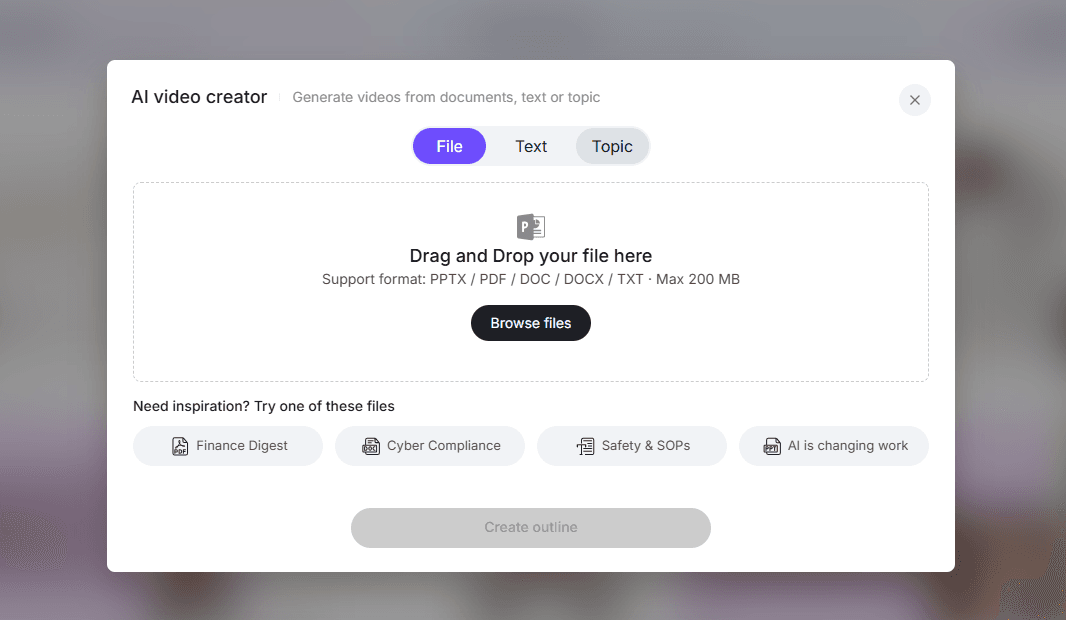
For healthcare training, document-to-video capability is one of the most important selection criteria. Most organizations already have the approved source material. They do not need AI to invent training. They need AI to restructure approved content into a better learning format.
A strong platform should be able to:
- Import PDFs, Word documents, PowerPoints, SOPs, and policy files.
- Extract key learning objectives.
- Rewrite dense text into plain language.
- Break long documents into short modules.
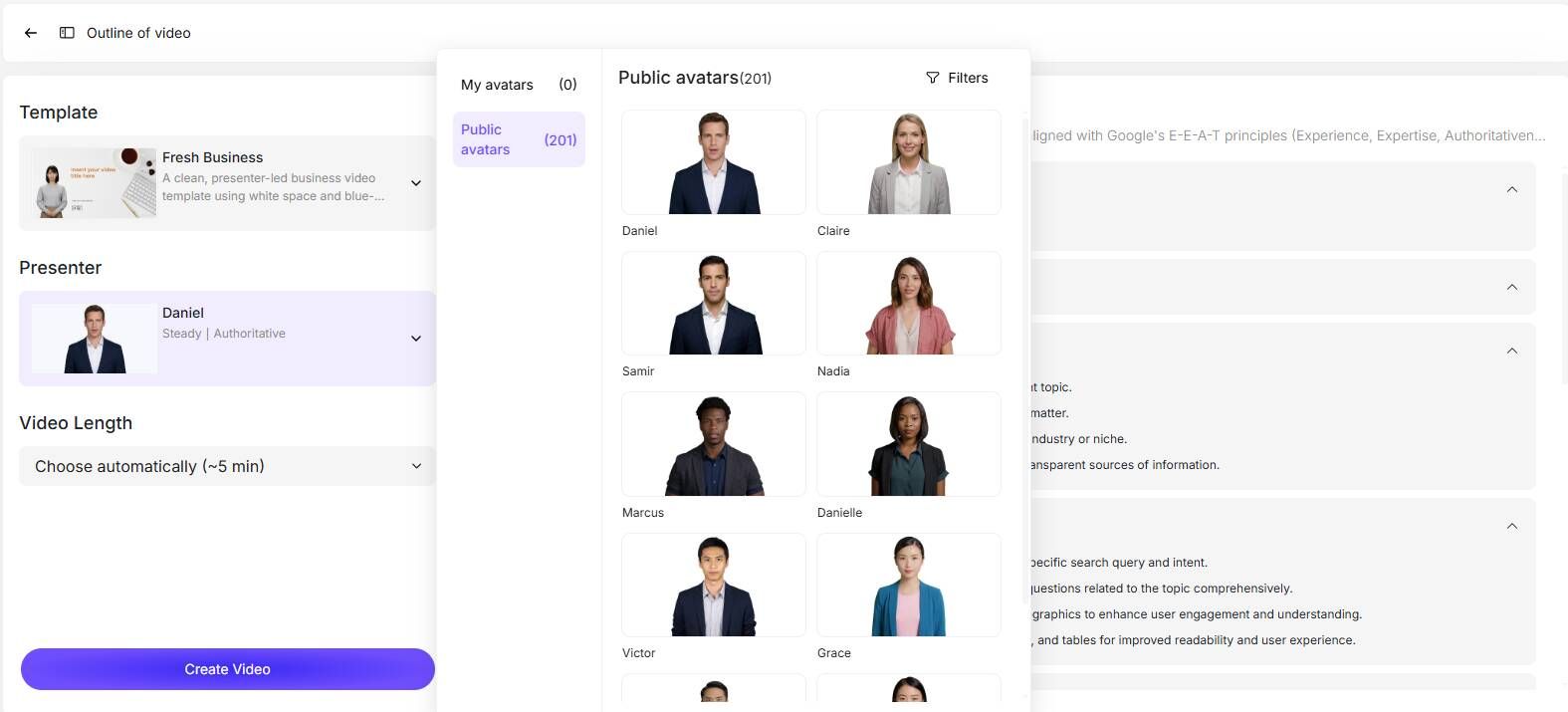
- Generate scripts, scenes, captions, and narration.
- Preserve links to source documents.
- Support reviewer edits.
- Update videos when the source changes.
A weak platform turns a PDF into a narrated slideshow. A strong platform turns a policy into a training experience.
For example, instead of telling staff, “Review Policy 7.4.2 and sign off by Friday,” the platform should help create:
- A 3-minute explanation of the workflow change.
- Role-specific examples for nurses, front desk staff, billing teams, or call center agents.
- A short quiz.
- A completion record.
- A link back to the approved policy.
- A version history.
This is the difference between AI video generation and healthcare training infrastructure.
Check HIPAA, PHI, Security, and Governance Before Testing the Platform
Any AI video platform used in healthcare should be evaluated through a privacy and security lens before production begins.
Ask these questions early:
- Can videos be created without uploading PHI?
- Does the platform support role-based access?
- Can you restrict who can upload, edit, approve, and publish?
- Is there an audit trail?
- Can outdated videos be archived or removed?
- Does the vendor offer a BAA if PHI is involved?
- Are uploads, prompts, voices, and generated assets used for model training?
- Where is data stored?
- Can you control retention and deletion?
- Can training records be exported?
HIPAA workforce training is not just a content requirement. It is also a workflow requirement. A healthcare organization needs to know who created the training, what source document it came from, who approved it, who completed it, and whether it is still current.
A safer default is to create videos from de-identified policies, SOPs, workflows, and simulated examples. For instance, create “How to Handle a Patient Portal Password Reset” using a demo environment, not a screen recording from a real patient account.
Choose an AI Video Platform with Clinical Review and Version Control
In healthcare, the most dangerous training video is not always the one that looks unpolished. It is the one that looks professional but is clinically wrong, outdated, or impossible to trace back to an approved source.
That is why review and version control are non-negotiable.
Look for:
- Draft and approval workflows
- Reviewer comments
- Source document links
- Version numbers
- Change logs
- Review dates
- Department-level ownership
- Draft versus published states
- Easy updates without re-recording
Our medical AI content research found that trust drops quickly when health content appears mass-produced, lacks visible expert review, or prioritizes volume over accuracy. In one medical content audit, daily 20+ minute health videos raised credibility concerns because the output volume seemed unusually high. Other observed patterns included hundreds of videos within months, estimates around five videos per day, and claims of rapid monetization.
The issue was not simply that AI might have been used. The issue was whether the medical claims had been reviewed, sourced, and responsibly produced.
The same applies to internal training. AI should make review easier, not optional.
Test Video Quality with Real Healthcare Training Materials
Many AI video platforms look impressive in demos. But healthcare training requires a different test.
Run pilots with real materials:
- A HIPAA policy
- A nursing SOP
- An EHR workflow
- A medical call center script
- A patient safety protocol
- A pharma training document
- A discharge instruction handout
Evaluate the output for accuracy, clarity, tone, usability, and reviewability.
Be especially cautious with AI-generated medical visuals. In one legal-medical visualization project we studied, a traditional medical animation company quoted about $20,000 for a short 20-second procedure video. AI video tools were tested as a lower-cost alternative, but a complex thoracic spine fusion animation produced visuals that were more entertaining than useful. The practical workaround was to break the animation into 4–5 second clips and review each segment with anatomy-aware human oversight.
That case is important for healthcare training buyers. AI avatars may work well for HIPAA training, onboarding, and policy explanations. Screen recordings may work well for EHR workflows and medical software demos. Simple graphics may work well for compliance and patient education. But complex anatomy, procedure visuals, and clinical simulations need careful expert review.
A healthcare AI video platform should support multiple video formats instead of forcing every use case into the same avatar style.
Prioritize Microlearning, Quizzes, Captions, and Tracking
The best AI video platform for healthcare training should support short, trackable learning modules.
Look for:
- 2–5 minute videos
- Auto-generated captions
- Knowledge checks
- Quizzes
- Scenario-based questions
- Completion tracking
- Retake rules
- LMS or SCORM export
- Role-based learning paths
- Mobile-friendly playback
This matters because healthcare staff are busy. Nurses, residents, call center agents, billing teams, medical assistants, and front desk staff often learn between shifts, appointments, and operational tasks.
In our training research, long-form content created friction. In one EHR training case, trainees wanted a 2x speed option because required training videos felt too slow. In another Epic workflow case, applicable training was hard to find because generic EHR training did not match the practical workflow users needed.
A good platform should help create training modules such as:
- How to document a refill request
- How to escalate a call center safety concern
- How to use an EHR smart phrase
- How to verify insurance information
- How to complete a wound care checklist
- How to report a privacy incident
Short, searchable, role-based videos are more useful than one long annual training course.
Measure ROI: Time Saved, Update Speed, and Training Consistency
AI video platforms should be evaluated by operational impact, not only by output quality.
Useful ROI metrics include:
- Time to create one training video
- Time to update a video after a policy change
- Number of videos created from existing documents
- Training completion rate
- Quiz pass rate
- Reduction in repeated questions
- Reduction in manager-led retraining
- Number of outdated assets retired
- Time saved by educators, compliance teams, and operations leaders
Real healthcare AI workflow data helps set expectations. In one clinical documentation workflow, AI saved 20–30 minutes per day for a resident seeing 14–16 clinic patients. Another admission-note workflow saved 10–20 minutes per note. A separate clinic workflow saved at least one hour of charting after a half-day clinic.
These are not video training results directly, but they show where AI performs best in healthcare: summarizing existing information, creating structured drafts, reducing repetitive work, and helping experts move faster.
The same principle applies to training video production. The highest ROI usually comes from:
- Turning SOPs into first-draft scripts
- Updating videos when policies change
- Creating role-specific variants
- Generating captions and translations
- Converting PowerPoints into narrated videos
- Reducing manual editing and re-recording
Do not only ask, “Can this platform make a video?” Ask, “How much manual training work does this platform remove without increasing risk?”
Compare AI Video Platform Types for Healthcare Training
Not every AI video platform is built for the same job. Healthcare teams should compare platforms by workflow fit.
| Platform type | Best for | Limitation |
|---|---|---|
| AI avatar platforms | HIPAA, compliance, onboarding | Can feel generic without scenarios |
| Document-to-video platforms | SOPs, PDFs, PowerPoints, manuals | Need strong review and source tracking |
| Screen recording platforms | EHR training, software demos | Need PHI-safe demo environments |
| AI animation tools | Simple concepts and diagrams | Risky for complex anatomy |
| LMS-first platforms | Tracking, quizzes, audit records | May have weaker video generation |
| General AI video generators | Fast creative drafts | Often lack healthcare governance |
In our medical video tool research, platforms such as Synthesia, Runway, Fliki, Kling, Pika, HeyGen, and others appeared in different workflows. Some were used for avatars, some for prompt-based video, some for PowerPoint-to-video, and some for image-to-video animation. In one case, a tool supported videos up to 15 minutes on a standard plan and 30 minutes on a pro plan, but the output was still treated as better for supporting visuals than high-quality medical training.
The takeaway: platform category matters. For healthcare training, workflow reliability matters more than flashy generation features.
Conclusion: Choose the AI Video Platform That Makes Healthcare Training Safer, Shorter, and Easier to Update
Choosing an AI video platform for healthcare training is not about finding the most impressive video generator. It is about choosing a system that turns approved healthcare knowledge into short, accurate, privacy-safe, reviewable, and measurable training.
The strongest platforms support document-to-video workflows, PHI-safe production, clinical review, version control, captions, quizzes, role-based learning, multilingual delivery, and fast updates when policies change.
AI can improve speed, structure, and creativity, but healthcare still needs human oversight. The best platform helps teams create better training faster without sacrificing trust, compliance, or accuracy.