
What is a Shoppable Video? 9 Innovative Shoppable Video Examples for 2026

The digital marketplace is shifting from passive viewing to active participation. A shoppable video is an interactive asset that allows viewers to buy products directly from the screen.
This video example removes the friction of leaving a platform to search for a specific item. Instead, it integrates the shopping experience directly into the content flow.
Modern brands use these digital assets to transform storytelling into immediate revenue. By embedding clickable elements or high-energy narration, companies bridge the gap between discovery and checkout.
These interactive formats are essential for driving conversions on mobile-first platforms like TikTok and Instagram.
The true power of a shoppable video example lies in its efficiency. Leading teams no longer rely on expensive film crews for every product update. Instead, they use AI engines like Leadde to turn static documents into dynamic, avatar-led sales pitches.
What is a Shoppable Video and Why is it Essential for 2026 E-commerce?
A shoppable video is an interactive asset that transforms passive viewers into active buyers via embedded purchase links. These videos feature clickable hotspots or product tags that allow consumers to view details and buy products instantly.
This format effectively eliminates the high-friction experience of browsing static images to find a specific product.
The true return on investment for 2026 e-commerce lies in the speed of asset creation rather than just the interface. Brands managing hundreds of SKUs often face production bottlenecks that erode profit margins when relying on traditional filming.
Leadde addresses this by converting existing business documents into polished, high-converting shoppable video examples in minutes.
How do AI-powered workflows solve high-paced retail challenges?
Automation allows marketing teams to respond to rapid market shifts without booking expensive camera crews.
These four scenarios demonstrate how agile production maintains a competitive edge for a modern video example:
- Bulk SKU Product Pitches: Leadde converts static product sheets or PDFs into structured, avatar-led explainer videos instantly.
- Perfectly Timed Flash Sales: Use precise animation controls to ensure promo codes or CTAs appear at the peak of viewer interest.
- Zero-Reshoot Price Updates: Edit video scripts like a simple text document to update pricing or inventory without restarting production.
- Cross-Border Ads: Instantly localize any shoppable video example into 170+ languages to capture global storefront traffic with one click.
Modern retailers use these automated strategies to stay ahead of the competition.
| Feature | Strategic Impact on Sales |
|---|---|
| Scene Level Editing | Enables rapid iteration of shoppable video examples without manual reshoots. |
| Smart Layouts | Automatically animates key messages for emphasis to guide the viewer toward a purchase. |
| Multilingual AI | Supports global teams by producing localized training and marketing videos effortlessly. |
Efficient production cycles ensure that content remains as dynamic as the marketplace.
How do Shoppable Videos Compare to Traditional Product Videos?
Traditional product videos showcase features but lack the embedded links needed for instant commerce. This forces viewers to manually search for products, which often leads to lost interest and lower conversion rates.
A modern shoppable video example integrates the buying process directly into the entertainment flow.
Interactive formats drive a 66% engagement rate compared to only 44% for linear, non-interactive videos. This deep interaction allows for granular analytics tracking, including hotspot click-throughs and viewer behavior.
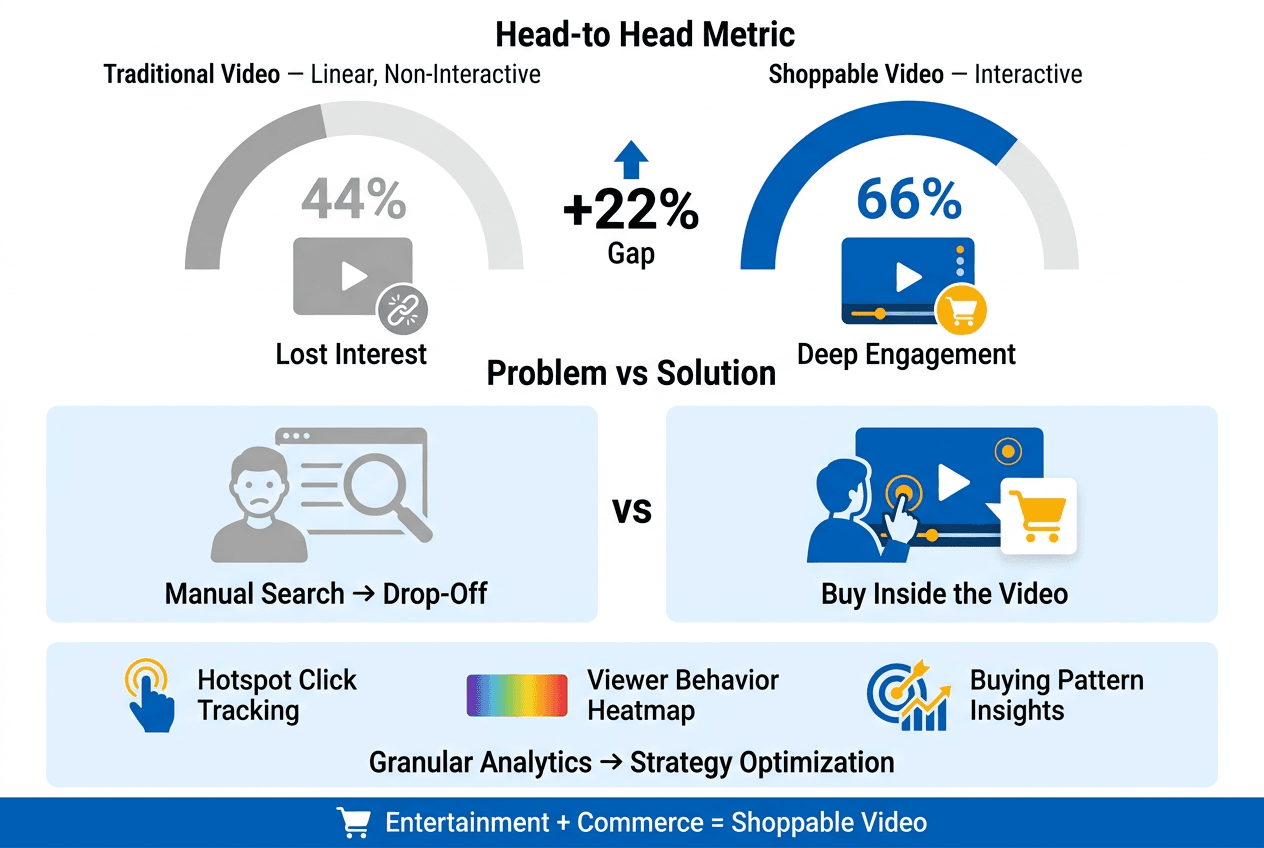
Such insights help brands optimize their video example strategy to match specific consumer buying patterns.
Scalability is the final differentiator between these two content formats. While traditional ads are costly to replicate,
Leadde enables the cost-effective creation of thousands of personalized variations, significantly reducing overall video production expenses. This shift allows brands to move beyond a single video example and dominate every sales channel.
The following data summarizes the clear performance gap between these two strategies:
- Conversion Path: Shoppable formats reduce drop-offs by providing a direct, clickable path to checkout.
- Engagement Levels: Interactive elements result in higher viewer retention and significantly more social shares.
- Technical Integration: Catalog sync ensures that displayed prices and inventory are always accurate within the video.
Reviewing these innovative strategies reveals a clear roadmap for e-commerce success.
What are the Primary Formats for Shoppable Video Examples?
Modern digital marketing utilizes several distinct interactive frameworks to drive commerce. Each shoppable video example serves a specific role in the customer journey from social discovery to on-site conversion.
Choosing the right format ensures that your video example aligns with your audience's browsing habits and platform preferences.
Effective shoppable content bridges the gap between initial inspiration and the final purchase. Brands now leverage these five high-impact formats to maintain a consistent presence across all digital channels.
- Pre-recorded Website Elements: These assets combine high-quality recorded footage with clickable hotspots or cart links embedded directly on official sites.
- Social Commerce: Platforms like TikTok and Instagram allow for native tagging that turns passive scrolling into an active shopping experience.
- Live-stream Events: Real-time broadcasts feature hosts who answer questions while viewers click on integrated purchase links.
- UGC and Creator-led Content: Authentic stories from real customers build essential trust while providing a seamless buying path.
- AI-Generated Narratives: Advanced tools use product feeds and existing docs to craft full, on-brand narratives at a massive scale.
These diverse formats allow for a highly personalized and scalable commerce strategy.
Next, examine 9 real-world cases that prove how top brands are redefining digital retail today.
1. Puma: How can Interactive Hotspots Drive Higher Conversion Rates?
Puma revolutionized sportswear marketing with its "Forever Faster" campaign by integrating subtle interactive hotspots into high-action football clips. Whenever a specific product appears on screen, a small red Puma logo surfaces as a clickable indicator for viewers. This shoppable video example allows users to explore items without pausing the cinematic flow.
The campaign achieved record-breaking performance by bridging the gap between inspiration and immediate action.
- Conversion Milestone: The interactive format secured a massive 6.9% conversion rate.
- Revenue Growth: This strategy delivered earnings per click that were 24 times higher than industry averages.
- Production Agility: Brands can use Leadde to create similar high-energy overlays using element timing controls to sync graphics with movement.
Visual cues turn passive viewers into active shoppers instantly.
Best for: Athletic and high-energy retail brands focusing on rapid impulse purchases.
2. Ralph Lauren: Can "Shop the Look" Features Simplify Fashion Purchases?
Ralph Lauren uses interactive fashion reels to solve the complexity of multi-item styling in e-commerce. As models move through the scene, the embedded product tags follow the garments dynamically to maintain constant interactivity. This video example ensures that every visible accessory or clothing item is ready for purchase.
Seamlessly buying an entire outfit reduces the research friction for modern fashion consumers.
- Bundle Purchases: Viewers can purchase individual pieces or the entire coordinated look with one click.
- Mobile Precision: Large, easy-to-tap elements cater to the 75% of consumers shopping on mobile devices.
- Visual Continuity: Leadde enables this consistency by allowing users to swap presenters across scenes to match specific brand aesthetics.
Interactive tags remove the need for manual product searches.
Best for: Luxury fashion houses and apparel retailers showcasing seasonal collections.
3. IKEA: Why is Interactive Storytelling Ideal for Home Decor?
IKEA utilizes documentary-style clips to provide design inspiration alongside a direct checkout path. Viewers watch room tours and can click on furniture tags to view specific product details or "Shop Now" CTAs. This shoppable video example maintains an educational tone while encouraging immediate product discovery.
Targeted themes help customers visualize products within their own living environments.
- Themed Content: IKEA tailors live events and videos around specific topics like "Small Spaces" or holiday decorations.
- Resource Repurposing: Previous live shows are stored in a video library to provide ongoing value and social proof.
- Automated Narration: Using Leadde, teams can turn static assembly guides into avatar-led explainers to clarify complex product features.
Storytelling builds the trust necessary for larger home equipment purchases.
Best for: Home decor, lifestyle brands, and furniture retailers focused on long-form engagement.
4. Nike: How does Story-Driven Commerce Build Brand Desire?
Nike used celebrity Jason Momoa for the LeBron XX launch. The brand integrated purchase links into a cinematic narrative. This video example builds deep emotional desire before the sale.
Compelling stories turn viewers into loyal brand advocates.
- Emotional Connection: Storytelling builds trust with the target audience.
- Seamless Buying: Purchase links fit naturally within the movie plot.
- Impulse Capture: Tagging early captures buys at peak interest.
Narrative flow drives higher conversion than traditional ads.
Best for: Brands using celebrity influence or strong brand stories.
5. Volkswagen: Can Interactive Videos Modernize High-Ticket Product Exploration?
The Volkswagen Golf uses interactive video to simplify complex tech. Viewers click car parts to learn unique specifications. This shoppable video example provides a deep product exploration.
Interactive highlights make technical details easy to understand.
- Feature Discovery: Clicking specific parts reveals detailed car information.
- Direct Lead Gen: Viewers book test drives directly within the video.
- Reduced Friction: Interactive paths shorten the high-ticket sales cycle.
Virtual car tours provide an engaging alternative to showrooms.
Best for: Automotive and high-value equipment manufacturers.
6. Swarovski: How does One-to-One Luxury Commerce Elevate Sales?
Swarovski offers real-time virtual tours of physical boutiques. Online customers connect with a personal shop assistant. This shoppable video example delivers a premium luxury experience.
Personalized video commerce creates exclusive and high-touch service.
- Virtual Presence: Assistants show actual store items via video link.
- Real-time Urgency: Live events feature limited-edition product launches.
- Credibility: One-to-one interaction builds a community of engaged buyers.
Luxury shoppers value high-quality personalized digital attention.
Best for: Luxury retailers and high-end jewelry brands.
7. Shein: Why is Authentic UGC the Future of Shoppable Livestreams?
Shein uses real customers as models for their runway events. These livestreams sync across Facebook, Instagram, and YouTube. This video example focuses on authenticity to drive results.
Authentic content often receives significantly more social shares.
- Broad Reach: Multi-platform streaming captures diverse digital audiences.
- Real-time Shopping: Viewers buy items via an app during the show.
- Consumer Trust: Real-life models create a more relatable experience.
Authenticity is the key trend for successful video commerce.
Best for: Fast-fashion brands and community-focused e-commerce stores.
8. Lenovo: How do AI-Powered Product Snippets Boost Sales Post-Livestream?
Lenovo hosts interactive live events featuring in-depth product demonstrations. These sessions allow viewers to participate in live polls and receive instant answers to questions. This shoppable video example effectively turns a technical presentation into a collaborative community event.
AI technology maximizes the value of these long-form broadcasts.
- Automated Snippets: AI cuts long live events into short, shoppable video segments.
- Strategic Buy Buttons: Clickable links take shoppers directly to the specific product page.
- Secondary Marketing: Repurposing live content drives a steady stream of sales post-event.
Automation ensures that every minute of video generates long-term ROI.
Best for: Tech brands and manufacturers needing deep feature demonstrations.
9. Fenty Beauty: Can Pre-recorded Testimonials Act as Continuous Sales Tools?
Fenty Beauty displays high-quality testimonial videos directly on its official website. These pre-recorded assets showcase real results to build consumer confidence. This video example serves as a permanent, high-conversion sales assistant for the brand.
Strategic placement of interactive elements turns social proof into revenue.
- Embedded Cart Links: Viewers add products to their bag without leaving the video.
- High Visual Trust: Customer-led content builds more authenticity than traditional ads.
- Reduced Friction: Shoppable tags provide a direct, clickable path to checkout.
Testimonials convert inspiration into ownership in just a few moments.
Best for: Beauty and cosmetics brands leveraging customer results for sales.
How can Brands Implement a Successful Shoppable Video Strategy?
Executing a high-performing shoppable video example requires technical precision and creative agility. Brands must follow a structured workflow to ensure their video example assets drive consistent revenue.
Practical implementation turns passive viewing into a seamless buying journey.
- Step 1: Optimize for Mobile: Use vertical or square formats for every video example. Mobile devices account for 75% of global video consumption today.
- Step 2: Sync Your E-commerce Catalog: Connect your video platform to Shopify or WooCommerce. This ensures your shoppable video example reflects real-time inventory and pricing.
- Step 3: Tag Products Early: Place interactive hotspots or tags early in the video. Early tagging captures impulse buys before the viewer loses interest.
- Step 4: Enable Seamless Checkout: Integrate an "Add to Cart" function directly within the player. One-click checkout options reduce friction and minimize abandoned carts.
- Step 5: Zero-Reshoot Maintenance: Use Leadde to update video scripts like a simple text document. This keeps your shoppable video example accurate without expensive re-filming, making it easier to quickly update product feature videos as your offering evolves.
Conclusion: Mastering the Future of Interactive Shoppable Content
The evolution of e-commerce demands a shift toward frictionless and humanized marketing. A shoppable video example serves as the ultimate tool for capturing instant consumer interest. By studying the 9 innovative leaders above, brands can master the art of interactive sales.
Success stems from combining high-quality storytelling with extreme production efficiency.
- Authenticity: Follow Shein's lead by using real customer stories.
- Precision: Mimic Puma's hotspots to guide viewer attention.
- Scalability: Use Leadde to localize assets into 170+ languages instantly.
- Interactivity: Apply IKEA’s themed storytelling to build deeper consumer trust.
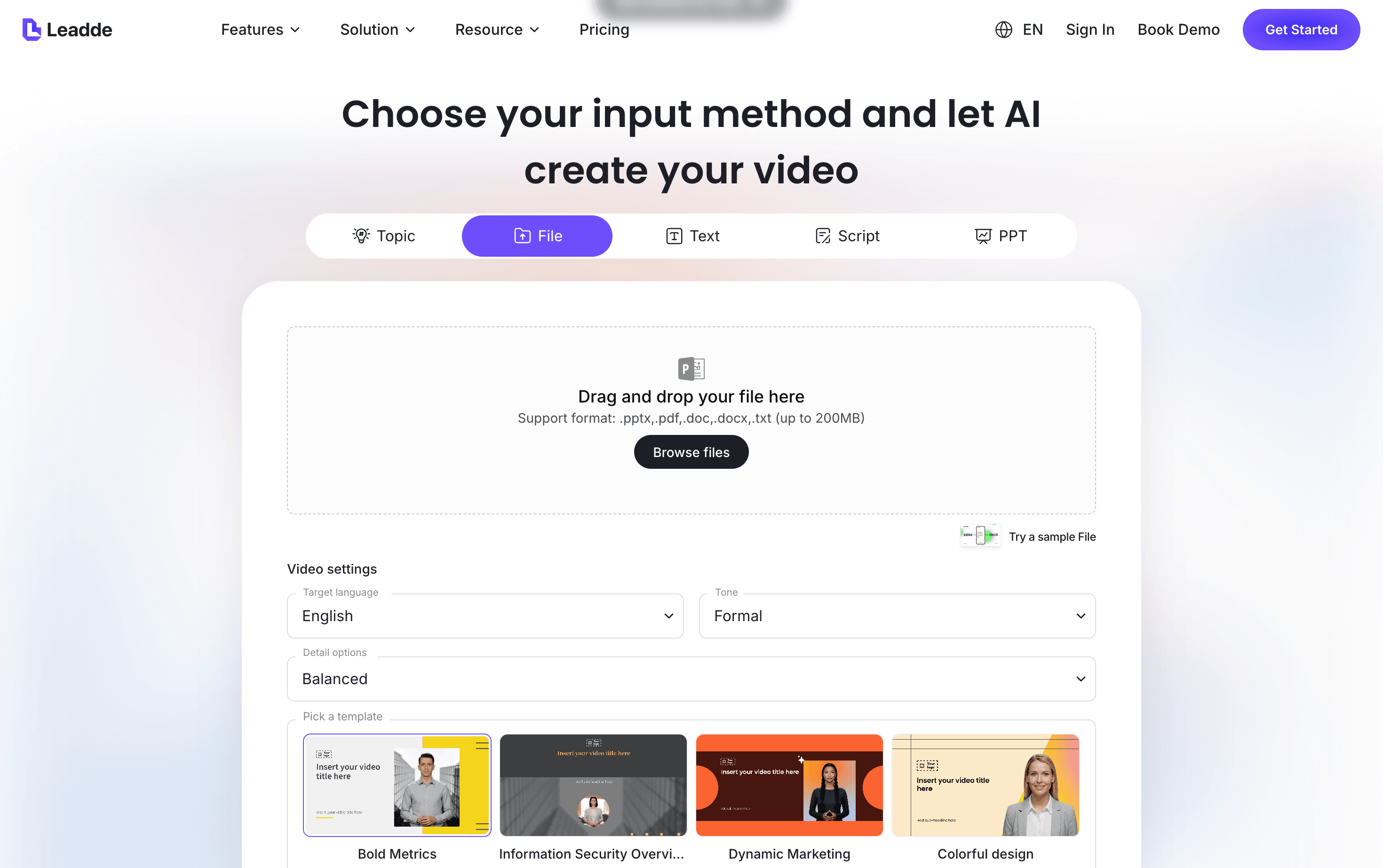
Transform your product PDFs and sales decks into a high-conversion video example library. Leadde empowers your team to scale globally without the bottleneck of traditional production. Start creating your next shoppable video example today to turn passive viewers into instant buyers.