
Leadde Logo

Code of Conduct and Business Ethics Training

Walks through the company code of conduct, conflicts of interest, gift and entertainment limits, anti-bribery rules, and confidential reporting options.
LBy Leadde Updated August 21, 2026

What a Code of Conduct Is For

A code of conduct exists for the situations that policies do not cover. Specific rules handle the predictable cases; the code is what one person applies when facing something the rulebook never anticipated, which is why it has to be memorable rather than exhaustive.

Most organisations write the opposite: a code that attempts completeness and is therefore read once, acknowledged, and never recalled at the moment it would have mattered. A code that fits in someone's head is worth more than one that survives legal review. What stays out of the published version is the full text of the code: definitions, thresholds, and named exceptions belong in the controlled document that the video points to.

The template covers it in nine scenes: one on scope and who is bound, four on the obligations taken one at a time, two on situations where the right answer is genuinely unclear, one on the confidential reporting route, and one on the acknowledgement step.

How to Explain a Code So It Is Recalled Under Pressure

The code is applied by someone alone, in a moment, without the document. Everything about the training should be built for recall rather than for coverage, which means fewer obligations explained more concretely.

Take one obligation per scene

Take one obligation per scene

Conflicts, gifts, bribery, confidentiality. Two on a slide are remembered as neither, and this is the most common structural error in ethics training.

Use situations with no obvious answer

A supplier offering something during a live tender is instructive. An obvious bribe is not, and it teaches employees that the code is about other people.

Give the phrase for declining

"I'll need to declare that" is usable in a real conversation. Principles about integrity are not.

Route the difficult case to a person

Most people escalate if there is somebody to escalate to. Naming the role, and stating confidentiality, is the mechanism.

Leadde produces the video and does not certify a programme, record acknowledgements, or constitute evidence of compliance; attestation stays in your own system.

Feed in the code your legal team has already approved

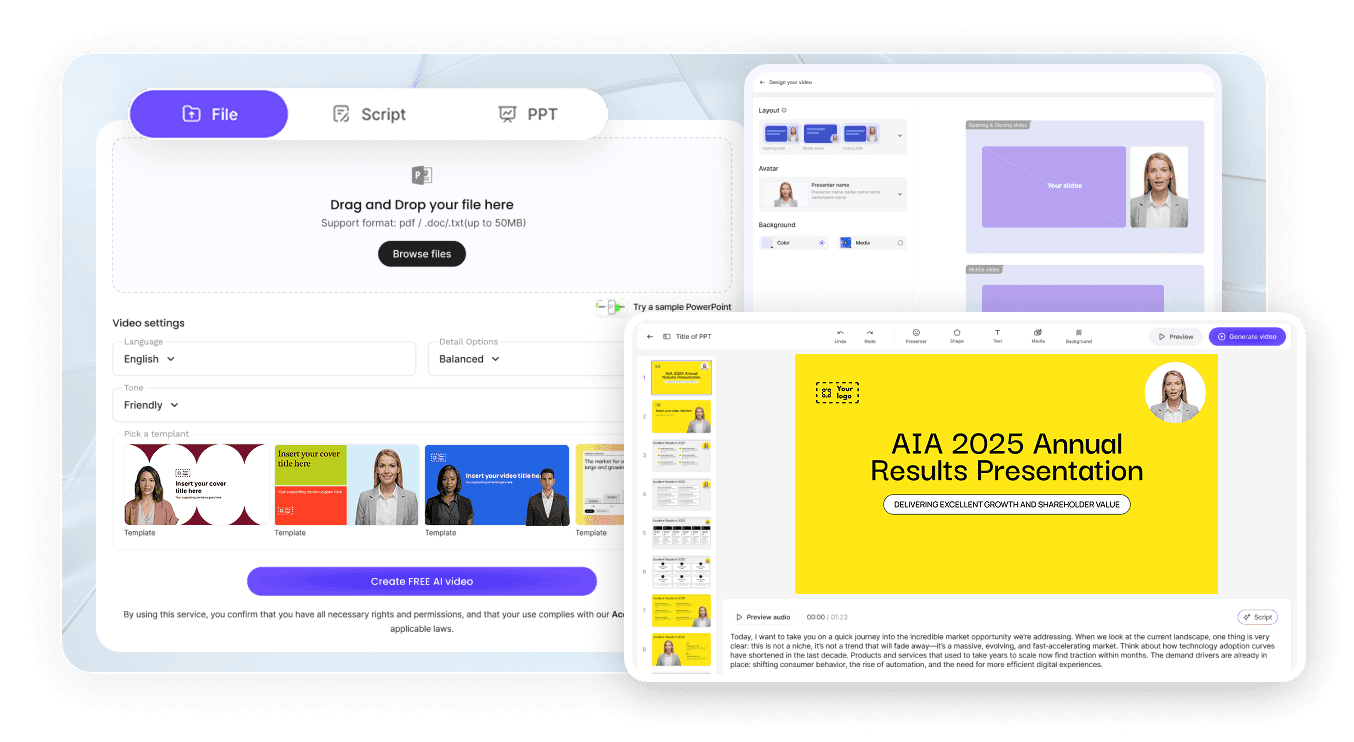
Upload the code of conduct, the conflicts declaration form, or the speak-up procedure issued alongside it — PDF, DOC, DOCX, PPTX, or TXT, to a 200 MB limit. What returns is editable, and the upload is not altered.

Restate the Code Where It Is Actually Tested

The code your legal team has already approved is the only input needed — rework the draft before the annual acknowledgement.

avatar

Start With This Template. Finish With a Video Ready to Share.

Add your onboarding guide or help-center pages and generate an editable draft in minutes.