
Leadde Logo

GDPR Data Handling Essentials for Employees

Covers lawful bases for processing personal data, consent and data subject rights, cross-border transfer limits, and how to report a suspected breach.
LBy Leadde Updated August 21, 2026

Why Consent Is Not the Default Lawful Basis

Consent is the lawful basis most people name and the one least often correct. Processing usually rests on contract, legal obligation, or legitimate interests, and consent has to be freely given, specific, and withdrawable, which it rarely is between an employer and an employee. Choosing the wrong basis is itself the failure.

That misunderstanding produces most of the practical errors staff make: consent forms collected where none was needed, and processing continued after a withdrawal that never applied. Teaching the bases in order of frequency, rather than starting with consent, corrects it in one scene. Kept out of the video entirely is records of processing and DPIA content: they name systems, vendors, and data flows, and belong in the register rather than in a training video.

The template covers it in nine scenes: one on what counts as personal data, two on the lawful bases in order of how often they apply, one on why consent is the exception, two on data subject rights and the response clock, one on cross-border transfer limits, one on how to recognise a suspected breach, and one on reporting it within the internal deadline.

How to Teach Data Protection Without a Legal Lecture

Staff arrive believing this topic is legal work that happens elsewhere, and the training usually confirms it by starting with the regulation's structure. The way in is the handful of decisions employees actually make with personal data every week.

Start with the decisions staff actually make

Start with the decisions staff actually make

Sending a list, exporting a report, forwarding a CV. Three ordinary actions, each with a data protection question inside it.

Teach the bases by frequency, not by article order

Contract and legal obligation cover most workplace processing. Leading with consent teaches the exception as the rule.

Give the response clock a number

Data subject requests have a deadline, and the delay that causes breaches is internal routing rather than the response itself. Staff need to know it is urgent from the first hour.

Make breach reporting internal and immediate

Employees are not deciding whether something is notifiable. Their only job is to report fast, and telling them that removes the hesitation that costs the organisation its window.

Leadde produces the video and does not certify a programme, track attestation, or assess whether processing is lawful; that judgement stays with your data protection function.

Point it at the data protection policy already issued

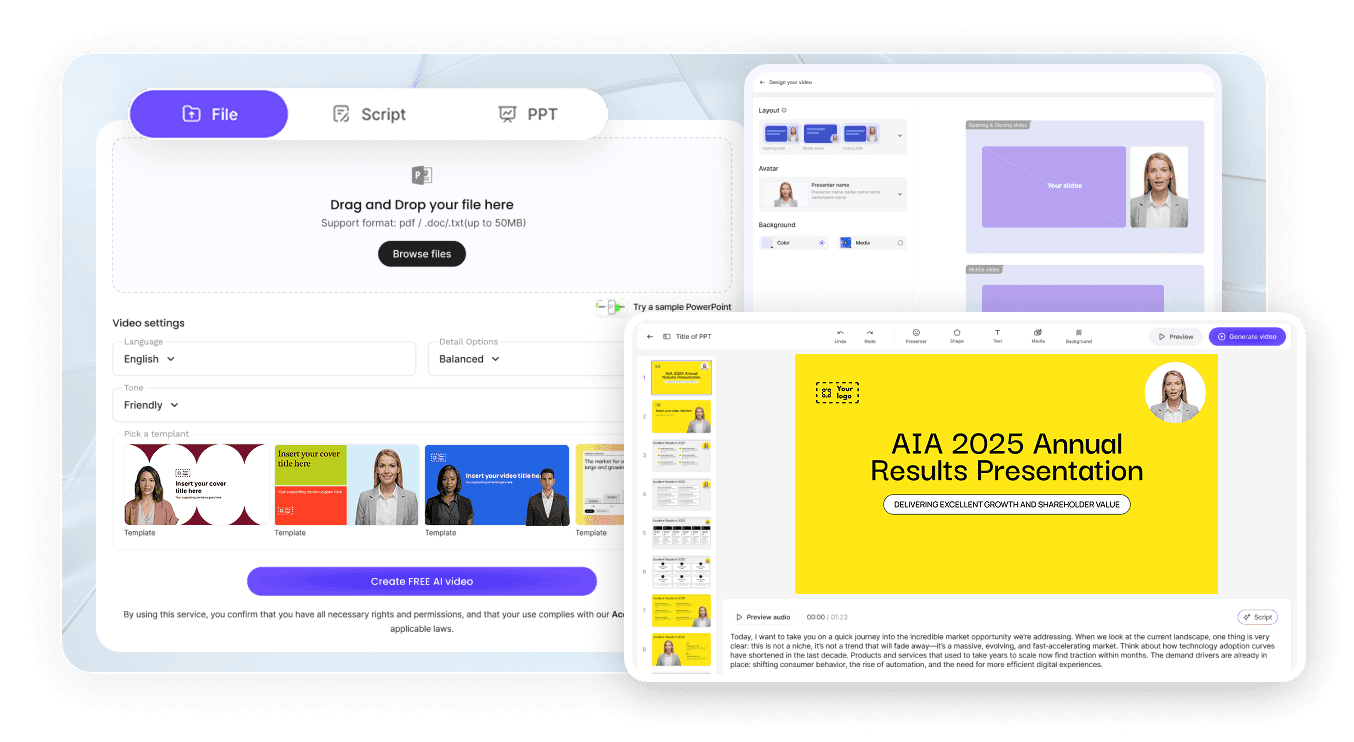
Upload the data protection policy, the retention schedule, or the breach reporting procedure, in PDF, DOC, DOCX, PPTX, or TXT under 200 MB. The returned scenes are editable and the upload is untouched.

Justify the Processing Before It Starts

Point it at the data protection policy already issued and edit what comes back before the next induction.

avatar

Start With This Template. Finish With a Video Ready to Share.

Add your onboarding guide or help-center pages and generate an editable draft in minutes.