
Leadde Logo

Quarterly Business Review Presentation

Presents quarterly targets versus actuals, revenue and pipeline movement, key wins and misses, and the agreed priorities for next quarter.
LBy Leadde Updated August 21, 2026

What a Quarterly Review Is Actually For

A quarterly review is for deciding what changes, not for reporting what happened. The numbers are already in the system and everyone has seen them; the meeting exists because two or three of them require a decision nobody can make alone. A review that only presents is a status email with an hour attached.

Most QBR decks are built the other way, as a comprehensive record with the decisions implied at the end if time allows. Time never allows, so the decisions get deferred and the same numbers are presented again three months later. The material to leave in the source document is individual performance data: attributing a miss to a named person turns a business review into an appraisal in front of an audience.

The quarter is set out across nine scenes: one on the two or three decisions this meeting has to reach, two on targets against actuals with the variance explained, one on pipeline movement, one on what worked and will be repeated, one on what missed and why, one on the resource or priority conflict behind it, one on the decision options, and one on the agreed priorities.

How to Present a Quarter So the Decisions Actually Get Made

The failure mode is running out of time before the part that mattered. The structural fix is to put the decisions first, which feels wrong to present and works considerably better in the room.

Open with the decisions, not the summary

Open with the decisions, not the summary

Naming what has to be decided in the first minute changes how the audience listens to everything after it.

Explain variance, do not display it

A number against a target is not information. Why it diverged, and whether that cause persists, is the only part worth an hour of senior time.

Separate what missed from who missed

The review's purpose is a decision about resources or priorities. Attribution to individuals moves it into a different conversation and ends the useful one.

End with owners and dates, on screen

A review that closes without both has produced a discussion. Putting them in the final scene makes them minutes.

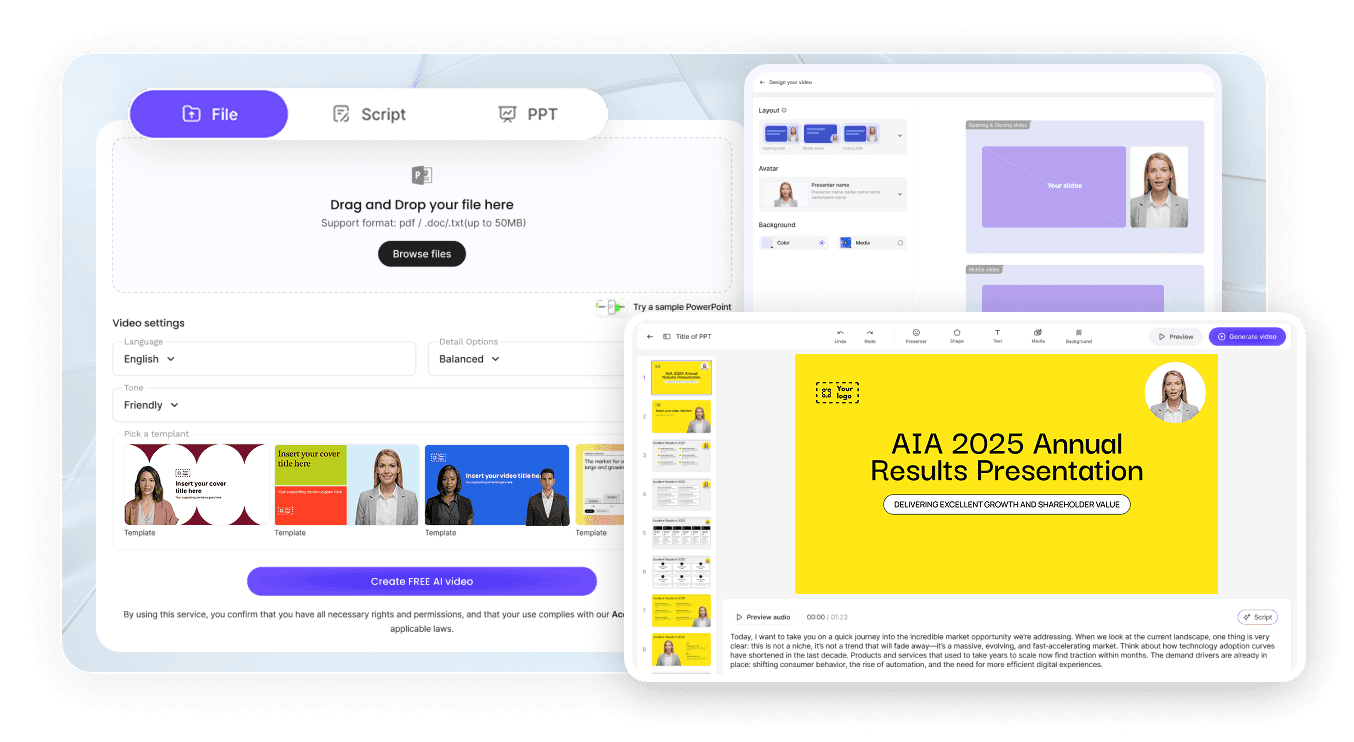
Feed in the QBR deck your team assembles each quarter

Upload the QBR deck, the variance analysis behind it, or last quarter's agreed actions for comparison in PDF, DOCX, DOC, PPTX, or TXT, up to 200 MB. Scenes come back ready to edit; the original stays as it is.

Review the Decisions, Not the Dashboard

Bring the QBR deck your team assembles each quarter across, review the scenes, and publish before the review meeting.

avatar

Start With This Template. Finish With a Video Ready to Share.

Add your onboarding guide or help-center pages and generate an editable draft in minutes.