
Leadde Logo

Screen Time and Digital Wellbeing: What the Data Shows

Breaks down average daily screen time by age group, sleep impact findings, notification volume, and habits linked to healthier device use.
LBy Leadde Updated August 21, 2026

Why Screen Time Numbers Land Badly

Screen time numbers land badly because the audience hears them as a judgement. A single figure about daily hours arrives at a parent or a teenager as a comment on how they live, and the defensive response begins before the next scene. What the figure is for has to be established before the figure appears.

The framing problem is compounded by the measure itself, which counts minutes without distinguishing a video call with a grandparent from an hour of scrolling before sleep. A total that treats those identically will be dismissed by anyone who has thought about it for a minute. Kept out of the video entirely is anything that reads as a clinical threshold: recommended limits by age, sleep advice, and any link to a diagnosis belong with a health professional rather than in a data video.

Seven scenes carry the picture: one on what the measure counts and what it cannot see, two on where time actually goes across a day, one on the habit most consistently associated with poor sleep, one on what changes when the same total is spread differently, one on a single practical adjustment, and one on where to read more.
How to Present Health Data Without Producing a Defensive Audience

A public health video on this topic competes with the audience's own sense of being lectured. It works when the data is offered as a tool for their own decision rather than as evidence in a case against them.

Say what the number cannot tell you, early

Say what the number cannot tell you, early

Conceding the limitation of the measure is what earns permission to use it at all with this audience.

Separate the time from the timing

An hour in the afternoon and an hour before sleep are the same figure and different outcomes. This distinction is the most useful thing the video can carry.

Give teenagers the data, not the instruction

An audience that is handed the finding and left to decide engages; an audience handed a rule disengages and shares the video mockingly.

Offer one adjustment, not a programme

A single change, described concretely, is what a family might actually try. A list of recommendations is read as a lecture and produces nothing.

Run the health brief your service already publishes through it

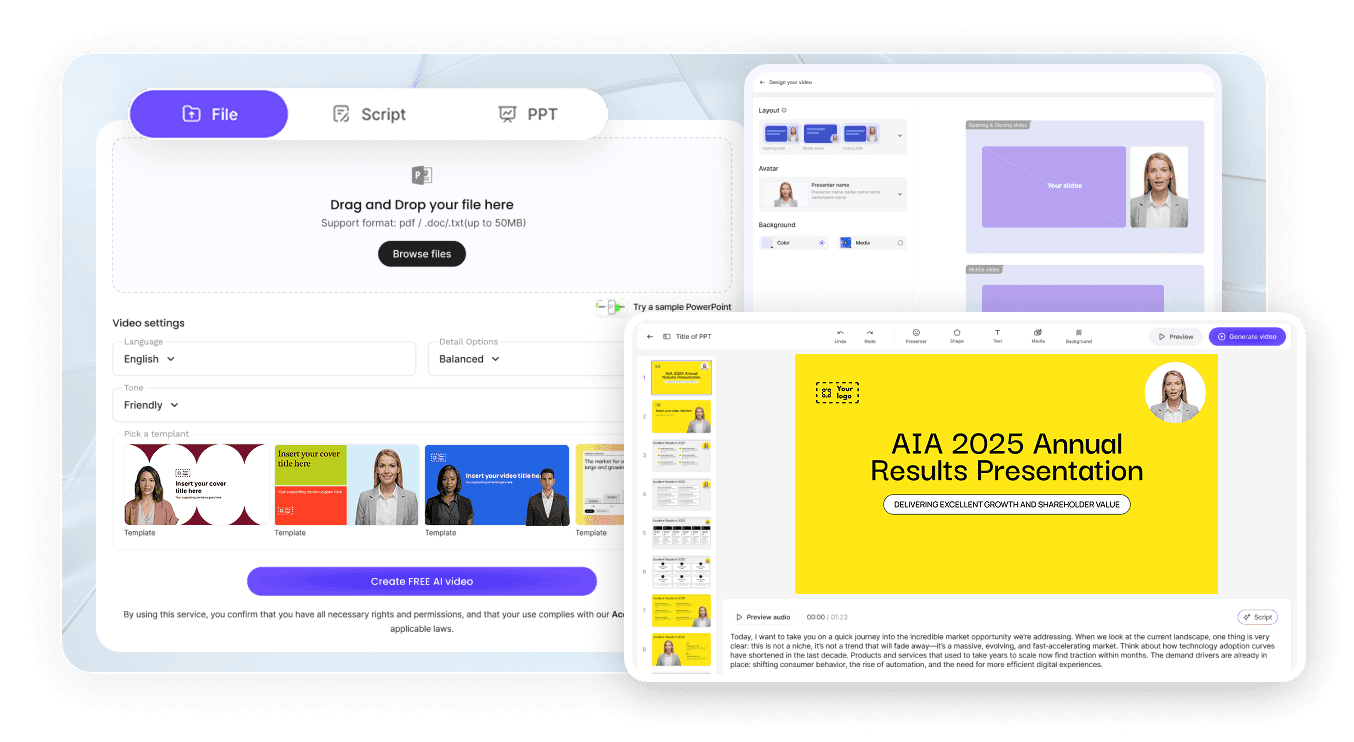
Upload the health brief, the school wellbeing pack, or the parent information sheet already in circulation, in PDF, DOC, DOCX, PPTX, or TXT under 200 MB. The returned scenes are editable and the file itself is untouched.

Frame It Before the First Number Appears

Point it at the health brief your service already publishes and edit what comes back before the new school term.

avatar

Start With This Template. Finish With a Video Ready to Share.

Add your onboarding guide or help-center pages and generate an editable draft in minutes.