
Leadde Logo

Understanding SQL Joins

Learn how SQL joins combine data from separate tables, covering inner, left, right, and full outer joins with practical business examples.
LBy Leadde Updated August 21, 2026

What a Join Actually Returns

A join returns rows built from two tables by matching a column they share. The kind of join decides what happens to rows that find no match: an inner join drops them, a left join keeps everything from the left table and fills the gaps with nulls, and a full outer join keeps both sides.

Learners rarely struggle with the syntax. They struggle because the wrong join silently returns a plausible answer, and a report built on an inner join between customers and orders quietly excludes every customer who has not ordered yet. One thing to keep off screen is database-specific behaviour: optimiser hints, index strategy, and vendor syntax differences belong in the platform documentation rather than in a module teaching the concept.

The lesson is broken into seven scenes: one on why tables are separate at all, two building an inner join from a shared key, two on left joins and what a null means in a result, one on the full outer join and when it is genuinely needed, and one on the three mistakes that produce a wrong answer without an error.

How to Teach Joins to People Who Will Otherwise Copy a Query

Most learners in this audience already have a query that works and no idea why. The module has to build the mental model, because a person who understands the row-matching can debug their own result rather than escalating it.

Use one business question the whole way through

Use one business question the whole way through

Customers and orders, asked four times with four joins. Changing the example between joins is what makes the differences look arbitrary rather than consequential.

Show the result set, not the diagram

Venn diagrams are the standard teaching aid and they mislead, because they suggest set membership rather than row multiplication. A small result table shown for each join is more accurate and more memorable.

Make the null the moment of insight

A left join producing nulls is the point where the concept lands. Spend a scene on what a null means here, because it is also where learners misread their own output.

Warn about the duplicate-row surprise

Joining on a non-unique key multiplies rows and inflates every total downstream. It is the most expensive join error in practice and the least taught.

Start from the SQL course outline already written

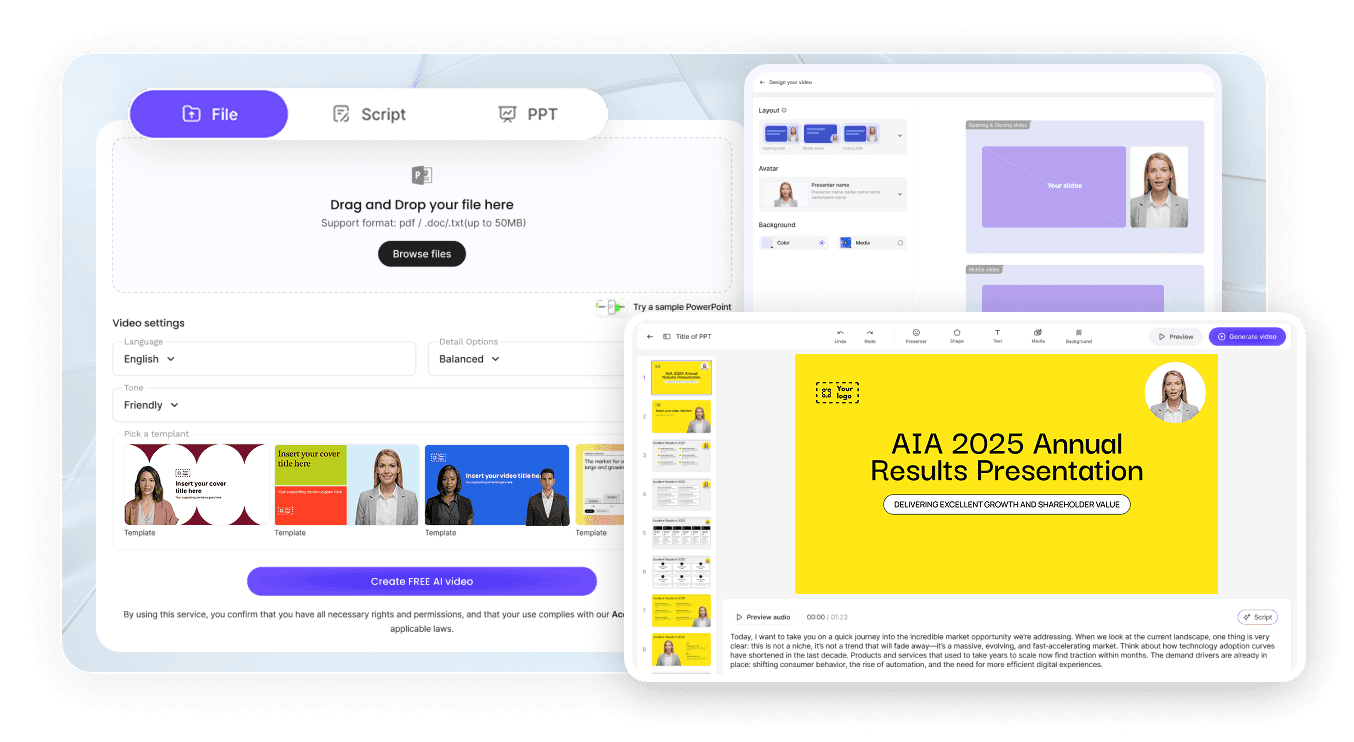
Upload the SQL course outline, the sample schema you teach against, or the exercise set from the last cohort as PDF, DOC, DOCX, PPTX, or TXT, up to 200 MB. Every scene returns editable, and the original is untouched.

Join the Tables Before the Report Is Due

Start from the SQL course outline already written; everything stays editable right up to the next analyst cohort.

avatar

Start With This Template. Finish With a Video Ready to Share.

Add your onboarding guide or help-center pages and generate an editable draft in minutes.