How Hospitals Use AI Video for Staff Onboarding (Step-by-Step)
Modern healthcare facilities utilize AI video to transform dense, text-heavy manuals into clear and engaging training modules. This systematic transition allows administrators to automate the delivery of HIPAA and OSHA protocols, ensuring every new hire receives identical, high-quality safety information.
By following a step-by-step workflow, clinical educators can reduce training production costs by up to 99% while drastically improving information retention among busy medical professionals.
⭕️ Traditional orientation methods often drown clinical staff in 50-page binders, leading to immediate information overload and critical safety gaps in high-pressure environments.
Leadde solves this by instantly converting your existing PDFs and slide decks into professional, avatar-led presentations without requiring a single camera or film crew.
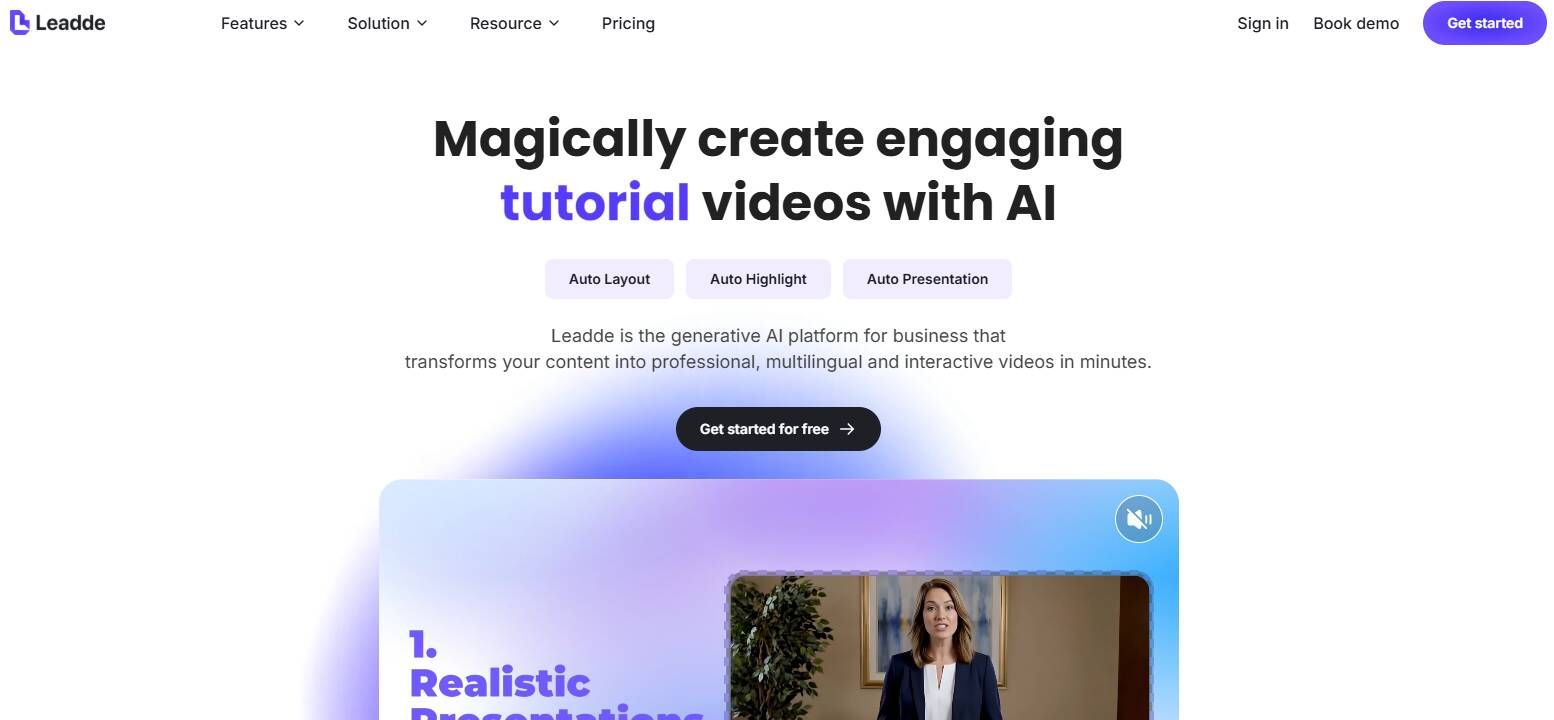
You can easily create a standardized onboarding academy that updates in minutes as regulations shift, ensuring your team remains 100% compliant without the friction of constant reshoots.
Strategic implementation of how hospitals use AI video for staff onboarding begins with organizing core clinical policies to ensure a hallucination-free training experience. By adopting this modern workflow, hospital HR managers can scale their orientation programs across multiple shifts and diverse global locations effortlessly.
This guide provides the definitive roadmap for integrating AI video into your medical facility to boost staff confidence and ultimately improve patient care outcomes.
Why are Hospitals Switching to AI Video for Staff Onboarding in 2026?
Hospital administrators are moving away from traditional training methods that rely on 50-page binders and static manuals. These outdated materials often lead to immediate information overload for new clinical hires.
By adopting AI video, facilities transform dense text into engaging, modular learning videos, forming a more effective e-learning experience that prevents disengagement during the critical first week.
High-stakes medical environments require absolute consistency in training delivery to protect patient safety. Every nurse and physician must receive identical, high-quality instructions on emergency protocols and clinical standards.
A standardized AI video ensures that no critical safety detail is missed due to human variability in live presentations.
The financial impact of this transition is significant for modern healthcare systems.
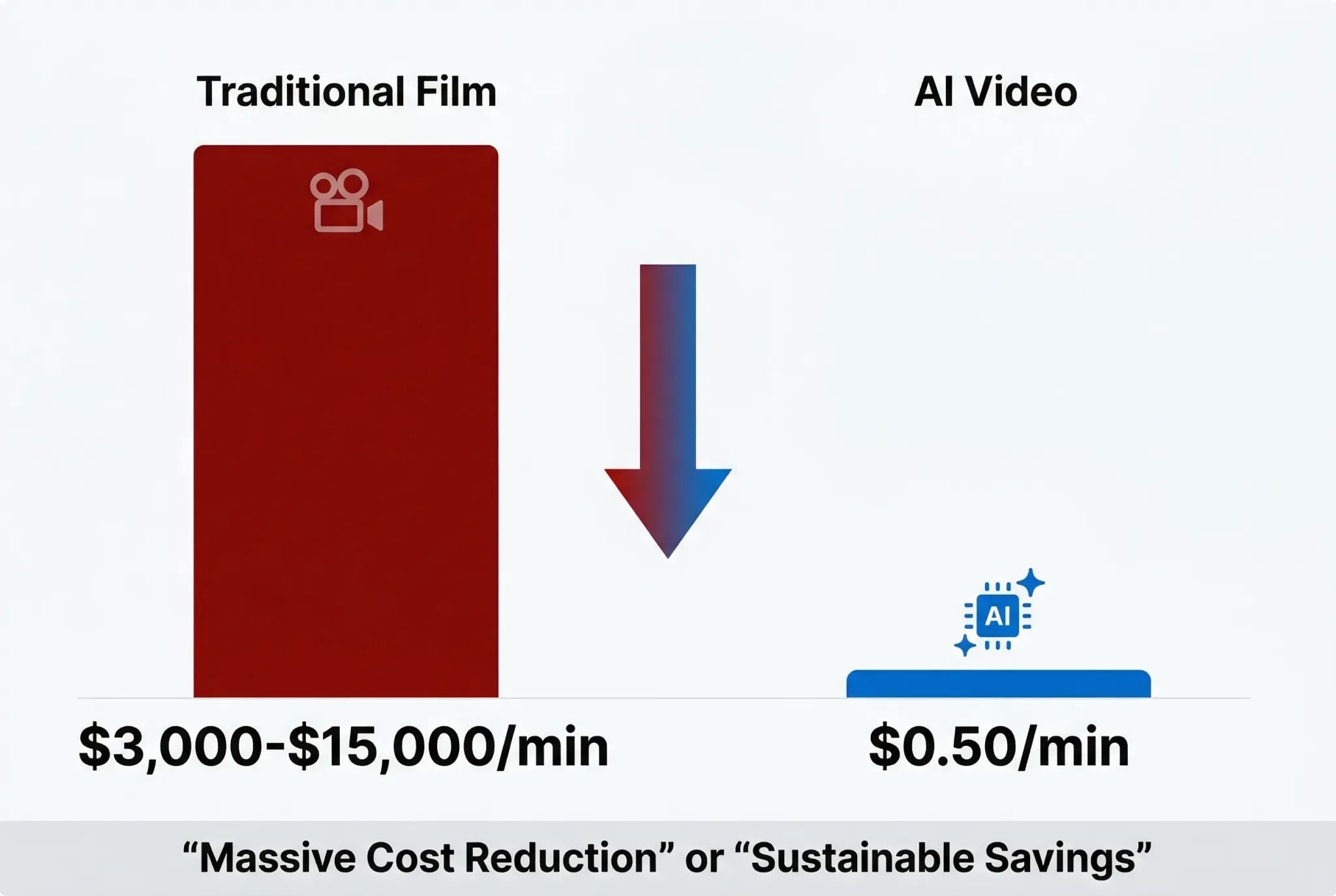
Traditional film production costs ranging from $3,000 to $15,000 per minute are no longer sustainable. Switching to AI video reduces these expenses to as low as $0.50 per minute.
Maximizing ROI with Automated Workflows
The following table compares traditional training methods with modern automated solutions:
| Training Factor | Traditional Manuals | AI Video Solutions |
|---|---|---|
| Production Cost | $3,000+ per minute | Under $5 per minute |
| Update Speed | Weeks or months | Hours or minutes |
| Consistency | Varies by instructor | 100% standardized |
Digital tools now offer superior efficiency for medical education. Leadde introduces a sophisticated policy-to-video workflow designed for rapid institutional scaling. This system allows clinical teams to repurpose established knowledge from PDFs or slide decks instantly.
It effectively eliminates the need for expensive filming crews or specialized video editing skills.
Step 1: How to Audit and Convert Clinical Policy Documents into Video?
Success in how hospitals use AI video for staff onboarding begins with a rigorous content audit. Administrators must identify mandatory training topics required by HHS, OSHA, and CMS guidelines.
This initial phase ensures that HIPAA Privacy rules and Bloodborne Pathogens protocols are fully integrated into the digital curriculum.
Clinical accuracy is non-negotiable when dealing with life-saving medical procedures. Using Leadde provides access to deterministic AI that preserves the integrity of your original source files. This technology converts existing documents without altering facts, effectively removing the risk of AI hallucinations.
The platform supports a versatile range of file inputs to streamline the creation process. You can upload existing slide decks or text-heavy documents up to 200MB in size.
The AI video engine then generates a structured, scene-by-scene outline that is easy to refine.
Effective medical training relies on high information retention rates among staff. A modular architecture is essential for maintaining focus during long orientation sessions.
Breaking content into 5-minute to 10-minute segments prevents the 40% drop in retention seen after 15 minutes of viewing.
The audit process involves several key regulatory layers:
- HHS Compliance for HIPAA Privacy and Security Rule fundamentals.
- OSHA Standards regarding emergency action plans and hazard communication.
- Joint Commission Goals focusing on infection control and patient safety.
A structured compliance matrix helps track these mandatory requirements efficiently. This documentation serves as a vital audit trail for state health department inspections.
Leadde simplifies this by organizing complex medical docs into clear, easy-to-follow video outlines.
Step 2: How to Customize Training with Professional AI Avatars?
High-quality medical training requires a sense of clinical authority that static text cannot provide. By utilizing a diverse library of over 200 lifelike AI presenters, hospitals establish immediate credibility with new hires.
These digital instructors deliver complex information with consistent energy, ensuring that every orientation session feels professional and authoritative.
The precision of medical terminology is a critical factor in patient safety and regulatory compliance. Leadde addresses this need through advanced narration polish tools designed to refine audio delivery.
Clinical educators use these features to insert natural pauses and apply pronunciation correction for difficult drug names and hospital-specific acronyms.
Visual clarity significantly impacts how well staff retain procedural information during fast-paced shifts. The following features help maintain high engagement levels:
- One-click avatar replacement ensures a unified "institutional face" across all training modules.
- Entrance and emphasis animations highlight key medical procedures on the digital canvas.
- Timed element controls guide the viewer's attention to critical life-saving steps.
These interactive elements transform passive viewing into an active learning experience.
- Professional backgrounds keep the training environment visually aligned with hospital branding.
- On-screen text and shapes provide visual reinforcement for technical medical concepts.
- Media uploads allow teams to insert real images of facility-specific equipment.
Strategic visual cues improve information absorption for clinical staff.
Step 3: How to Support a Multilingual and Diverse Medical Workforce?
Modern healthcare systems thrive on global talent integration but often struggle with language barriers during onboarding. Providing training in a native language significantly improves comprehension of complex safety rules.
AI video makes it possible to bridge this gap without the high costs of traditional translation agencies.
Leadde facilitates this transition with a one-click translation engine that supports over 170 languages. This capability allows hospitals to instantly generate localized versions of orientation videos, including all narration and on-screen text.
Choosing multi-ethnic avatars further enhances cultural relatability, reflecting the diverse reality of today's medical workforce.
Localization ensures every employee meets identical clinical standards.
| Localization Feature | Benefit for Healthcare Teams | Accuracy Metric |
|---|---|---|
| 170+ Language Support | Instant access for international clinical staff | 1-Click Generation |
| Multi-Ethnic Avatars | Represents a diverse workforce accurately | 200+ Options |
| Native Voiceovers | Improves safety rule comprehension | Natural Tone |
This automated approach maintains consistent messaging across global offices and local branches. Because the localized content stems from the same original source, the clinical rigor remains unchanged regardless of the target language.
Hospitals effectively eliminate the risk of translation errors that could lead to medical non-compliance.
Step 4: How to Personalize the Onboarding Path for Clinical Roles?
A "one-size-fits-all" approach fails in complex medical environments where roles vary significantly. Knowledge-based customization allows administrators to adjust orientation based on an employee's base knowledge in areas like cardiac rhythm or diabetic patient care.
This personalization ensures that experienced clinicians move efficiently through familiar protocols while new graduates receive the depth they require.
Leadde accelerates this professional alignment by offering business-ready templates specifically designed for medical SOPs and internal communications. These structures allow clinical educators to deploy role-specific modules that resonate with nursing, administrative, and facilities staff.
By using adaptive learning paths, hospitals reduce cognitive load and improve overall time-to-productivity for every new hire.
Tailored modules address the specific needs of diverse hospital departments:
- Nursing Modules: Focus on patient care, hand hygiene, and medication administration.
- Administrative Modules: Prioritize HIPAA Privacy fundamentals and medical record documentation.
- Facilities Modules: Emphasize OSHA safety, equipment maintenance, and emergency code response.
Relevant content is essential for high information retention.
- Clinical SOP Templates: Structured flows for presenting step-by-step medical procedures.
- Internal Update Templates: Clean layouts for announcing hospital-wide policy changes.
- Safety Induction Templates: Engaging frames for mandatory OSHA and HIPAA orientation.
Step 5: How to Track Compliance and Send Automated Training Alerts?
Strict regulatory audits require hospitals to maintain ironclad records of all training activities. AI-powered alerts eliminate the risk of oversight by sending automated notifications when a new hire has not completed a required HIPAA or OSHA module.
This continuous monitoring ensures that 100% of the workforce remains compliant with mandatory HHS and CMS standards.
The system captures critical data through electronic attestations and precise timestamps. Audit-ready reporting stores every employee ID and assessment score, providing a permanent record for state health department inspections.
By integrating these tools, safety managers receive expiry notifications before annual certifications lapse, preventing costly penalties for training failures.
Automated tracking features provide a comprehensive digital audit trail:
- Completion Records: Logs identifying the employee name, ID, and specific module completed.
- Digital Signatures: Verification that staff have viewed and understood safety protocols.
- Assessment Data: Performance scores that confirm competency in clinical areas.
Reliable documentation proves due diligence during regulatory reviews.
Step 6: How to Update Training Protocols Instantly Without Reshooting?
Medical regulations from the CDC or CMS shift frequently, making traditional video training obsolete within weeks. Agile compliance updates allow hospitals to respond to these changes in hours by editing a script instead of re-filming. This flexibility removes production bottlenecks, empowering clinical educators to maintain a current onboarding library without a professional media team.
Leadde simplifies this maintenance through scene-level script editing, allowing users to modify only the specific section affected by a policy change.
After making the edit, you can use instant republication to update the entire staff with a single click. This workflow ensures training content remains 100% accurate, supporting the highest standards of patient care and institutional excellence.
Updating your video library involves three simple, text-based steps:
- Identify Updates: Pinpoint the specific clinical protocol or regulation that has changed.
- Modify Script: Use the scene-level editor to rewrite the narration like a standard document.
- Regenerate Scene: Refresh the individual scene to reflect the new medical guidance instantly.
Fast updates ensure compliance never lags behind regulation.
Transforming Hospital Excellence with a Modern AI Onboarding Strategy
Mastering how hospitals use AI video for staff onboarding replaces fragmented orientation with a scalable clinical training system. By streamlining workflows—from policy audits to one-click translation—hospitals ensure 100% staff alignment with HHS and OSHA standards.
This shift removes production bottlenecks and frees educators from manual editing. The result: faster updates, consistent delivery, and stronger compliance across all teams.
With AI video tools like Leadde, hospitals can update critical safety protocols in minutes. Training materials stay current with evolving medical regulations—no delays, no reshoots.
The impact is immediate: up to 99% lower training costs, higher staff confidence, and a smoother path to clinical excellence from day one.
Frequently Asked Questions on Medical AI Video
- Is AI video accurate enough for clinical training?
Yes, Leadde uses deterministic AI to convert your approved PDFs and documents into video without altering medical facts.
- How long should each onboarding module be?
Research indicates that 5-10 minutes is the optimal length, as knowledge retention drops significantly after 15 minutes.
- Can we update videos when CDC guidelines change?
Leadde allows for scene-level script editing, enabling you to refresh specific protocols instantly without re-recording.
- Does the platform support multiple languages?
You can translate your entire onboarding library into 170+ languages to support a diverse global workforce.