Pharmacology Animation Maker
A pharmacokinetics or mechanism-of-action slide usually freezes at one step: a drug crossing a membrane, a ligand meeting a receptor. Leadde scripts that same step as a pharmacology animation: Text-to-Motion and a narrated AI presenter carry a written prompt through to a finished scene.
Why Leadde is the Best Pharmacology Animation Maker
Cover Pharmacokinetics, Pharmacodynamics, and Mechanism of Action in One Workflow
Text-to-Motion for Receptors, Pathways, and Drug Movement
Narrated Pharmacology Videos in 88 Languages
Templates and Brand Kit for Every Drug Class
How to Create a Pharmacology Animation with AI
Scripting a pharmacology animation takes three steps here, from a written outline to a finished narrated video, without opening a separate animation program.
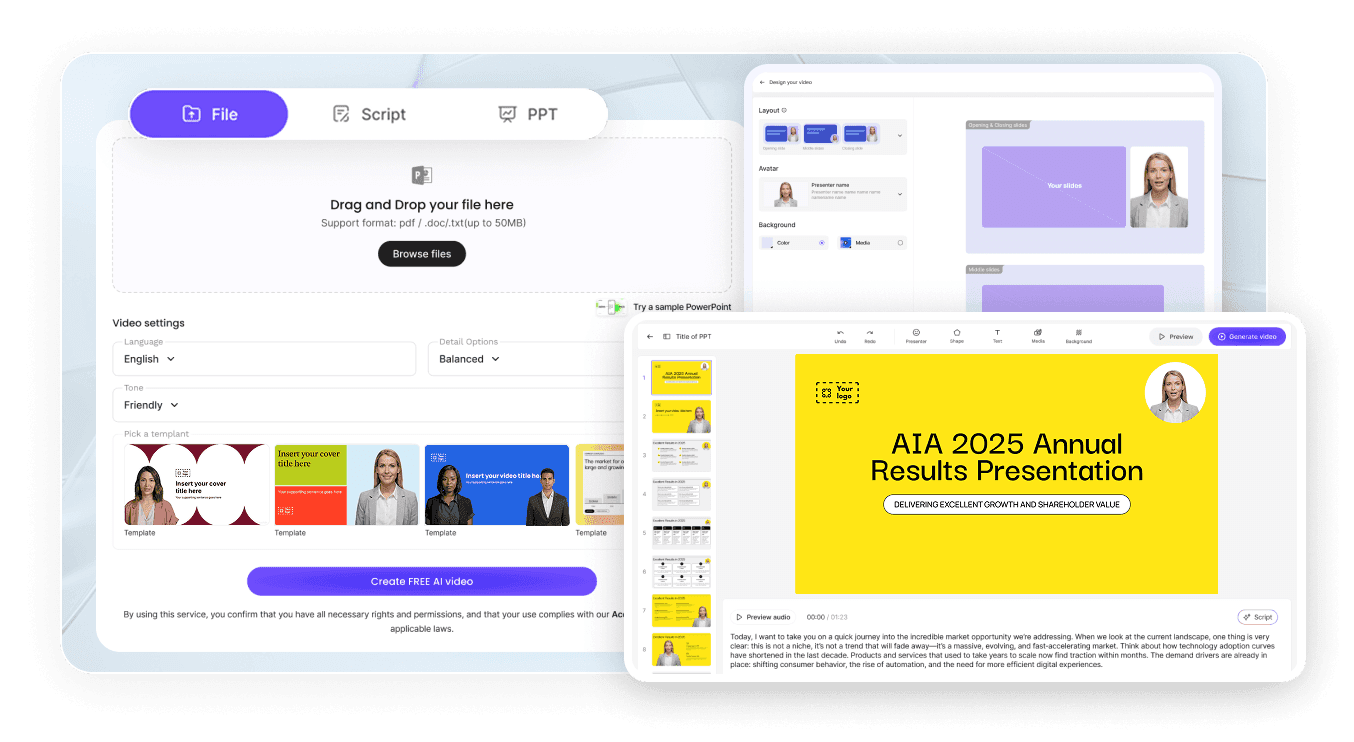
Step 1: Add Your Lecture Notes or Drug Monograph
Step 2: Generate the Mechanism Animation and Narration
Step 3: Refine, Translate, and Share
Pharmacokinetics & ADME Animation Videos
Drug Absorption Animation
Drug Distribution Animation
Drug Metabolism Animation
Drug Excretion Animation
Pharmacodynamics & Mechanism of Action Animation Videos
Receptor Binding Animation
Mechanism of Action Animation
Dose-Response Animation
Drug Interaction Animation
Trusted by Pharmacology Teachers, Tutors, and EdTech Creators
One Workspace for Kinetics, Dynamics, and Everything Between
Update a Video When a Guideline or Dosage Changes
A Chat Panel Catches the Receptor Question Before Office Hours
Analytics Flags the Mechanism Losing Students Midway

Pharmacology Animation Ideas & Use Cases
Pharmacy and Nursing School Courses
Medical School Pharmacology Units
Board and Licensing Exam Prep
Pharma Training and CE Content
See More Biology and Life-Science Animation Videos
Heart Animation
See how a cardiac drug's target organ actually beats, its chambers, valves, and blood flow.
Brain Animation
Trace the CNS target itself: brain structure, neural signaling, and the nervous system.
Cell Animation
Zoom into the cell biology a drug receptor sits inside, from the membrane to the organelles.
DNA Replication Video
Cover the replication process some antibiotics and chemotherapy drugs are built to interrupt.
Biology Animation
See the life-science foundation underneath a pharmacology unit, cells through genetics.
Science Animation
Branch into the chemistry and physics that a drug's mechanism depends on.
Related Leadde Tools for Pharmacology Animation

AI Medical Education Video Maker
Turn pharmacology PDFs on drug classes and mechanisms of action into clear teaching videos for health students in 88 languages.

AI Motion Graphics Generator
Create animated explainers of receptor binding and drug absorption from a prompt, text, or slides, using visual flows.

AI PDF to Video Converter
Convert a pharmacokinetics handout or ADME study guide PDF into a video with an editable script, voiceover, and subtitles.
FAQs
A drug mechanism animation maker turns a pharmacology topic, absorption, receptor binding, or a full mechanism of action, into an animated, narrated video. Feed it a lecture outline or a short prompt, and it plots the sequence, casts a presenter to narrate it, and can translate the finished clip into the language a cohort studying abroad needs.
A pharmacology animation can begin the same session an account opens, since signup takes no card and no payment. Scaling a course past the free tier is a leadde.ai/pricing question, not something worth guessing at.
You can animate ADME, receptor binding, mechanism of action, dose-response relationships, and drug interactions, or narrow it down to a single drug class. Bring your own lecture notes, or use a topic page above as the starting template.
88 languages and 175 dialects are covered by Translate, so a dose-response or drug-metabolism module isn't locked to the language it was first recorded in. Make the pharmacology animation once, then let Translate handle a new language on demand, regenerating both the script and the on-screen labels.
Inside Create Media, filed under AI Tools in the sidebar, Motion handles one process at a time, a receptor meeting a ligand, for instance, while a longer prompt becomes a full narrated clip through Text-to-Video, billed to your account credits.
Ready to try Leadde?
A dose-response curve makes more sense moving than plotted flat on a handout. No drug-animation studio, no stock footage license, just a free account.