How to Create Multilingual Medical Training Videos (2026 Guide)
To create medical training videos in 2026, you must transform static clinical documents into AI-driven visual assets that support global accessibility. The most efficient way to master how to create multilingual medical training videos is by uploading medical PDFs or SOPs into an automated generator to produce localized, avatar-led content.
This modern workflow allows healthcare teams to generate accurate training in 175 languages with a single click, reducing production timelines from weeks to mere hours.
Picture the high-stakes challenge of rolling out a critical new clinical protocol to a global healthcare workforce.
Relying on text-heavy manuals often leaves dangerous room for misinterpretation, yet the cost of traditional filming for every regional branch remains a massive bottleneck.
Leadde eliminates these production barriers by turning your existing medical research and slide decks into professional medical training videos without requiring a camera or a studio.
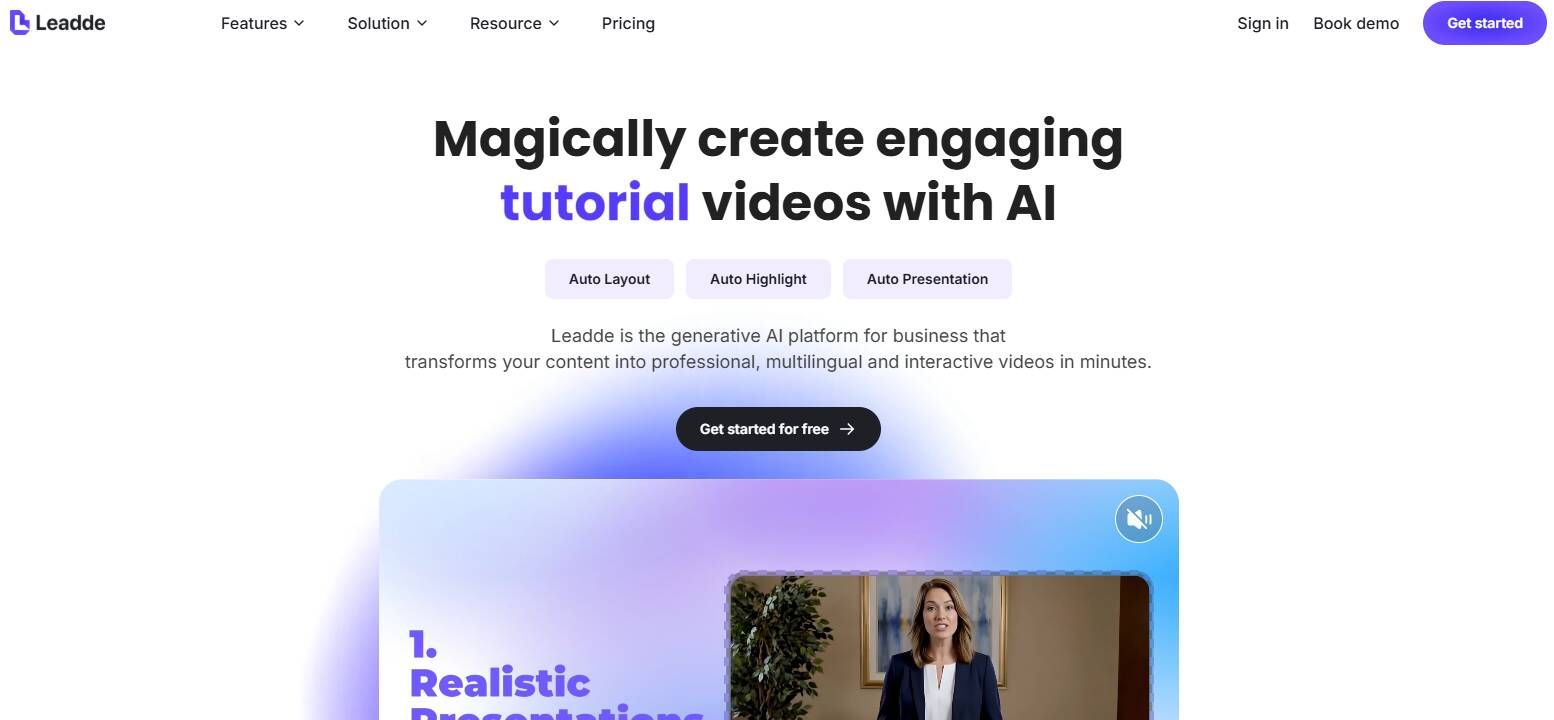
By using Leadde, your organization can ensure that every surgeon and nurse receives life-saving instructions with flawless medical pronunciation in their native tongue.
Why Is Multilingual Video Production Essential for Modern Healthcare Teams?
The 2026 healthcare landscape is defined by a highly mobile, international workforce that requires instant access to technical knowledge.
⭕️ Traditional training methods often fail to bridge the communication gap between specialized medical departments and global nursing staff. Professional medical training videos mitigate the high-stakes risk of clinical errors caused by language barriers.
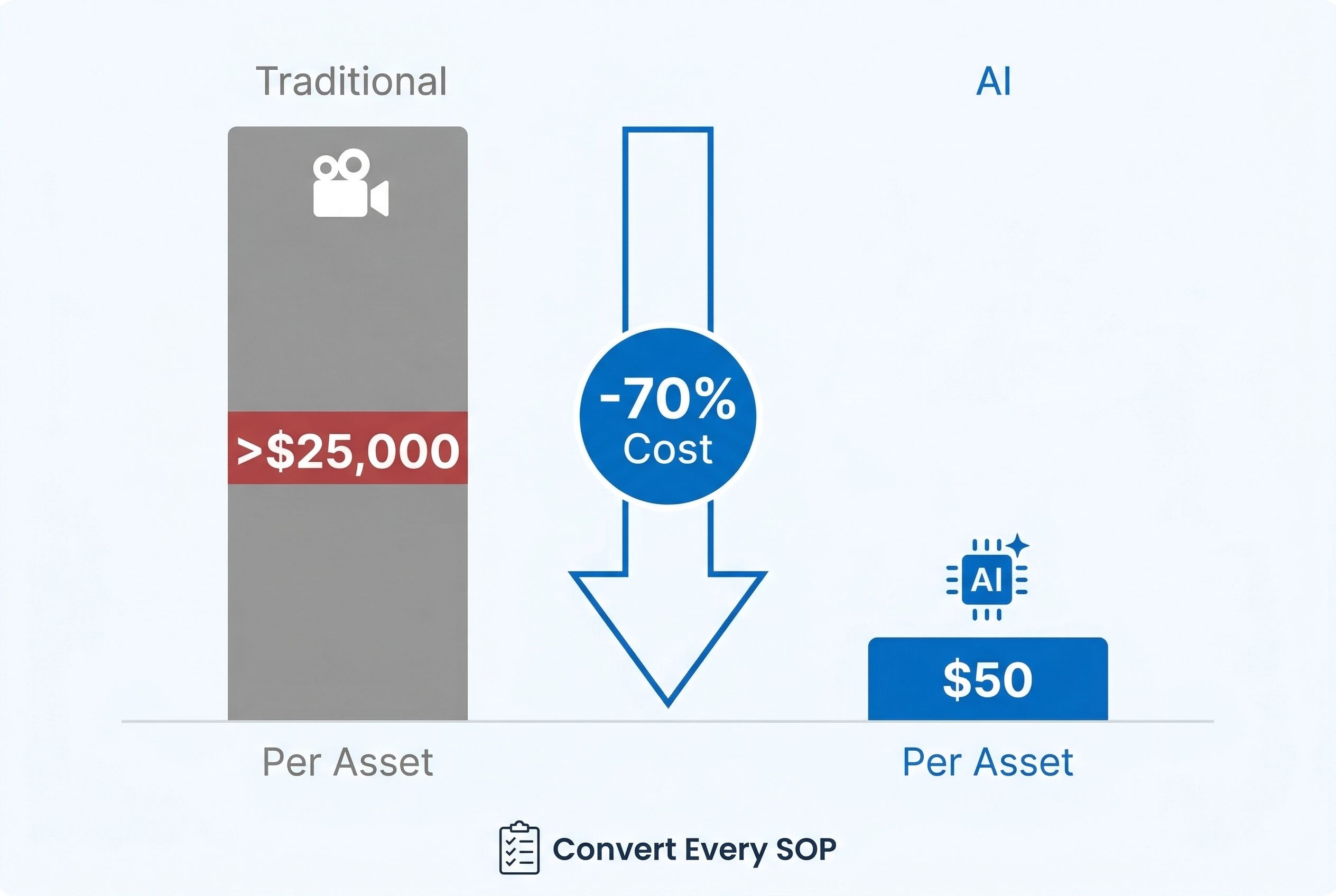
Scaling clinical education across multiple hospital branches previously required budgets exceeding $25,000 per asset. Today, organizations leverage AI efficiency to produce high-quality medical training videos for as little as $50.
This 70% reduction in production expenses allows L&D teams to convert every SOP into a visual resource.
The following table compares legacy production workflows with the modern AI-driven approach for global healthcare.
| Feature | Traditional Video Production | AI-Driven Healthcare Videos |
|---|---|---|
| Timeline | 3–5 weeks per video | 2–4 hours per video |
| Localization | $1,200 per minute | Included in platform fees |
| Equipment | Studios, cameras, and crews | Browser-based AI tools |
Advanced medical training videos guarantee that a surgeon in London and a nurse in Tokyo receive identical, high-standard instructions.
Leadde supports this global consistency by providing a single source of truth that remains professional across all 175 languages.
How Standardized Care Drives Patient Safety
Standardized education serves as the backbone of patient safety in complex, multi-site medical networks. Consistent medical training videos ensure that life-saving protocols are never diluted by local dialect differences.
This uniformity allows administrators to verify that every employee meets the exact same healthcare compliance benchmarks.
- Unified Voice: AI avatars maintain a professional, calm authority across every localized module.
- Visual Clarity: Synchronized highlights guide the eye to critical surgical tools or drug dosages.
- Error Reduction: Automated scripts remove the risk of human presenters omitting vital safety steps.
How Can You Plan a Successful Multilingual Medical Video Strategy?
Successful deployment starts with analyzing hospital staff demographics to identify which regions face the highest linguistic hurdles.
Prioritizing the first 2–3 target languages based on real-world patient and staff data ensures the fastest impact on clinical outcomes. This data-driven phase prevents the waste of resources on languages that do not serve the immediate needs of the frontline workforce.
Transitioning from vague goals to measurable objectives is the next requirement for high-impact medical training videos. Instead of simply "improving awareness," effective strategies aim for specific targets, such as "reducing equipment operation errors by 40%".
These metrics allow healthcare leaders to prove the ROI of their multilingual medical training programs to stakeholders.
Clear objectives facilitate a smoother production workflow and better learner alignment.
- Metric Tracking: Align video content with actual support ticket data or clinical incident reports.
- Role Adaptation: Design separate modules for surgeons and administrative staff to ensure technical relevance.
- Cultural Nuance: Verify that medical symbols and colors resonate correctly within regional cultural norms.
Leadde enhances this planning phase by offering business-ready templates specifically designed for structured medical SOPs and internal communications. By selecting a formal tone and balanced detail level within the Leadde settings, creators match the authoritative "bedside manner" required for professional education.
This strategic alignment ensures that every medical training video feels like a natural extension of the hospital’s official medical board.
What Is the Step-by-Step Guide to Creating Multilingual Medical Training Videos?
Creating professional medical training videos requires a transition from static documentation to dynamic, multi-sensory learning. Modern workflows prioritize accuracy and speed by utilizing AI to process existing clinical manuals.
This systematic approach ensures that multilingual medical training remains consistent across global healthcare networks.
Step 1: Plan Target Languages and Medical Learning Objectives
Effective medical training videos begin by defining specific, measurable goals for the clinical staff. Instead of vague aims, focus on outcomes like "reducing medication administration errors by 25%". This clarity allows you to align every scene with your internal medical SOPs and safety requirements.
Identifying the linguistic profile of your frontline workforce prevents critical gaps in healthcare education. You should prioritize the 2-3 most common languages used across your hospital sites to maximize early impact. Leadde facilitates this by analyzing your source files to ensure the content meets your specific training objectives.
Clear planning directs the technical configuration of your localized content.
- Audience Profiling: Distinguish between foundational training for new hires and advanced technical updates for experienced surgeons.
- Metric Alignment: Connect video goals directly to reducing support tickets or improving clinical compliance rates.
- Content Inventory: Gather existing PowerPoints, manuals, and expert notes to serve as your script foundation.
Step 2: Write Clear, Modular Scripts and Build a Medical Glossary
Writing for medical training videos demands a "write for the ear" strategy to ensure high retention. Use short, direct sentences under 20 words to explain complex clinical procedures. This modular scripting style allows each section to stand alone, simplifying future updates to specific clinical protocols.
Establishing a central medical glossary is the only way to guarantee terminology consistency. This "source of truth" defines how drug names and anatomical terms must be translated across every language. Leadde automates the initial script generation from your documents, allowing you to refine the technical narration for perfect accuracy.
A structured script prevents linguistic ambiguity during the AI translation phase.
- Simple Vocabulary: Replace complex terms like "utilize" with "use" to help non-native speakers follow instructions.
- Direct Address: Use "you" and "your" to create a personal, engaging learning experience for the staff.
- Signposting: Tell viewers exactly what they will learn at the start of each medical training module.
Step 3: Select the Right AI Medical Avatars and Voiceovers
Trust in medical training videos is built through professional visual representation. Choosing AI presenters in healthcare scrubs or lab coats reflects the authority of your medical institution. This relatability ensures that doctors and nurses perceive the training as an official and credible resource.
Voice selection must match the serious nature of clinical education. Select an authoritative tone with natural inflection to emphasize vital safety warnings or surgical steps. Leadde offers over 200 multi-ethnic avatars, enabling you to match the presenter’s appearance and accent to your regional audience.
Professional avatars and voices humanize technical data for the learner.
- Avatar Consistency: Use the same digital presenter across a series of related modules to build familiarity.
- Pacing Control: Slow down the narration to 130 wpm when explaining highly technical medical equipment.
- Diversity: Rotate different ethnicities to reflect the actual diversity of your global medical workforce.
Step 4: Generate and Localize Subtitles with Technical Precision
Subtitles are essential for medical training videos to support learning in noisy hospital environments. They allow clinicians to scan for specific troubleshooting steps without needing full audio. Leadde generates these captions automatically in 175 languages, providing a solid base for global medical education.
Technical precision in subtitles prevents dangerous clinical misunderstandings. You must verify that abbreviations like "UI" or complex drug names are correctly formatted for the target language. Leadde provides built-in tools for narration polishing, allowing you to insert pauses and correct pronunciations for technical terms.
Accurate subtitles improve accessibility for hearing-impaired and non-native staff.
- One-Click Translation: Instantly convert your entire video into 175 languages to reach global branches.
- Human Review: Always invite native medical experts to audit AI-generated subtitles for technical accuracy.
- Pacing Alignment: Ensure subtitles appear 1–2 seconds before the speaker finishes to give viewers time to read.
Step 5: Adapt Visuals, UI, and Scene Timing for Global Accuracy
Visual localization for medical training videos requires more than simple text translation. You must account for text expansion, where languages like German or Spanish take up 30% more space than English. Leadde’s canvas editing tools allow you to drag and position elements to prevent overlapping in different language versions.
Synchronizing visuals with narration is critical when demonstrating medical software or hardware. If a medical training scene describes a specific device button, that highlight must appear at the exact moment of narration. Leadde includes timing and animation controls to ensure every visual cue is perfectly aligned with the audio.
Localized visuals ensure the training matches the tools staff use daily.
- UI Screenshots: Replace English software captures with localized interface images to match regional systems.
- Visual Highlights: Use arrows and animated frames to emphasize key messages and safety steps.
- Buffer Times: Leave extra space between scenes to accommodate longer localized voiceovers.
Step 6: Insert Knowledge Checks and Distribute via Healthcare LMS
Interactive medical training videos improve information retention by up to 40%. By inserting knowledge checks every 3-5 minutes, you force the staff to actively apply what they have learned. These scenario-based questions verify that a surgeon or nurse can perform a task safely before they return to the ward.
Final distribution must occur through a secure Healthcare LMS to track compliance and completion. This data allows administrators to identify which teams have mastered the latest clinical standards. Leadde allows for easy updates; if a protocol changes, you simply edit the script like a document and regenerate the video instantly.
Tracking performance metrics ensures that training leads to better patient outcomes.
- Scenario Questions: Use real-world workplace examples to test how staff handle specific medical emergencies.
- Completion Metrics: Monitor play rates and quiz scores to audit the effectiveness of your global curriculum.
- Agile Updates: Refresh videos annually to keep procedures aligned with the newest healthcare regulations.
How Do You Optimize Medical Training Videos for Maximum Engagement and Retention?
Busy healthcare professionals prioritize speed and clarity when consuming clinical education. Restricting medical training videos to under 10 minutes prevents cognitive overload and fits into short clinical breaks. This micro-learning approach ensures that every healthcare professional retains critical safety information during long shifts.
Visual scannability allows learners to identify vital technical steps within seconds. Leadde uses smart layout and auto highlights to emphasize important surgical maneuvers or dosage warnings automatically.
These animated textual highlights ensure that medical training videos remain readable on mobile screens in high-pressure environments.
Updating medical training videos is effortless when clinical standards evolve. Leadde offers scene level script editing, allowing you to modify specific clinical protocols as easily as editing a text document. This agility keeps your global medical education library 100% accurate without the need for expensive reshoots.
Strategic Use Cases for AI Medical Videos
Different medical departments require tailored visual formats to achieve specific learning objectives. Utilizing diverse medical training videos allows organizations to standardize knowledge across various specializations. From the operating room to the administrative office, AI-driven content scales healthcare training with unmatched consistency.
The following table highlights key applications for AI video in a modern medical facility.
| Medical Scenario | Training Application | Expected Outcome |
|---|---|---|
| Surgical Dept | Procedure Walkthroughs | Reduced intraoperative errors |
| Nurse Onboarding | Medication Safety SOPs | Zero dosage-calculation mistakes |
| IT & Cybersecurity | Patient Data Privacy | Flawless HIPAA/GDPR compliance |
Broadening the scope of your multilingual medical training covers every facet of the healthcare experience.
- Medical Device Demos: Transform technical manuals into 175-language videos for international equipment rollout.
- Compliance Updates: Instantly refresh safety rules for all hospital branches when regional laws change.
- Patient Instructions: Provide clear post-operative care guides to patients in their preferred native language.
Conclusion: Mastering Multilingual Medical Training in 2026
The transition from text-heavy manuals to AI medical training videos has solved the crisis of high costs and slow production. By mastering how to create multilingual medical training videos, global hospital networks now deliver life-saving knowledge at 70% lower costs.
This shift ensures that a surgeon in London and a nurse in Tokyo operate with the exact same technical precision.
The future of clinical education is "global-first," where language is no longer a barrier to medical excellence. Providing every staff member with accessible, multilingual medical training represents the ultimate commitment to patient safety and workforce inclusivity.
As we move through 2026, the ability to rapidly generate accurate content defines the leaders in the healthcare industry.
Imagine a world where a new life-saving protocol is deployed across twenty countries in a single afternoon. Leadde makes this a reality by turning your most complex clinical documents into captivating medical training videos in minutes.
You can start a free trial of Leadde today to begin empowering your global team with professional, accurate, and localized healthcare education.