Best Conversational AI Platform (2026): Top Tools Compared & Ranked

The best conversational AI platform in 2026 depends on your specific use case, but leading solutions typically combine advanced large language models (LLMs), automation workflows, and multi-channel support. Platforms like OpenAI, enterprise systems such as Microsoft and IBM, and no-code tools like Intercom dominate the market, while newer solutions are redefining the space with multimodal capabilities such as video-based conversational AI.
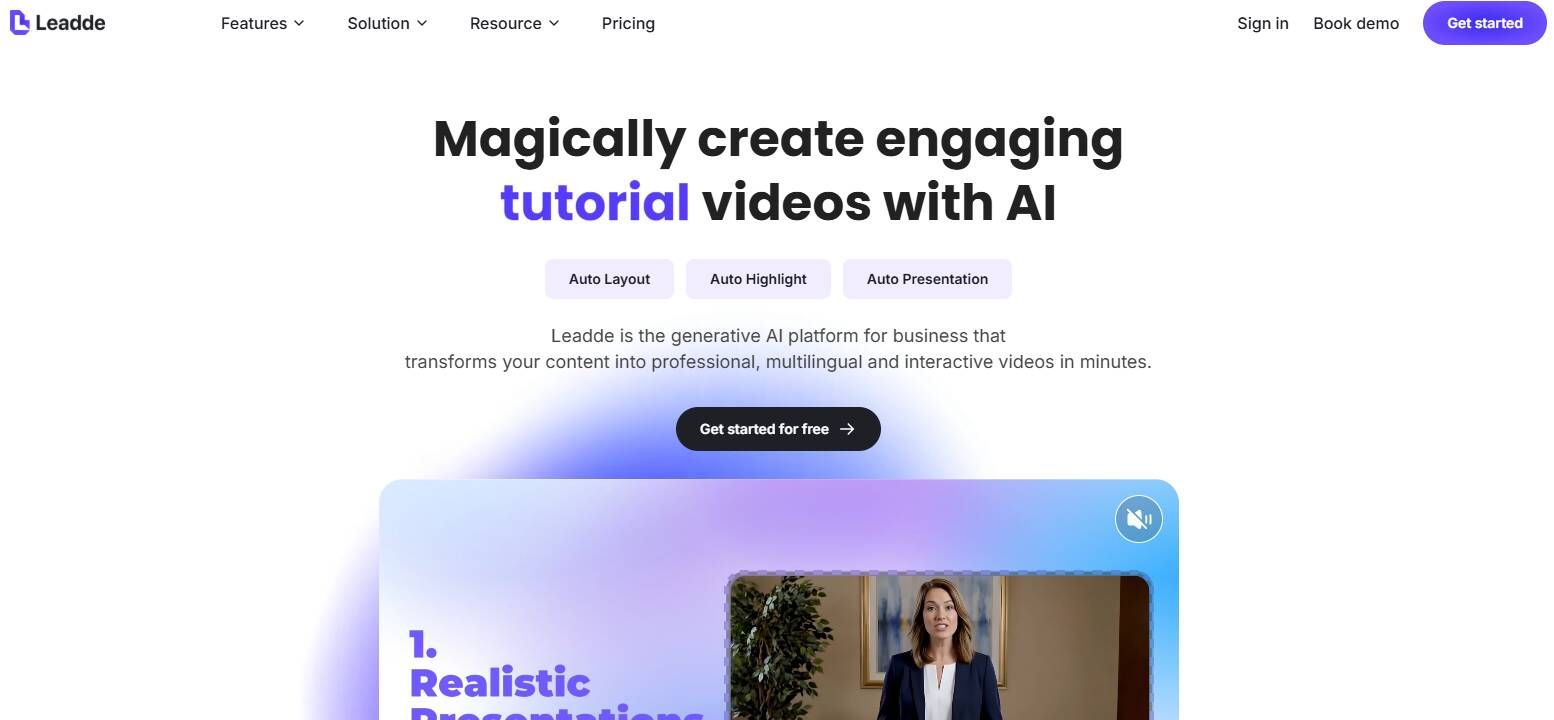
Many businesses struggle with complex setup, low engagement, and text-only AI that fails to convert users. Leadde solves this by turning any document into an interactive AI video—fast. Create professional videos in minutes while reducing costs by 80% and saving 90% of content creation time.
What Is a Conversational AI Platform? (The 2026 Evolution)
Defining Modern Conversational AI: NLU, LLMs, and Generative Layers
As of 2026, a Conversational AI Platform is a generative AI ecosystem designed to transform static content into interactive dialogues. It combines Natural Language Understanding (NLU) to grasp intent, and Large Language Models (LLMs) to generate human-like responses.
Chatbots vs. Conversational AI vs. Autonomous AI Agents: Key Differences
Chatbots: Rely on rigid, pre-scripted decision trees; often fail when a user deviates from the path.
Conversational AI: Uses deep learning to understand context and sentiment, providing fluid multi-turn conversations.
Autonomous AI Agents: Independent systems that can execute tasks (like booking or data retrieval) without human intervention.
Beyond Text: The Rise of Multimodal and Video-Based Interactions
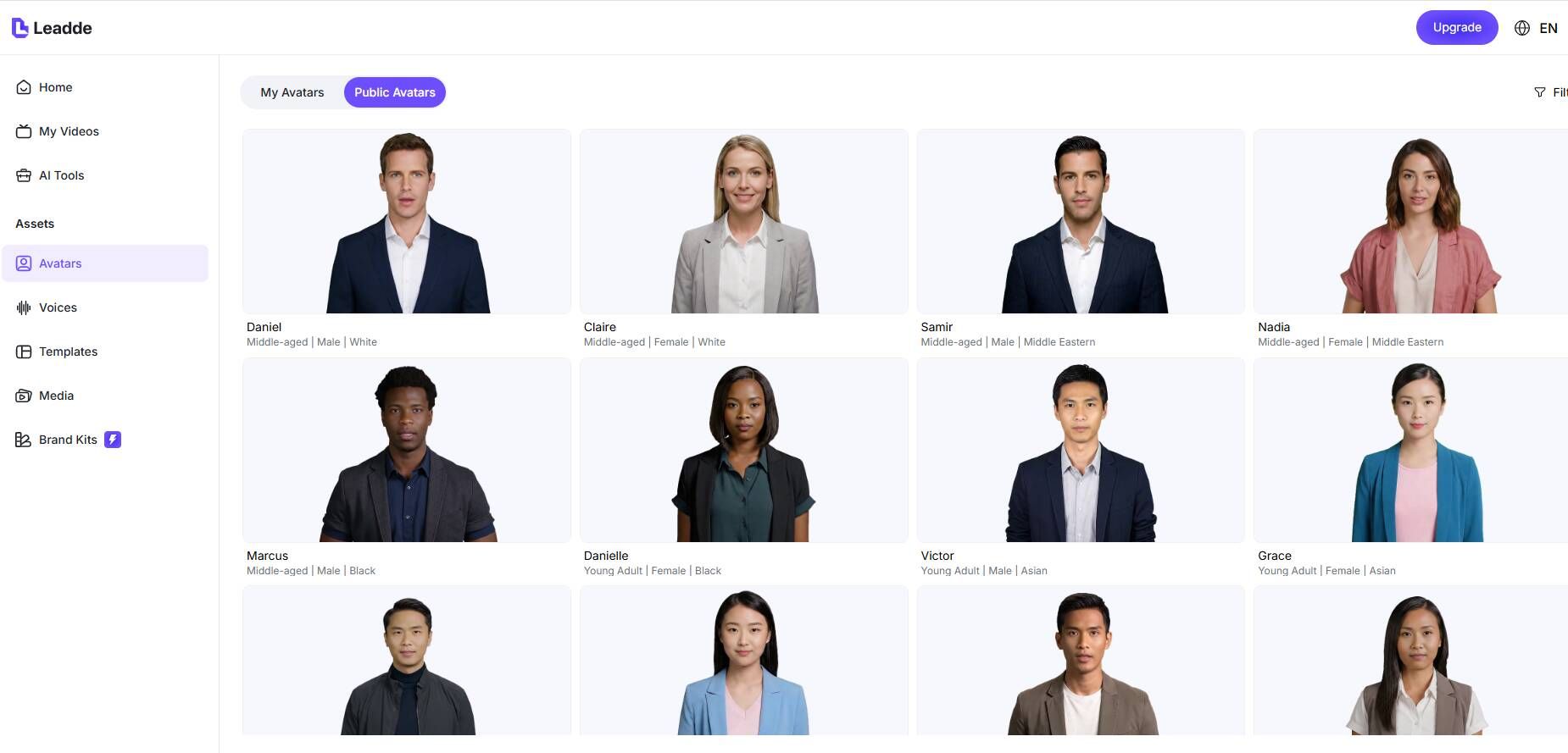
The 2026 market has shifted from simple text windows to multimodal interactions. Modern platforms allow users to interact via voice and visual avatars. Leadde leads this trend by enabling "Chat with Video," where viewers ask questions directly to the video content. To understand how this fits into broader content strategy, explore what video marketing is and why it matters.
Key Benefits of Conversational AI Platforms: The 80/90 Rule
Automating Customer Interactions at Scale (24/7 Availability)
Conversational AI provides instant, 24/7 support across 92+ languages. This ensures global customers receive native-level assistance without the need for massive human support teams.
Massive Cost Reduction: Slashing Production and Support Overhead by 80%
Organizations using advanced AI automation report an up to 80% reduction in production costs. By automating the generation of scripts, layouts, and voice-overs, companies avoid expensive traditional filming and editing. For deeper insights into pricing structures, see video production cost breakdowns.
Improving CX with Real-Time Data and Context Retention
90% reduction in content creation time allows brands to stay updated in real-time.
3x increase in content engagement is achieved by transforming passive videos into interactive knowledge resources.
Types of Conversational AI Platforms: A Complete Breakdown
LLM-Native Platforms: OpenAI, Anthropic, and Google Vertex AI
These provide the "brain" or the underlying API. They are best for developers building custom tools but lack the specialized video or UI layers required for business-ready content creation.
Enterprise-Grade Solutions: IBM watsonx, Microsoft Copilot, and Salesforce Einstein
These are best for CRM depth and data security. They excel at ticket routing and internal workflow automation but often struggle with producing high-impact visual or video content.
No-Code & CX Automation: Intercom, Drift, and ManyChat
Focused on website lead generation and customer success. They offer simple drag-and-drop interfaces but are generally limited to text and basic image-based interactions.
Multimodal & Video Pioneers (Leadde, Synthesia, HeyGen)
These platforms represent the 2026 cutting edge. They combine the intelligence of LLMs with AI avatars and video generation. Leadde is unique here for its ability to convert complex documents like PPTs and PDFs directly into interactive video assets. If you're exploring how to implement this, check out how to produce a corporate video with AI.
Top 10 Conversational AI Platforms in 2026: Structured Comparison
Choosing the best conversational AI platform depends on your use case, technical requirements, and scalability needs. As of 2026, the market includes LLM-native tools, enterprise systems, no-code platforms, and emerging multimodal solutions.
Below is a structured comparison of the top 10 conversational AI platforms based on capabilities, flexibility, and business impact.
Platform Comparison Overview
| Platform | Category | Best For | Key Strength |
|---|---|---|---|
| OpenAI | LLM-native | Developers & AI agents | Advanced reasoning & flexibility |
| Anthropic | LLM-native | Safety-critical applications | Reliable, aligned outputs |
| Google Vertex AI | LLM-native | Enterprise AI + search integration | Ecosystem & data integration |
| Microsoft Copilot Studio | Enterprise | Enterprise workflows | Deep Microsoft ecosystem |
| IBM watsonx Assistant | Enterprise | Regulated industries | Security & compliance |
| Salesforce Einstein | Enterprise | CRM automation | Customer data integration |
| Intercom | No-code | Customer support | UX & messaging experience |
| Drift | No-code | Sales automation | Lead conversion |
| ManyChat | No-code | Social media automation | Messaging platform support |
| Leadde | Multimodal | Content & training | Interactive video + AI |
Key Insights from the Comparison
LLM-native platforms (OpenAI, Anthropic, Google) offer the most flexibility but require technical expertise.
Enterprise platforms (Microsoft, IBM, Salesforce) excel in integration, security, and large-scale operations.
No-code tools (Intercom, Drift, ManyChat) are ideal for fast deployment in marketing and support.
Multimodal platforms like Leadde represent the next evolution, combining conversational AI with interactive video experiences.
Quick Recommendations by Use Case
Best for developers: OpenAI
Best for enterprise integration: Microsoft Copilot Studio
Best for CRM-driven automation: Salesforce Einstein
Best for customer support teams: Intercom
Best for sales & lead generation: Drift
Best for content, training, and engagement: Leadde
Mandatory Features for the "Best" Platform Selection
Natural Language Understanding (NLU) and Intent Accuracy
A top platform must accurately identify user intent, even with slang or complex phring. Leadde's system analyzes pitch, tone, and rhythm to ensure a natural interaction.
Two-Way Interactivity: Chat-Enabled Avatars and "Chat with Video"
Passive video is no longer enough. The best platforms turn videos into interactive learning assets where users can ask questions and explore material deeply.
Seamless Omnichannel Support and API Integration
Your AI must live where your customers are. Look for platforms that support web, mobile, and social integrations while maintaining enterprise security like SOC 2 and GDPR.
Enterprise Security: SOC 2, GDPR, and ISO 42001 Compliance
Safety is non-negotiable. Leading platforms like Leadde follow ISO 42001 guidelines for ethical AI and provide content moderation frameworks.
Industry Use Cases: Transforming Support, Sales, and Operations
Customer Support: Ticket Deflection and 24/7 Troubleshooting
AI resolves routine queries autonomously, allowing human agents to focus on complex cases. Leadde's playback modes allow for inserting video segments into these support flows for better clarity.
Sales & Marketing: Scaling Outreach with Hyper-Localized Voice Clones
Voice Cloning: Supports 170+ languages with specific accents.
Localization: One-click translation of video drafts directly within the editor. Learn more about scaling globally with video localization strategies.
Training & Internal Ops: Turning PPTs/PDFs into Interactive Learning Assets
Leadde's Slide Presenter supports layered PowerPoint editing. This allows teams to update specific text or icons without rebuilding the entire video. You can also explore how to convert documents into videos for practical workflows.
Pricing Models and the ROI Decision Matrix
Subscription vs. Usage-Based Pricing (Hidden Costs to Watch For)
Many platforms charge "per minute," which can lead to unpredictable costs. For example, Synthesia's starter plan provides only 10 minutes per month for $29.
The Unlimited Advantage: Why Flat-Fee Plans are Winning in 2026
Leadde offers a disruptive $19/month Unlimited videos plan. This makes it the most cost-effective choice for high-volume video needs like employee onboarding and SOP documentation.
Choosing by Business Size
Small Teams: Benefit from Leadde's free plan (10 min/month + 80 credits).
Global Enterprises: Need the 92-language support and SOC 2 compliance provided by Leadde's enterprise tier.
Pros, Cons, and Future Trends (2026 & Beyond)
Advantages of Early Adoption vs. Implementation Limitations
Early adopters see a 3x increase in engagement. However, the main limitation is often the quality of original audio; high-quality voice clones require at least 10–60 seconds of clean recording.
Future Trends: Agentic Workflows and 100% Autonomous Customer Success
The next step is the integration of AI Agents that not only talk but act. We are moving toward a future where the AI video avatar can close a sale or process a refund directly within the video chat interface.
Conclusion
Selecting the best conversational AI platform requires balancing technical NLU accuracy with visual interactivity and cost efficiency. For 2026, the standard is set by platforms that can transform existing business documents into interactive assets.
Overall, Leadde is the premier choice for organizations needing to scale professional video creation efficiently. By converting documents directly into videos and providing unlimited $19/month plans, 92-language support, and two-way interactivity, Leadde keeps your time and costs under control while maximizing engagement.