
Colossyan Review 2026: Is the NEO 2 Engine Worth the Cost?
Colossyan’s NEO 2 engine delivers strong value for organizations that prioritize high-quality avatar realism and interactive training experiences. Its advanced gesture system and natural delivery make it particularly effective for corporate learning, onboarding, and compliance videos where engagement matters.
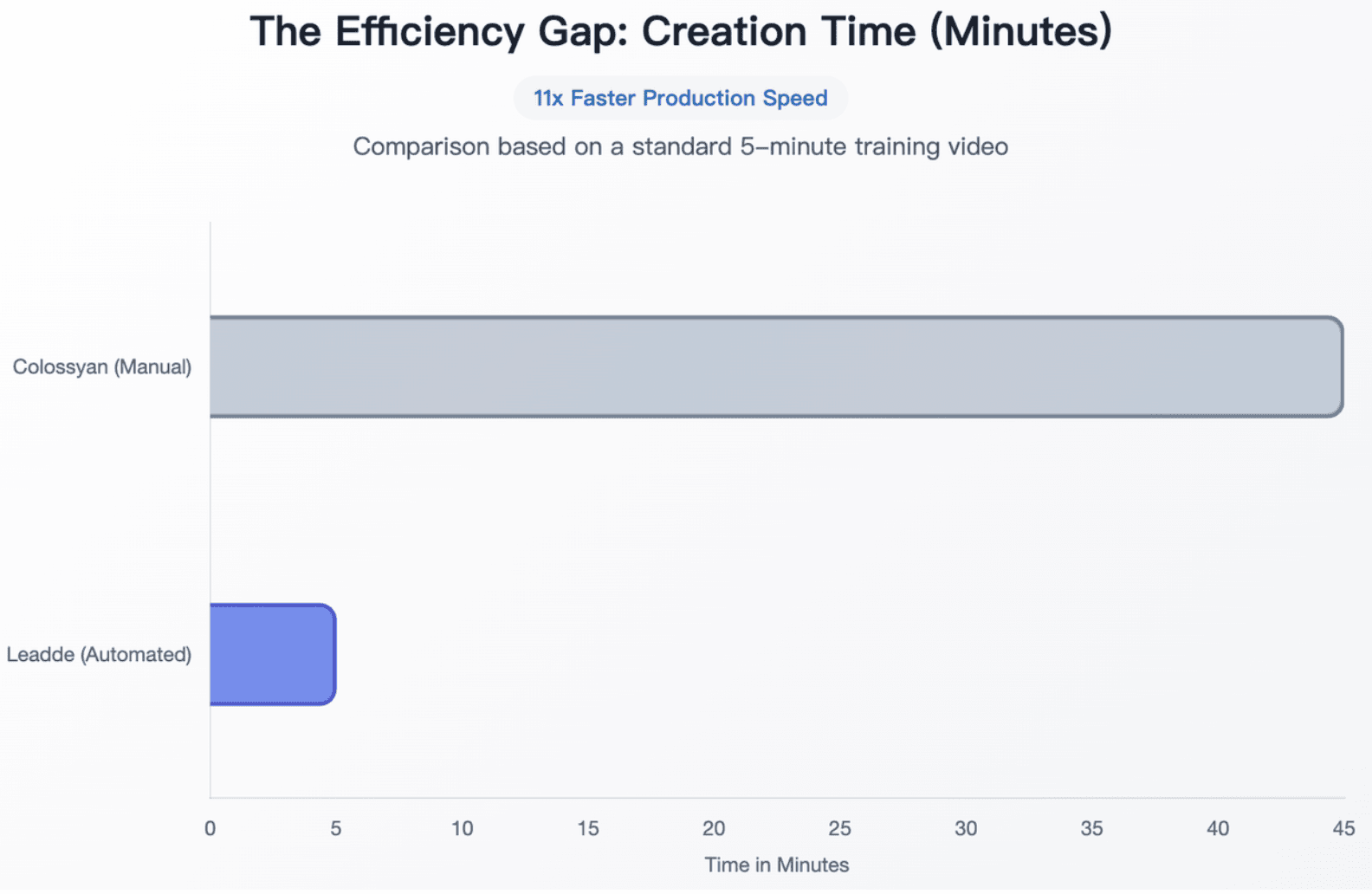
However, this value quickly diminishes in high-volume production scenarios. The Business plan limits NEO 2 usage to just 10 minutes per month, and creating a single video often requires 30–60 minutes of manual scripting and scene setup. For teams producing large-scale technical documentation or software tutorials, these constraints significantly slow down output.
While NEO 2 stands out for its industry-leading gesture realism, its “minute-based pricing model” and rendering bottlenecks make it less efficient for rapid content scaling.
Struggling with slow scripting and strict video minute limits? These bottlenecks are exactly why many teams fail to scale corporate video production.
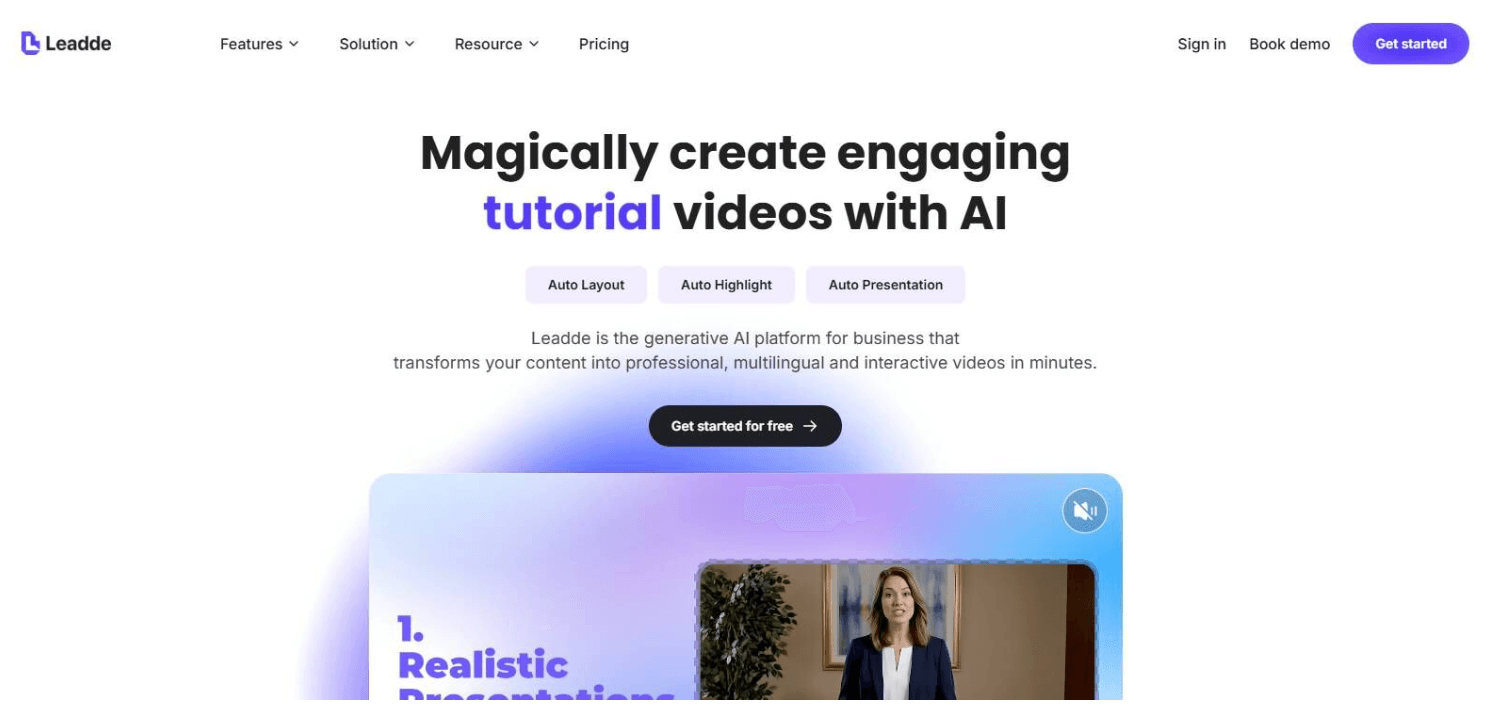
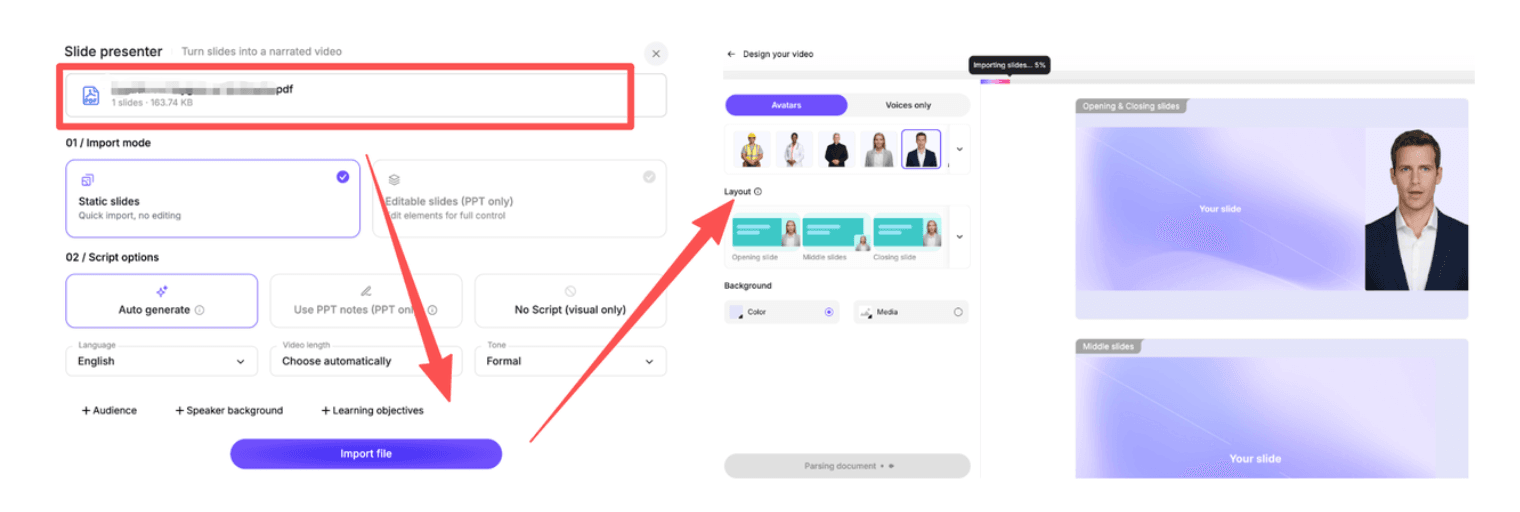
Leadde AI solves this by turning documents, SOPs, and text into fully structured videos automatically—no manual scripting required. Teams can generate professional videos in minutes, reducing production costs by up to 80% and creation time by 90%, making it ideal for high-volume training and documentation workflows.
What Is Colossyan?
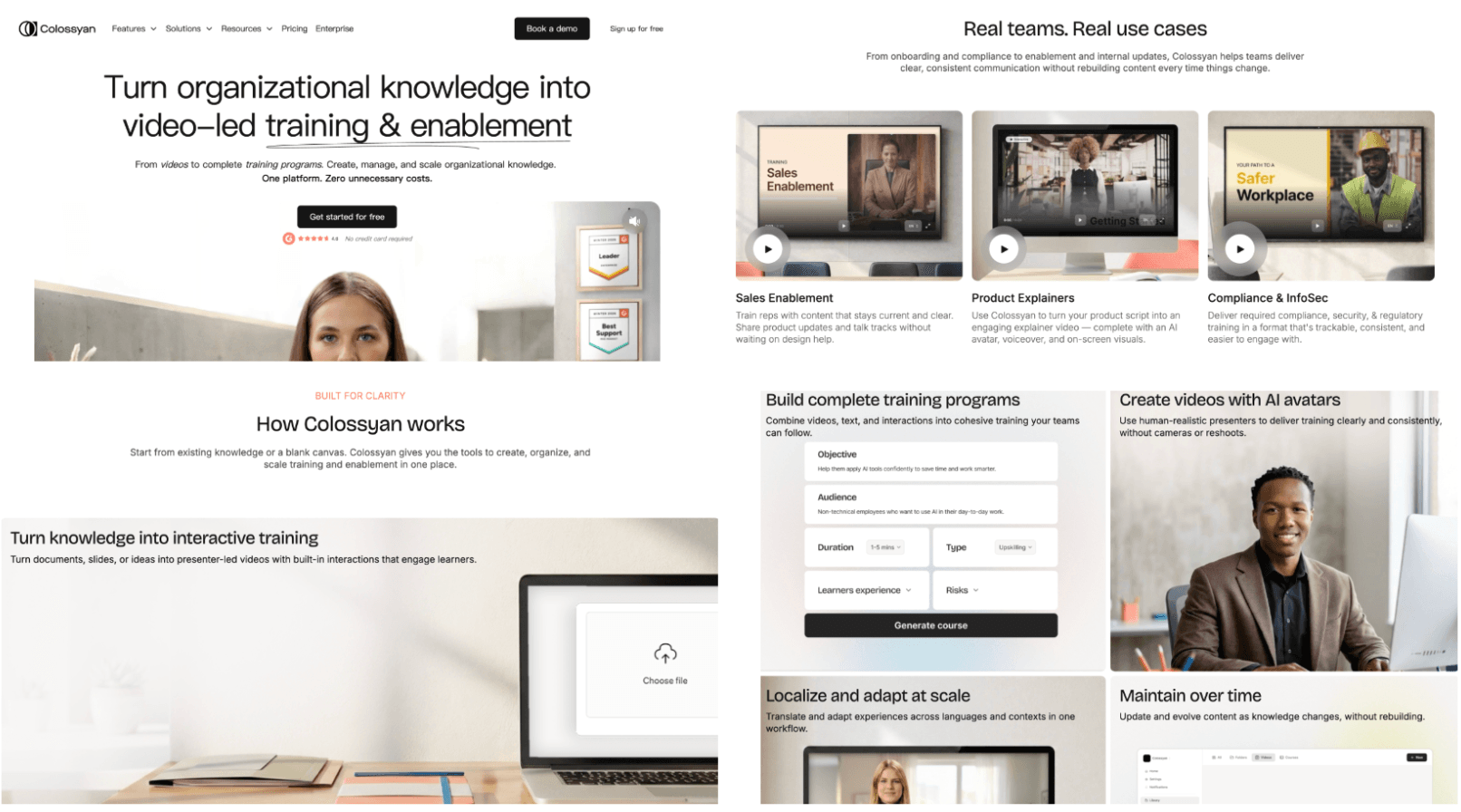
Colossyan is an AI video generation platform designed primarily for corporate training and internal communication. It enables users to create videos using AI avatars by simply inputting a script, selecting a presenter, and generating a talking-head style video.
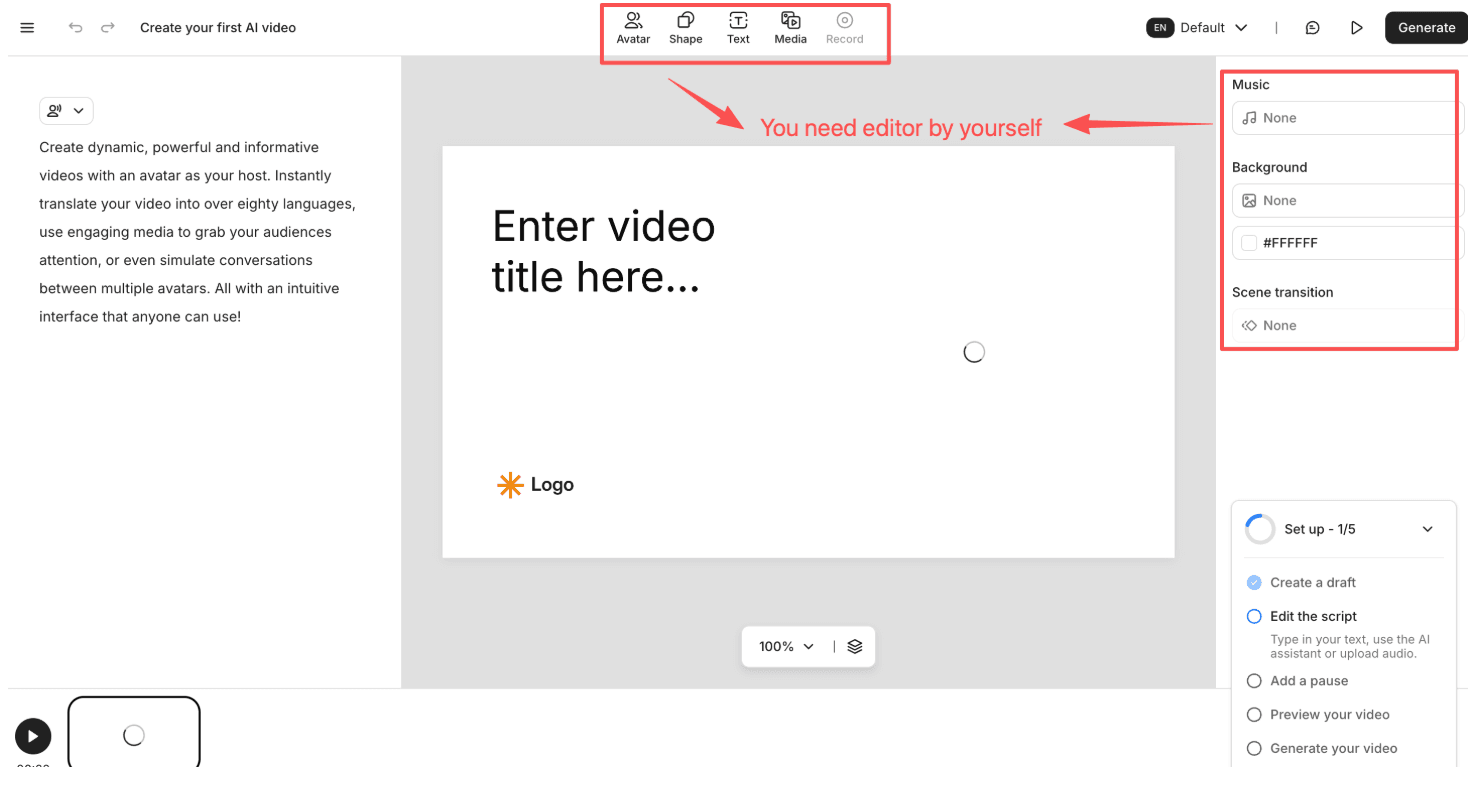
Unlike traditional video production, Colossyan removes the need for cameras, actors, and editing tools. However, its workflow still relies heavily on manual scripting and scene configuration, which can limit efficiency at scale.
Colossyan Review 2026: What are its Core Features and Capabilities?
-
Exploring the 170+ AI Avatar Library and Persona Diversity:
Colossyan gives you a huge choice of over 170 digital people, or "avatars," to lead your videos. These characters come from many different backgrounds and wear different clothes, like office suits or medical scrubs, so they can fit into almost any type of business training.
-
The NEO 2 Engine:
How Realistic are the New Expressions and Gestures?The newest version of their technology is called the NEO 2 engine. It makes the digital characters look much more like real people because they now have natural body movements, they look into the camera better, and they can even show emotions while they talk.
-
Text-to-Video and Interactive Scenarios:
How it Works for Learners: To make a video, you just type in your script, and the avatar says it out loud in one of 100+ languages. In 2026, Colossyan also lets you build "interactive" videos where the viewer can click on buttons to choose what happens next or take small quizzes to see if they learned the material.
-
NEO 2 Realism vs. Technical Training:
Why Avatars Struggle with Detailed Software UI: Even though these digital people look great, they have one big problem: they cannot actually show you how to use a computer program. If you need to teach someone where to click in Salesforce or how to fill out a form in SAP, watching an avatar just talk about it can be confusing because the viewer never sees the actual software screen.
How Much Does Colossyan Cost? A Detailed Breakdown of 2026 Pricing Plans
-
Analyzing the Starter, Business, and Enterprise Tiers:
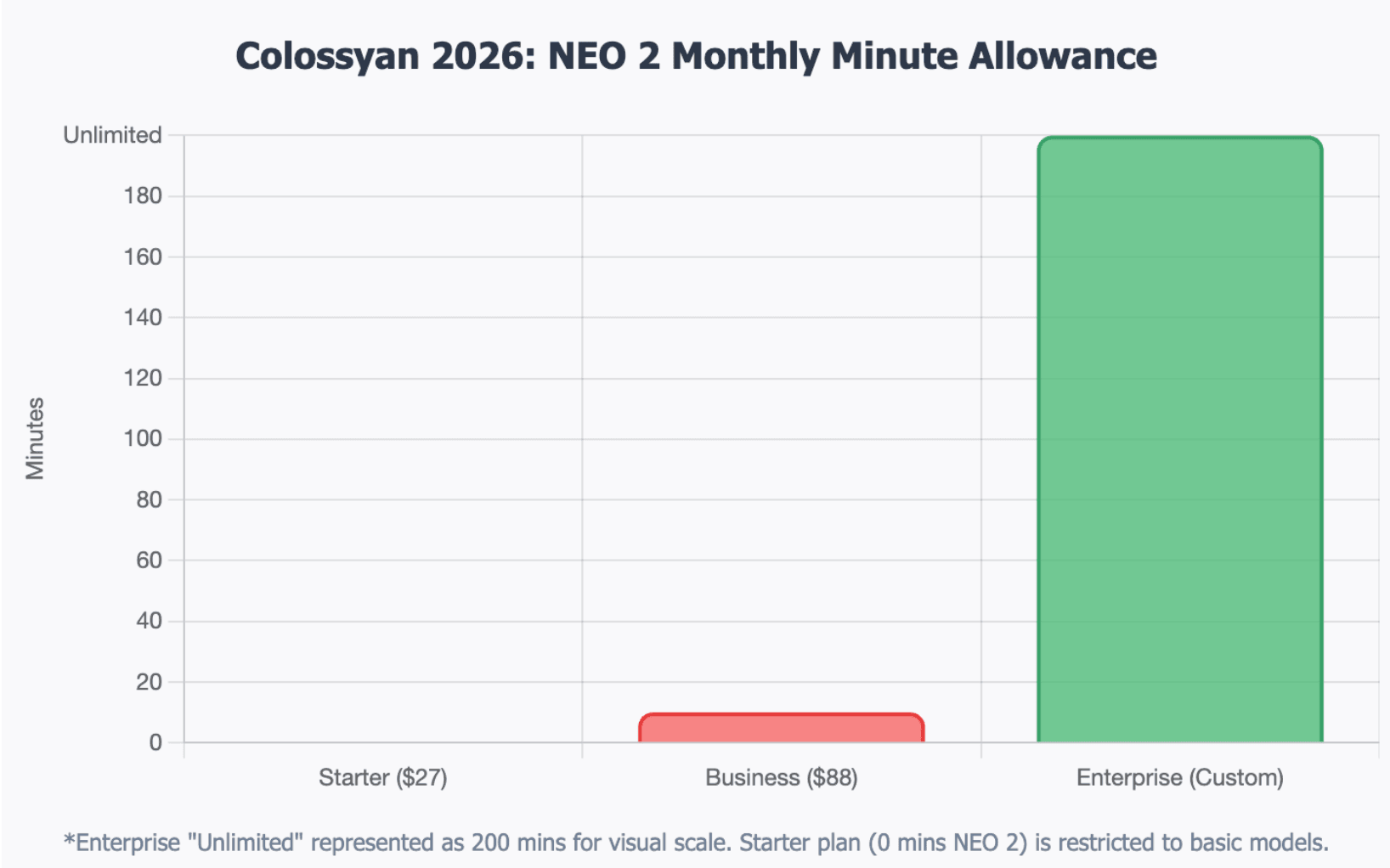
The Starter plan costs about $19 to $27 per month and lets you make 15 minutes of video.
The Business plan is much more expensive at $70 to $88 per month for each person on your team, but it gives you more features like automatic translation and 4 interactive videos a month.
-
The "NEO 2 Tax": Why are Advanced Models Limited to 10 Minutes per Month?
When evaluating your overall e-learning video production cost framework, a very important detail in the 2026 pricing is that even if you pay for a Business plan, you only get 10 minutes of NEO 2 video every month.
If you want to use the best-looking characters for all your training, you will run out of time very quickly, which forces many teams to upgrade to the high-cost Enterprise version.
-
Add-on Costs for Custom Avatars, Voice Cloning, and Extra Translations:
There are several extra costs to watch out for. For example, if you want a custom avatar that looks exactly like your CEO, it can cost an extra $1,000 per year. Also, while the Business plan gives you 10 translations a month, anything more than that will cost you extra or use up your monthly minutes.
What are the Main Pros and Cons of Using Colossyan in 2026?
Top 5 Benefits: Why Trainers Love the Interactive Quizzes and Branching
- Production is much faster than traditional filming: You don't need to hire actors, find a studio, or use expensive cameras, which can cut your production costs by up to 90% compared to old methods.
- Interactive tools keep students awake: You can build branching paths where learners make choices or take quizzes directly inside the video, helping them participate instead of just watching.
- One-click translation for global teams: You can instantly turn a single video into over 80 different languages, making it very easy to train employees in different countries all at once.
- High-quality characters with NEO 2: The latest digital avatars use the NEO 2 engine, which provides much more natural movements and facial expressions than older AI models.
- No need for pro editing skills: The platform is designed for people who aren't video experts, using a simple drag-and-drop system that anyone can learn quickly.
Key Limitations: The "AI Look" and Manual Scripting Bottlenecks
- The "Uncanny Valley" problem: Even with the newest updates, some digital people still have an "AI look" that feels a bit robotic or fake when you look closely.
- Writing scripts still takes too much time: For every 5-minute video, you still have to spend 30 to 60 minutes writing the script and organizing the scenes by hand.
- Dependency on the internet: Since the tool is based in the cloud, you cannot work on your videos offline, and you have to wait several minutes or even hours for the video to "render".
The Content Lifecycle Nightmare: Why Maintenance Kills Productivity
- Updating content is a major chore: If your software changes—like a button moving to a new spot—you have to manually edit the script and swap images for every single video in your library.
- Re-rendering wait times: Even for small changes, you often have to wait for the platform to process the video again, which slows down your ability to fix mistakes quickly.
- Hidden labor costs for large libraries: As you build more videos, the time spent managing and updating them becomes a huge burden that requires constant attention.
Colossyan vs Synthesia: Which AI Avatar Platform Wins for Corporate Training?
Comparing Production Quality and Visual Realism:
- Synthesia's "Gold Standard" look: As detailed in our comprehensive Synthesia platform evaluation, most experts agree that Synthesia has the most polished-looking video quality. Their avatars look very clean and professional, and they have the largest selection of digital people to choose from.
- Colossyan’s NEO 2 gestures: While Synthesia looks very polished, Colossyan’s NEO 2 model often feels more "real" because the avatars move their hands and heads in a more natural way. They don't just stand still; they act like a real teacher would.
Interactivity vs. Localization: Choosing the Best Tool for Your Team:
- Synthesia for global reach: If your company has offices in 50 countries, Synthesia is the winner because it supports over 140 languages. It is the best tool for massive, worldwide projects.
- Colossyan for active learning: If you want your students to do more than just watch, Colossyan is better. It allows you to add buttons, quizzes, and "choose your own adventure" paths inside the video.
- The Efficiency Middle Ground: While both tools focus on avatars, Leadde offers a faster alternative by turning your existing business documents into videos automatically, ensuring your branding stays perfect without manual editing.
Is Colossyan the Best Choice for Software Documentation and SOPs?
The Challenge of Demonstrating Real Workflows with Avatars:
- Best for "What," not "How": Colossyan is a great tool for explaining big ideas, like company rules or safety policies. However, it is not very good for technical "how-to" guides because an avatar cannot show your actual computer screen.
- The "Guessing Game": When you use an avatar to teach software, the viewer has to listen to the avatar’s voice and then guess where the buttons are on their own screen. This makes learning much slower and more frustrating for employees.
The "Translation Gap": Why Learners Struggle to Convert Avatar Instructions into Actions:
- Seeing is believing: When a student watches a digital character talk about a process instead of seeing the process happen in real life, it creates a "translation gap".
- Higher risk of mistakes: Because the training video doesn't perfectly match what the student sees on their own computer, they are more likely to make errors. In 2026, companies need training that is 100% accurate, which is why Leadde’s Magic Capture is often a better choice for turning SOP documents into interactive training videos, as it records the actual software interface instead of just talking about it.
How to Generate Professional Training Videos 11x Faster Without Manual Scripting?
-
Leadde’s Magic Capture: Documenting Real Workflows While You Work:
Unlike Colossyan, where you have to write every word of a script, Leadde uses "Magic Capture". You just do the work on your screen, and Leadde automatically turns it into a professional video with a script and voiceover in under 2 seconds. This is 11 times faster than manual video tools.
-
Eliminating the "Minute Tracking" Headache with Unlimited Video Creation:
Leadde does not punish you for making long videos. While Colossyan limits your best videos to 10 minutes, Leadde offers unlimited video creation on its paid plans. You can make 5 videos or 5,000 for the same price, which is perfect for growing companies.
-
Security-First Documentation: Auto-Blurring PII with Magic Redaction:
When recording software, you might accidentally show private info like passwords. Leadde’s "Magic Redaction" automatically detects and blurs this sensitive data. Colossyan requires you to edit these things out manually, which takes much more work.
Does Colossyan Integrate with Your Daily Business Tools Like Salesforce or Zendesk?
-
Moving Beyond LMS: Delivering Guidance in the Flow of Work:
Most Colossyan videos are designed to be watched in an "LMS" (a school-like portal). But most employees don't want to leave their work to watch a video. Leadde integrates directly with Salesforce, Zendesk, Slack, and Microsoft Teams.
-
Why Salesforce and Help Desk Integrations Achieve 80% Adoption Rates:
When training is hidden in a portal, only 30% of people watch it. But when it is embedded directly in the tools they use (like a Help Desk ticket), adoption jumps to 70-80%. This means your team actually learns the material instead of ignoring it.
FAQs
- Is Colossyan worth the price in 2026?
Colossyan is a great investment for interactive "talking-head" training, but its high cost and minute limits on advanced models make it expensive for high-volume teams.
- What is the monthly limit for NEO 2 avatars?
On the 2026 Business plan, users are limited to only 10 minutes of NEO 2 video per month, forcing power users toward expensive Enterprise plans.
- How long does it take to create a video with Colossyan?
It usually takes 30 to 60 minutes to manually write a script and set up scenes for a 5-minute video.
- Can Colossyan automatically turn documents into videos?
No, Colossyan requires manual scripting; however, Leadde can turn any document or text into a professional business video automatically in just minutes.
- Which is better for software SOPs: Colossyan or Leadde?
Colossyan is best for teaching policies, but Leadde is far better for software SOPs because it captures your actual screen and generates videos 11x faster without manual scripting.
Final Verdict: Is Colossyan Worth the Investment for Your Business in 2026?
- Summary of Best Use Cases: Colossyan is a solid choice if you need "talking-head" videos for marketing or basic company announcements. It makes professional presentations without needing a camera crew.
- Better for Software Training: Leadde: If you need to teach people how to use software, exploring the top-rated Colossyan alternatives reveals that Leadde is the clear winner because it is 11x faster, has no minute limits, and shows the actual screen instead of just an avatar.