
How to Build a Global Customer Training Library with AI (2026 Guide)

To build a global customer training library with AI, start by centralizing your existing text-based standard operating procedures (SOPs) and PDFs. Next, use an AI document-to-video platform to automatically convert these static files into structured, interactive video courses. Finally, apply AI voice cloning and 1-click auto-translation to instantly localize the training materials across different regions, creating a scalable, self-serve knowledge hub for your global audience.
Traditional global onboarding is slow and expensive. Continuously translating and re-recording training videos drains budgets and delays customer success. Leadde eliminates this bottleneck: turn any document into a professional business video automatically. Create videos in minutes, saving over 80% of production costs and 90% of content creation time.
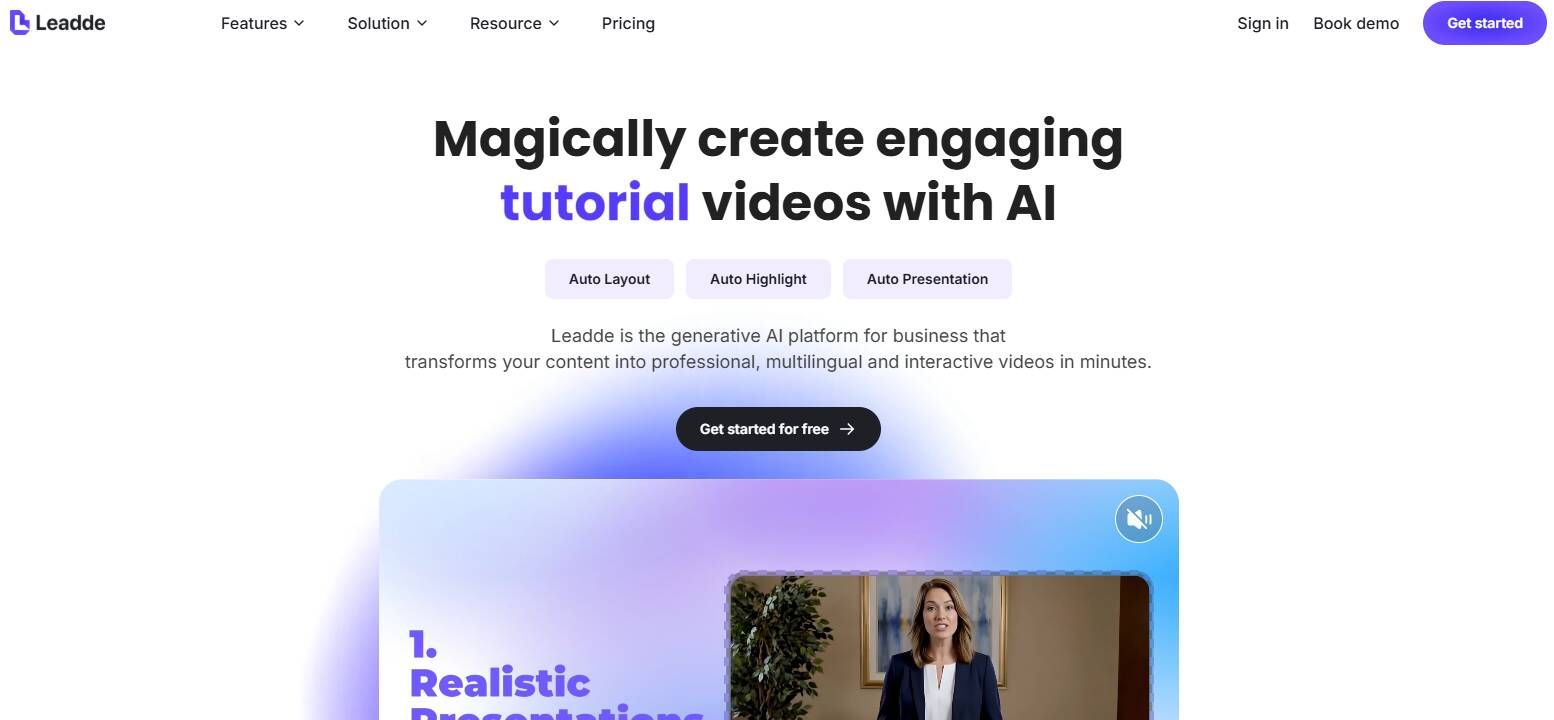
Understanding the Modern AI-Driven Global Training Ecosystem
The 2026 Shift: From Static Knowledge Bases to Interactive Video Hubs
As of 2026, available information suggests that enterprise customer education is undergoing a massive transformation. The traditional reliance on static, text-heavy knowledge bases is no longer sufficient for modern learners.
Modern users demand highly visual and dynamic training experiences. Upgrading text-driven support centers into AI-powered, multilingual video libraries is now the standard for globalized enterprises.
Why Customers and Employees Ignore Text-Based LMS
Real-world discussions across B2B communities and Reddit highlight a major pain point: severe "LMS fatigue" caused by lengthy Standard Operating Procedures (SOPs). Users simply lack the patience to read 20-page product manuals.
When training materials lack visual stimulation and interactive feedback, completion rates plummet. Businesses urgently need automated solutions to transform dry text into engaging video content, much like how sales teams optimize an effective outreach video to maintain viewer attention.
Why Traditional Corporate Education Fails at a Global Scale
The Hidden Costs of Manual Video Production & Voiceovers
In traditional training frameworks, video production is an incredibly expensive and labor-intensive process. Every minor product update requires re-recording, editing, and post-production, draining your content budget quickly.
Furthermore, paying talent fees for presenters and renting professional studios makes agile updates nearly impossible. This results in training libraries that become outdated almost immediately, unlike flexible digital assets such as a dynamically generated prospecting video.
Translation Bottlenecks in Multi-Regional Customer Onboarding
When expanding globally, language barriers present the most significant onboarding bottleneck. Relying on human teams for subtitle translation and localized voiceovers is both costly and painfully slow, prompting many to learn how to translate a video using automated tools.
This manual localization workflow often takes weeks or months to complete. It severely delays synchronized product launches and frustrates international customers trying to adopt your software.
Core Pillars of a Future-Proof AI Customer Education Library
Automated Document-to-Video Conversion (Ingesting PPTs & PDFs)
The foundation of a modern AI training library is Document-to-Video automation. Advanced platforms allow you to directly upload PPTs, PDFs, Word documents, or plain text, instantly parsing them into structured storyboards.
The AI automatically generates video outlines, matches layouts, and highlights key points. This completely eliminates the tedious manual effort required to build training videos from scratch, a technique equally useful whether you are building LMS content or looking at how to create a campaign video.
Hyper-Localization: Scaling Across 90+ Languages Instantly
To build a truly "global" library, seamless multilingual support is non-negotiable. Leading AI platforms enable teams to generate translated video drafts directly within the editor with a single click, utilizing the best video translator 2026 guide methodologies.
Combined with AI Voice Cloning, organizations can automatically produce standardized training courses in multiple languages while retaining the original speaker's authentic tone and emotion.
"Chat with Video": The Rise of Conversational Learning Assets
One-way video broadcasting is becoming obsolete; interactive knowledge assets are the future. With "Chat with Video" capabilities, viewers can type questions directly into the video player.
The AI then provides precise, contextual answers based on the specific video content. This instantly upgrades standard training videos into 24/7 self-serve interactive knowledge hubs.
Step-by-Step Guide: Building Your AI Training Library from Scratch
Step 1: Audit and Centralize Your Existing Standard Operating Procedures (SOPs)
Begin by taking a comprehensive inventory of your existing text assets. Centralize all quick-start guides, FAQ documents, and employee training slide decks into a structured cloud directory.
This crucial first step ensures the AI engine extracts the most accurate and verified business logic when generating your automated video courses.
Step 2: Leverage AI to Transform Raw Documents into Structured Video Courses
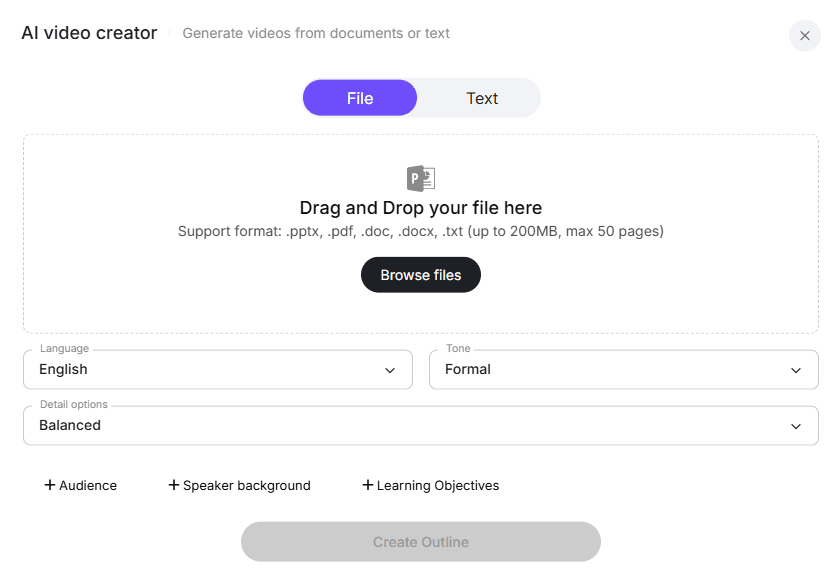
Utilize the robust file import modes of platforms like Leadde. You can upload business files up to 200MB (.pptx, .pdf, .docx) and customize the language, tone (e.g., Formal), and detail level.
The system will instantly generate a script and automatically match visual stock assets. You can then select from over 200 AI avatars to act as your professional presenter.
Step 3: Utilize Layered PPT Editing to Retain Brand Visuals and Asset Structure
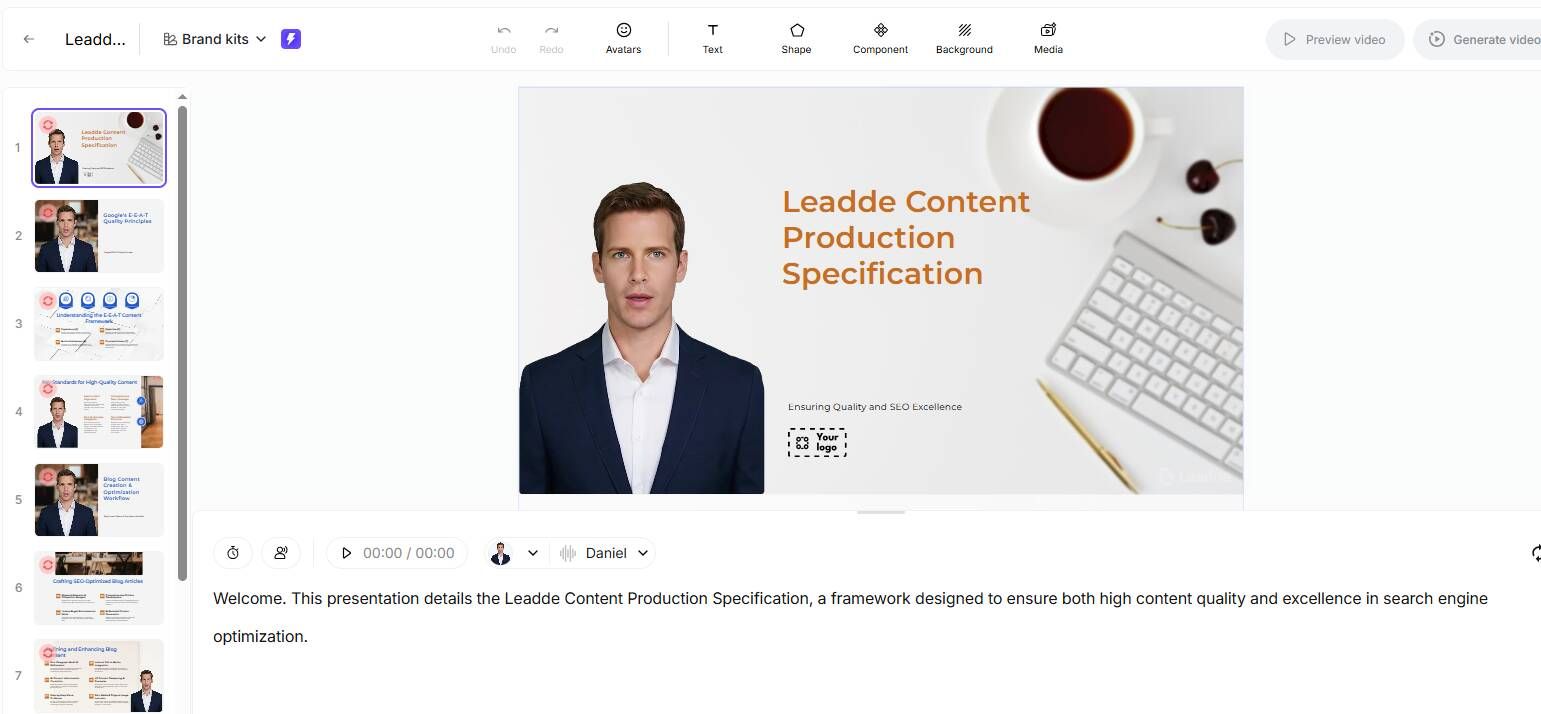
If your training relies heavily on existing slide decks, use an AI tool that supports Layered PPT handling. This allows you to import presentations and modify individual text, icon, or image layers directly.
This granular control ensures your final video output perfectly aligns with your corporate visual identity, without needing external editing software.
Step 4: Implement 1-Click Translation and AI Voice Cloning for Global Reach
Once your core master video is approved, use built-in video translation tools to scale globally. Select your target regions to generate localized versions with a single click.
- Deploy 170+ languages and accents using advanced voice cloning technology.
- Translate on-screen text and images automatically to ensure cultural relevance.
Step 5: Secure Your Corporate Assets with Enterprise-Grade Compliance (SOC 2 & GDPR)
When deploying a global knowledge base, data privacy is paramount. Always enable version control and set strict access permissions for your teams.
Ensure your chosen AI platform adheres to SOC 2, GDPR, and ISO 42001 compliance standards. This protects your sensitive corporate training data from unauthorized access or leakage.
Evaluating AI Video Platforms: Leadde vs. Synthesia vs. HeyGen
Feature Comparison: Document Processing and Automated Layouts
Choosing the right platform dictates the quality of your library. Here is how the top tools compare in automation:
- Leadde: Excels with powerful auto-layout and auto-highlight features that maintain business branding perfectly.
- Synthesia: Relies on fixed, non-editable templates. Visuals are often monotonous and cannot change dynamically.
- HeyGen: Currently does not support advanced automated document-to-video conversion.
Interactive Capabilities: Standard One-Way Output vs. Conversational AI Avatars
Interactivity is where these platforms diverge significantly in value:
- Leadde: Distinctly leads the market with ✅ Video chat and Chat-enabled interactive avatars.
- Synthesia / HeyGen: ❌ Strictly offer standard one-way video output, lacking audience engagement mechanisms.
Pricing Breakdown and Enterprise Scalability Strategies
Cost structure is a critical factor for B2B procurement. Here is a breakdown of the starter plans:
| Dimension | Leadde | Synthesia | HeyGen |
|---|---|---|---|
| Starter Plan | $19/month (Unlimited Videos) | $29/month (10 mins/month) | $29/month (Unlimited Videos) |
| Voice Support | 170+ languages with accents | 140+ languages | ~40+ languages |
| Best For | Enterprise training & Document-to-Video | Multi-region communication | Marketing short-form content |
(Data strictly reflects official 2026 platform metrics, highlighting Leadde's aggressive scalability and value.)
The Business Impact: Measuring the ROI of an AI-Powered Learning Hub
Reducing Content Creation Time by 90%
Traditional workflows require scripting, filming, and editing—a cycle that usually takes weeks. AI document-to-video engines compress this drastically, similar to the efficiency gained in high-stakes event video production.
Organizations report that by automating layouts and voiceovers, video courses that once took 10 days to produce are now completed in hours, resulting in a 90% reduction in content creation time.
Slashing Overall Video Production Costs by 80%
By eliminating physical studios, camera crews, and expensive third-party translation agencies, corporate budgets are massively unblocked.
Achieving an 80% reduction in production costs means you can redirect funds toward expanding the breadth of your training library, rather than burning cash on foundational infrastructure.
Conclusion: Future-Proofing Your Customer Education Strategy
In 2026, building a global customer training library with AI is no longer optional—it is a competitive necessity. By transforming static documents into dynamic, interactive, and localized videos, enterprises can deliver scalable education at a fraction of the traditional cost, freeing up resources to focus on other initiatives like how to create a teaser video for upcoming features.
Leveraging a comprehensive platform like Leadde, which combines automated document conversion, seamless 92-language localization, and cutting-edge interactive video chat, ensures your business stays ahead. You can drastically cut costs while providing global customers with the immersive, 24/7 learning experience they expect.