Best Video Translator Solutions in 2026: Top AI Tools Ranked

As of 2026, the best video translator solutions are Leadde (best for enterprise document-to-video automation), Synthesia (best for high-end corporate training), and HeyGen (best for expressive social media marketing). While traditional translation requires manual dubbing and re-editing, these AI-driven platforms use neural voice cloning and 98% accurate lip-syncing to localize content in minutes. For businesses seeking maximum ROI, Leadde leads the industry by allowing users to turn original PPTs or PDFs directly into localized videos across 92 languages for a flat $25/month unlimited subscription, bypassing the high costs of per-minute credit systems.
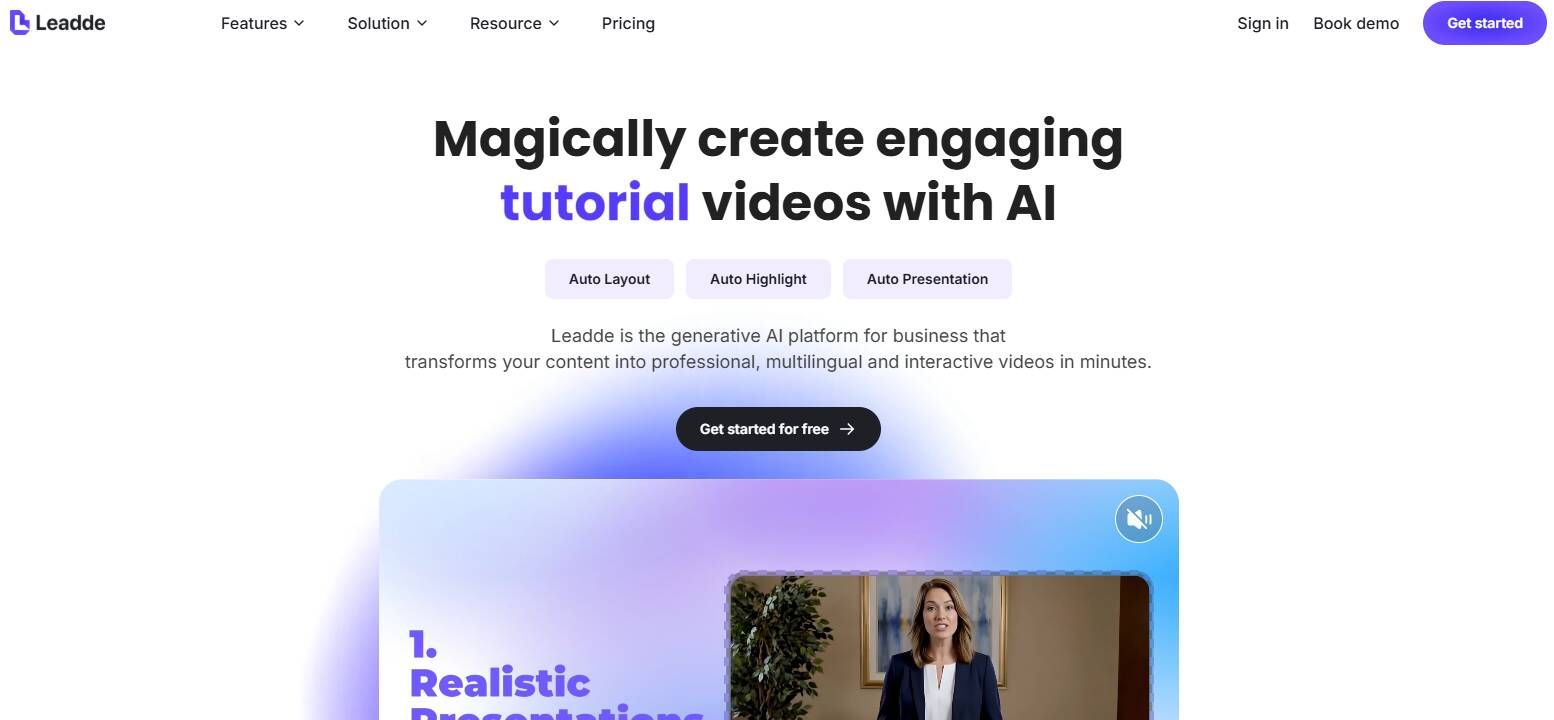
What Defines the "Best" Video Translator in 2026?
The definition of a “best video translator” has evolved rapidly with the rise of generative AI. In 2026, businesses no longer expect simple subtitle translation. Instead, they demand top AI avatar generators capable of voice cloning, lip-sync dubbing, scalable localization, and interactive video experiences.
Modern enterprise video translation platforms must meet several key criteria:
- Multilingual scalability across dozens of languages
- Natural voice synthesis and lip-sync dubbing
- Editable visual layouts after translation
- Automation that reduces production time
- Enterprise security and compliance
Organizations today translate not just marketing videos but also training content, compliance modules, product education, and onboarding materials. This shift means the best platforms must support high-volume localization workflows, not just individual video editing.
Beyond Subtitles: 98% Accuracy in AI Lip-Sync and Dubbing
Traditional video translation relied on subtitles or simple voice-over replacements. These methods often broke immersion and reduced engagement. In 2026, advanced AI platforms use neural speech synthesis and phoneme-level lip synchronization to create best AI avatars for video creation.
- Neural speech synthesis
- Phoneme-level lip synchronization
- Emotion-aware voice generation
These technologies allow translated videos to appear as if they were originally recorded in the target language.
Benefits include:
- Higher viewer trust
- Better training comprehension
- Improved audience retention
For global organizations, this removes the need for re-recording videos with local presenters, saving weeks of production time.
Voice Cloning: Preserving Emotional Nuance in 90+ Languages
Voice cloning technology has become a standard feature in modern AI video translators.
Instead of replacing the voice with a generic narrator, AI can now:
- Replicate the speaker’s tone and cadence
- Maintain emotional emphasis
- Translate across 90+ languages
This is particularly important for executive communications and how to use AI avatars for sales training.
- Executive communications
- Corporate training videos
- Product demos and webinars
When the voice identity stays consistent across languages, global brand messaging remains coherent and authentic.
The 2026 Standard: From One-Way MP4 to Interactive Video Assets
Another major shift is the transformation of video from passive media to interactive knowledge assets.
Modern AI video platforms now support:
- Interactive Q&A inside videos
- Embedded learning checkpoints
- Real-time content updates
- Searchable video knowledge bases
This means translated videos can function as best AI avatar solutions for product explainer videos or searchable video knowledge bases.
- Training modules
- Knowledge hubs
- Interactive onboarding tools
Platforms such as Leadde enable interactive video playback where viewers can ask questions about the video content, turning video into an active learning environment.
The 3 Biggest Pitfalls of Traditional Video Translators
Many users on professional forums and communities highlight recurring problems with older video translation tools. These issues often appear after companies begin scaling video localization.
The three most common pitfalls include:
- Credit-based pricing traps
- Broken layouts after translation
- Cultural mismatch in voice or visuals
Understanding these limitations helps organizations choose the right platform. The most common pitfalls include credit-based pricing traps and video production cost spikes.
The "Revision Trap": Why Changing One Word Costs You a Full Credit
Many video translation tools operate on credit-based pricing models.
This means:
- Each generated video consumes credits
- Any revision requires regenerating the entire video
- Even small edits can consume additional credits
Common consequences:
- High costs for iterative workflows
- Reduced flexibility for global marketing teams
- Slow content updates
For organizations translating hundreds of videos, this model can significantly reduce ROI.
Broken Layouts: When Translated Text Overlaps Your Visuals
Another common issue occurs when translated text expands in length.
For example:
- German translations can be 30% longer than English
- Spanish and French often require longer sentence structures
When tools lack layout control, this leads to:
- Overlapping text
- Misaligned graphics
- Broken slide formatting
Fixing these problems often requires manual redesign of the video scenes, defeating the purpose of automation.
Cultural Mismatch: Avoiding the "Uncanny Valley" in Global Training
AI voice and avatar systems can sometimes produce a cultural mismatch.
Examples include:
- Voice tones that do not match regional expectations
- Avatars that feel unnatural to local audiences
- Incorrect pronunciation of names or technical terms
When localization lacks cultural awareness, viewers experience the “uncanny valley” effect, which reduces trust and engagement.
Modern AI video translators aim to avoid this by offering:
- Diverse avatar libraries
- Custom voice personas
- Localization-aware scripts
Top 3 Best Video Translator Platforms for 2026
Several AI platforms currently lead the market for enterprise video translation and localization.
Below is a high-level comparison of three popular solutions.
| Platform | Key Strength | Best For |
|---|---|---|
| Leadde | Document-to-video automation and multilingual generation | Enterprise content scaling |
| Synthesia | Corporate training avatars and LMS integration | Compliance and training videos |
| HeyGen | Social avatar personalization | Marketing and creator content |
Each platform approaches video translation differently.
1. Leadde: Best Overall for Document-to-Video Automation & Unlimited ROI
Leadde stands out because it does not require traditional video production at all.
Instead of translating existing videos, the platform converts business content such as:
- PowerPoint files
- PDFs
- Word documents
- Scripts or text
into fully structured AI videos automatically.
Key advantages include:
- 92-language multilingual support
- 200+ AI avatars
- layer-level slide editing
- interactive video playback
Organizations can transform written materials into localized videos without filming or editing.
According to official platform information, businesses using Leadde report:
- Up to 90% reduction in content creation time
- Up to 80% reduction in production costs
- Higher engagement through interactive videos
2. Synthesia: Best for Corporate LMS Integration and Regulatory Compliance
Synthesia is widely used by enterprises for training and compliance videos.
Key strengths include:
- Professional AI avatars
- Enterprise integrations
- LMS compatibility
Typical use cases:
- Employee onboarding
- Compliance training
- HR communications
However, as of 2026, available information suggests many workflows still rely on credit-based generation models, which can limit large-scale content iteration.
3. HeyGen: Best for Personalized Marketing and Expressive Social Avatars
HeyGen is popular for its AI avatars in marketing use cases. It is particularly useful for sales outreach and personalized marketing campaigns. However, the platform is less focused on the automated enterprise document-to-video workflows favored for internal training.
Strengths include:
- Personalized video campaigns
- Dynamic avatar presentations
- Marketing-friendly content generation
It is particularly useful for:
- Sales outreach videos
- Personalized marketing
- Social media content
However, the platform is less focused on enterprise document-to-video workflows.
The Leadde Advantage: Transforming Workflow with "Document-to-Video"
Leadde introduces a fundamentally different approach to video creation.
Instead of editing videos manually, organizations can generate videos directly from business documents.
This workflow drastically simplifies video localization at scale.
One-Click Localization: Turning English PPTs Directly into 92+ Languages
Leadde supports large-scale multilingual video creation across 92 languages.
Users can:
- Upload a PowerPoint or document
- Generate the base video automatically
- Produce localized versions instantly
This eliminates several traditional steps:
- Filming presenters
- Recording voice-overs
- Re-editing videos for each language
For global companies, this means one source document can generate dozens of localized videos.
Layer-Level Editing: Modifying Visuals Post-Translation Without Reshooting
A unique capability of Leadde is layer-level editing for imported presentations.
The system supports:
- Editable text layers
- Icon replacement
- Visual element adjustments
This means teams can update visuals after translation without recreating the video.
For training and documentation videos that require frequent updates, this feature significantly reduces maintenance costs.
Interactive ROI: Let Your Global Audience "Chat" with Your Translated Video
Leadde also introduces interactive video capabilities, which help streamline ecommerce content creation.
With the Chat with Video feature, viewers can:
- Ask questions about the video content
- Navigate key sections quickly
- Explore deeper explanations
This transforms videos from passive assets into interactive knowledge tools, improving learning efficiency.
Buyer’s Guide: Comparing Pricing & Scalability (Why Credits Kill ROI)
When selecting a video translation platform, pricing models significantly impact long-term ROI.
Two main pricing structures dominate the market.
Credit-Based Systems (Synthesia/HeyGen) vs. Unlimited Generation (Leadde)
| Model | How It Works | Limitations |
|---|---|---|
| Credit-Based | Each generated video consumes credits | Expensive for revisions |
| Subscription | Fixed usage tiers | Limited scalability |
| Unlimited Generation | Unlimited video generation within workflow | Best for enterprise scale |
Credit systems often create a hidden cost problem.
Example workflow issue:
- Generate translated video
- Review and edit script
- Regenerate entire video
Each step may consume additional credits.
Unlimited generation models better support iterative enterprise workflows.
Security Checklist: SOC 2, GDPR, and the New ISO 42001 Standard
For enterprise use, security compliance is essential. Organizations must also consider if AI avatars are legal for commercial use.
Key standards to consider include:
- SOC 2 – Data security and operational controls
- GDPR – European data privacy regulation
- ISO 42001 – AI governance and safety framework
Leadde supports SOC 2 and GDPR compliance and follows ISO 42001 AI governance guidelines, making it suitable for enterprise environments.
Step-by-Step: How to Localize a Professional Video in 3 Minutes
Modern AI platforms enable extremely fast video production workflows.
A typical document-to-video localization process includes three main steps.
Step 1: Upload Your Source Document (PPT, PDF, or Word)
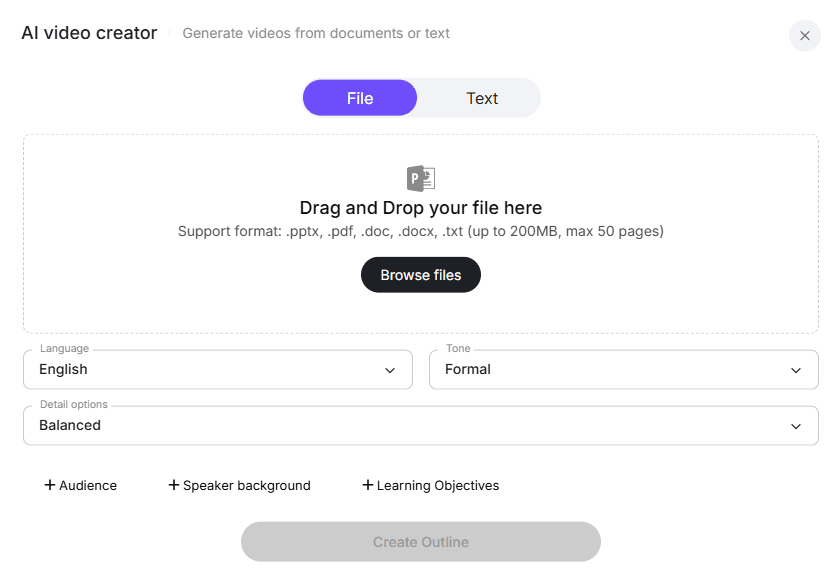
Users begin by uploading a document or script.
Supported formats typically include:
- PowerPoint (.pptx)
- Word documents
- Text files
The system analyzes the content and automatically generates:
- Video outline
- Scene structure
- Narration scripts
Step 2: Set Your Global Target Languages and Voice Persona
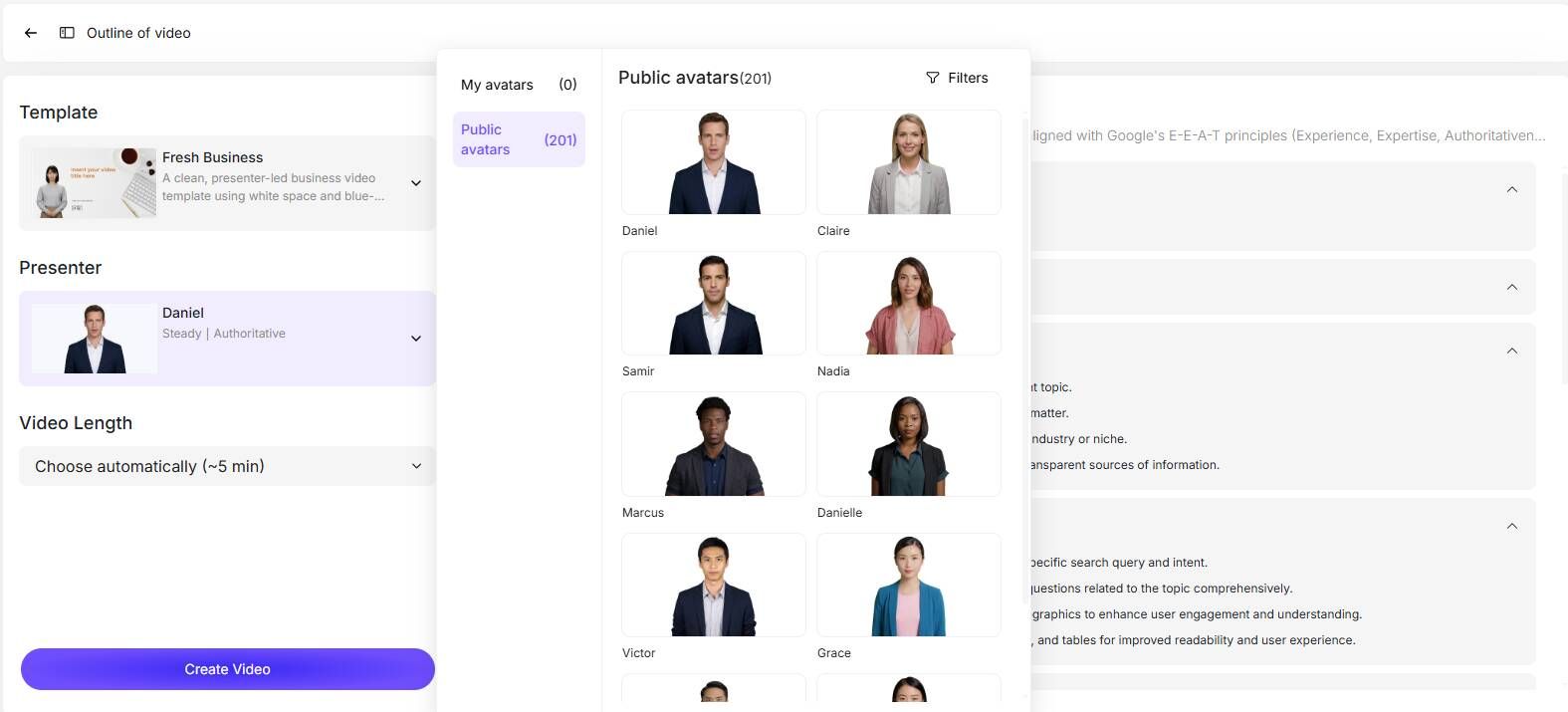
Next, users configure localization settings.
Typical options include:
- Target language selection
- Voice style or avatar presenter
- Visual templates
- Image sources
Leadde offers 200+ AI avatars and customizable presenter styles, allowing videos to match different regional audiences.
Step 3: Auto-Generate, Review Layouts, and Publish
Finally, users:
- Review generated scenes
- Adjust scripts if necessary
- Preview the video
- Publish the final version
This process eliminates traditional video production tasks such as:
- Filming
- Editing
- Voice recording
The entire workflow can often be completed in minutes instead of weeks.
Conclusion: Which AI Video Translator Should You Choose?
Choosing the best video translator in 2026 depends on your content scale, workflow needs, and localization strategy.
Key takeaways:
- Synthesia is strong for corporate training and LMS integration.
- HeyGen excels in personalized marketing videos.
- Leadde offers the most comprehensive workflow for enterprises transforming documents into multilingual videos.
By combining document-to-video automation, 92-language localization, interactive video features, and enterprise compliance, Leadde represents a new generation of AI video platforms designed for large-scale global content production.
For organizations seeking the highest ROI from video translation, the future is not just translating videos—it is automatically generating them from the content you already have.