How to Create Audit-Ready Healthcare Training Videos
To create audit-ready healthcare training videos, start with approved policies, SOPs, PDFs, PowerPoints, or clinical training documents; convert them into short role-based video modules; add quizzes, captions, completion tracking, source-document links, version history, and reviewer approval; then store evidence showing who completed the training, when they completed it, what version they saw, and whether they passed the knowledge check.
An audit-ready healthcare training video is not just a polished video. It is a defensible training asset that proves five things: the content came from an approved source, the right staff received it, learners completed it, understanding was checked, and updates were controlled when policies changed.
This matters because healthcare training is tied to privacy, security, infection control, patient safety, clinical workflows, and operational consistency. HIPAA’s Privacy Rule requires covered entities to train workforce members on privacy policies and procedures as appropriate for their roles, and the Security Rule requires security awareness and training for workforce members.
Platforms like Leadde.ai can support this workflow by helping healthcare teams turn approved SOPs, policies, PDFs, and PowerPoints into AI-assisted training videos while keeping review, updates, and human oversight central to the process.
What Makes Healthcare Training Videos Audit-Ready
A normal training video explains a topic. An audit-ready healthcare training video also creates evidence.
A healthcare training video becomes audit-ready when it can show:
- Which approved policy, SOP, or guideline the video came from
- Who reviewed and approved the content
- Which version was published
- Which staff members were assigned the training
- Who completed it and when
- Whether learners passed a quiz or knowledge check
- What changed when the policy was updated
- Whether outdated versions were archived
In our healthcare training workflow research, the biggest problem was not a lack of content. Most teams already had too much content: PDF binders, SOP libraries, slide decks, onboarding manuals, EHR guides, and long recorded sessions. The real problem was that staff skimmed, skipped, forgot, or could not tell whether they were using the latest version.
That is why audit-ready training videos should be built as a system, not as isolated media files. The video is only one layer. The full audit record includes source control, role assignment, learner completion, quiz data, reviewer approval, and version history.
Start with Approved Healthcare SOPs, Policies, and Training Documents
The safest way to create audit-ready healthcare training videos is to begin with approved source material. AI should not invent healthcare training content. It should restructure approved information into a clearer and more usable format.
Strong source materials include:
- HIPAA privacy and security policies
- OSHA bloodborne pathogens training material
- Infection control SOPs
- Patient safety protocols
- Nursing procedures
- EHR workflow guides
- Call center scripts
- Employee onboarding manuals
- Pharma SOPs and GxP documents
- Medical software training decks
A life sciences onboarding case from our research shows why this matters. A new employee had to review roughly 200 SOPs. Each SOP was at least 10 pages, and some reached 50 pages. Some teams tried to limit the load to 10, 12, or 15 SOPs per day, while one trainee pushed through 25 SOPs in a single day and still felt overloaded.
That case captures the core opportunity: healthcare and life sciences teams do not need more static documentation. They need a way to turn approved documentation into short, searchable, role-based, trackable learning modules.
Use AI to Convert SOPs and Policies into Audit-Ready Training Videos
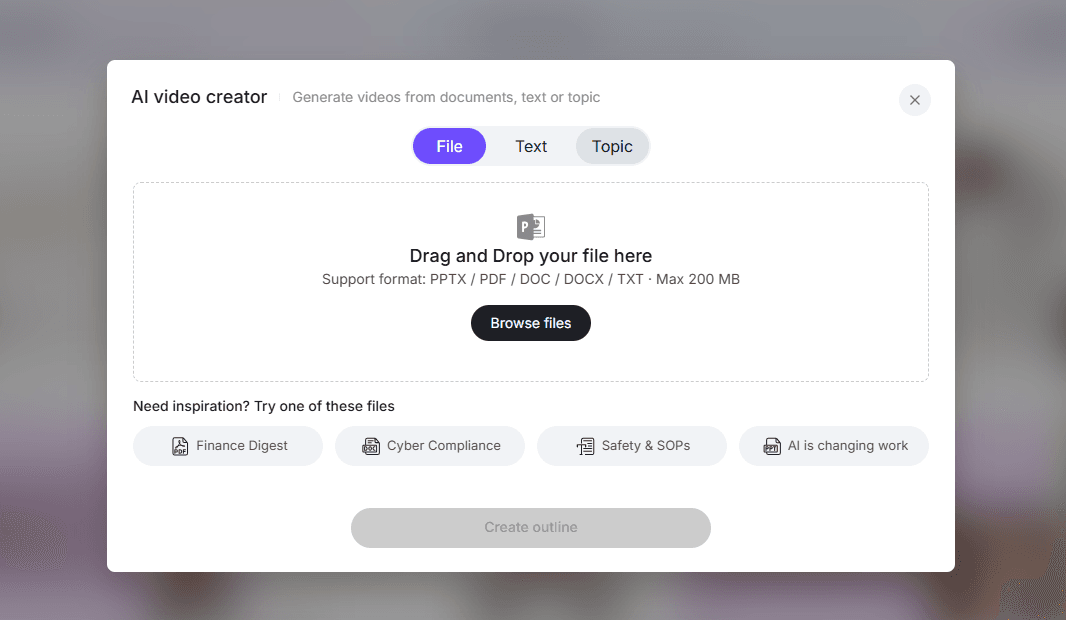
AI is most valuable in audit-ready healthcare video production when it speeds up structure, simplification, creative execution, and updates. It should not replace compliance, clinical, legal, or operational review.
A practical AI workflow looks like this:
- Upload or paste an approved SOP, policy, PDF, or PowerPoint.
- Extract the learning objectives and required staff actions.
- Rewrite dense policy language into plain language.
- Split the content into 2–5 minute training modules.
- Draft a video script and storyboard.
- Generate captions, narration, and quiz questions.
- Create role-based examples for different staff groups.
- Send the draft for clinical, compliance, or operational review.
- Publish only the approved version.
- Store completion, quiz, and version records.
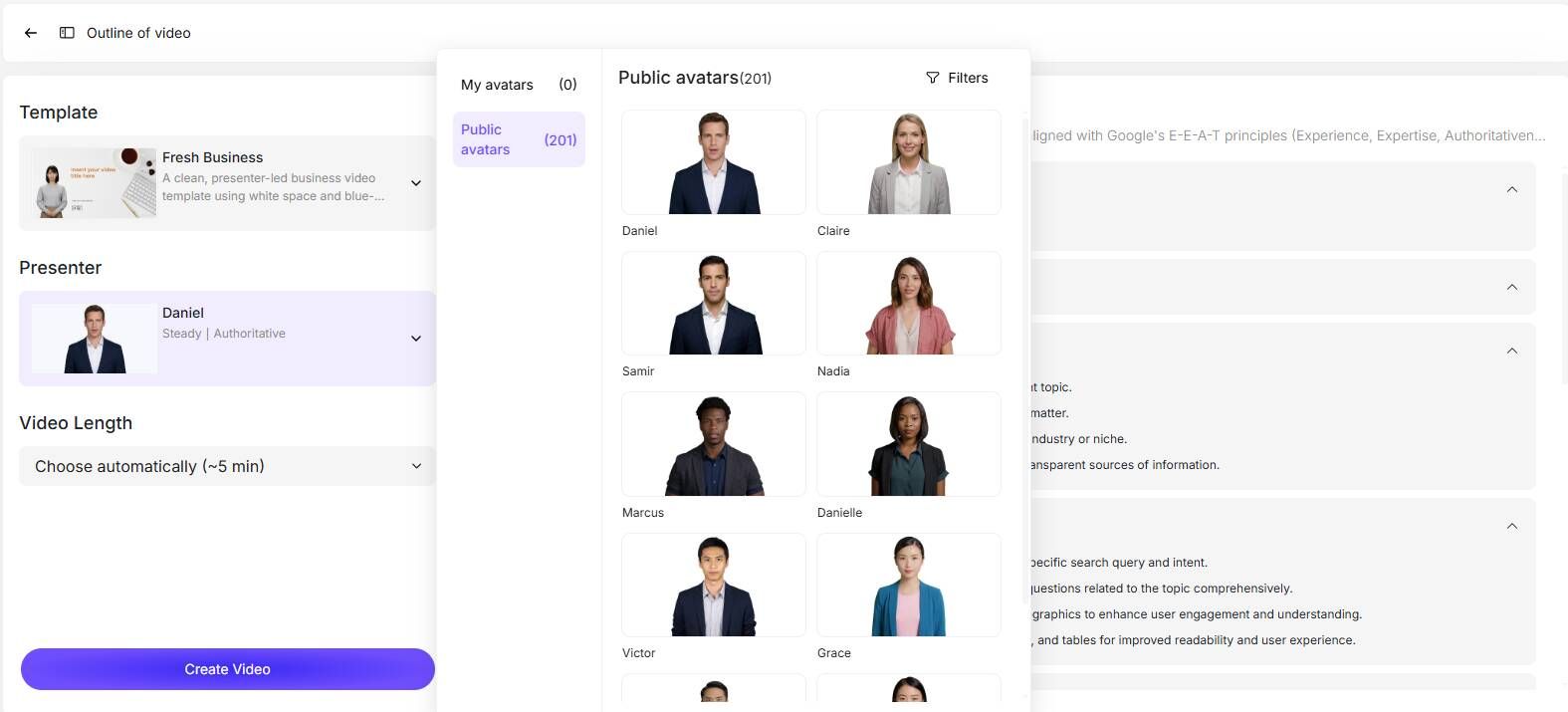
This matches where AI has shown practical value in healthcare operations: summarizing existing information, creating structured drafts, and reducing repetitive work. In our clinical workflow research, one AI documentation workflow saved 20–30 minutes per day for a clinician seeing 14–16 clinic patients. Another admission-note workflow saved 10–20 minutes per note. A separate clinic workflow saved at least one hour of charting after a half-day clinic.
The lesson for training teams is clear: AI creates the most value when it helps experts move faster, not when it bypasses expert review.
Build Role-Based Healthcare Training Videos for Stronger Audit Evidence
Audit-ready healthcare training should be role-based. A nurse, billing specialist, front desk employee, call center agent, pharmacist, resident, and IT analyst may all need HIPAA training, but they do not need the same examples.
For example, one privacy policy can become several role-based videos:
- Front desk: verifying identity before discussing appointments
- Billing: handling claims and insurance information
- Nursing: protecting PHI during bedside conversations
- Call center: confirming patient identity before sharing information
- IT: protecting credentials and reporting security incidents
- Managers: documenting training and corrective actions
This is especially important because HIPAA privacy training is tied to what workforce members need to do for their functions.
Role-based videos also create better audit evidence. Instead of proving that everyone watched a generic annual training video, you can show that each role received training tied to its actual workflow.
Add Quizzes, Knowledge Checks, and Completion Tracking
Audit-ready healthcare training videos need more than views. A view does not prove understanding.
Every audit-ready video should include a short knowledge check. For a 2–5 minute module, 3–5 questions are usually enough. The questions should test decisions and behavior, not memorization.
Examples:
- What should you do if PHI is sent to the wrong recipient?
- When should a call center agent escalate a safety concern?
- What is the correct step before accessing a patient’s chart?
- Which action should follow a needlestick exposure?
- Which workflow change applies to your role?
AHRQ describes teach-back as a way to confirm understanding by asking patients or caregivers to explain what they need to know or do in their own words. The same principle applies to staff training: learners should demonstrate understanding, not simply consume content.
For audit readiness, track:
- Assigned learners
- Completion date
- Quiz score
- Number of attempts
- Passing threshold
- Training version
- Expiration or renewal date
- Manager sign-off if required
The audit record should clearly answer: who was trained, on what, when, and how do we know they understood it?
Create HIPAA-Safe and PHI-Free Training Video Workflows
A common production mistake is using real patient examples, real EHR screenshots, or real call recordings in training videos without a clear privacy workflow. Audit-ready training should minimize PHI exposure wherever possible.
A safer workflow uses:
- De-identified examples
- Simulated patient data
- Demo EHR environments
- Generic screenshots
- Fictional scenarios
- Synthetic call scripts
- Approved policy language
- Redacted documents
Before using any AI video tool, confirm whether uploads, prompts, generated voices, screenshots, and scripts are stored, reused, or used for model training. If PHI may be involved, compliance and legal teams should review vendor safeguards, data retention, deletion controls, and whether a BAA is needed.
For audit-ready healthcare training, privacy is not only a training topic. It is part of the production process itself.
Use Version Control When Healthcare Policies Change
Audit-ready healthcare training videos must be easy to update. Otherwise, the training library becomes a liability.
Every healthcare training video should include:
- Source document name
- Source document version
- Video version number
- Review date
- Approved-by field
- Change log
- Retirement date for outdated versions
- Distribution list
- Completion records by version
This matters after policy changes. A training record should show not only that an employee completed training, but that they completed the correct version.
AI is useful here because it can compare an old SOP with a new SOP, identify changed sections, and draft an updated script. For example, if a call escalation policy changes, AI can help generate a “what changed” microlearning video, draft quiz questions, and create role-specific examples. Human review is still required, but the update cycle becomes much faster.
Keep Healthcare Compliance Videos Short, Searchable, and Mobile-Friendly
Long videos create friction for healthcare staff. Nurses, residents, call center agents, medical assistants, billing teams, and front desk staff often learn between shifts, calls, charting, and patient care.
Audit-ready healthcare compliance videos should usually be short:
- 60–90 seconds for policy updates
- 2–5 minutes for SOP modules
- 5–8 minutes for complex workflows
- Longer courses split into chapters
This is also useful for annual or recurring training. OSHA’s bloodborne pathogens standard requires training at initial assignment where occupational exposure may occur and at least annually thereafter. Annual training must be provided within one year of the previous training.
In our EHR training research, trainees wanted a 2x speed option because required videos felt too slow. In another workflow, staff struggled because generic EHR training did not match the actual steps they needed to perform.
A better format is a playlist:
- What changed in the policy
- What this means for your role
- Common mistakes to avoid
- Scenario walkthrough
- Quiz and attestation
This format is easier to complete, easier to update, and easier to audit.
Case Study: Why Medical Video Accuracy Matters for Audit-Ready Training
In one medical visualization project we studied, a team explored AI tools to create a short 20-second medical procedure video. A traditional medical animation company quoted about $20,000. AI video tools were tested as a lower-cost option, but the complex thoracic spine fusion visuals were more entertaining than clinically useful.
The practical workaround was to break the animation into 4–5 second clips and review each segment with anatomy-aware human oversight.
This case is important for healthcare training teams. AI-generated videos can be excellent for policy explanations, onboarding, call center scripts, EHR walkthroughs, and compliance reminders. But complex anatomy, procedural content, clinical simulations, and patient care instructions need expert review.
Audit-ready means defensible. If a video teaches a clinical or safety procedure, the organization should be able to show who reviewed it and what source material supports it.
Audit-Ready Healthcare Training Video Checklist
Before publishing any healthcare training video, check these areas.
Source control
- Based on approved SOP, policy, manual, or guideline
- Source document linked
- Source version recorded
- Content owner assigned
Review and approval
- Compliance, clinical, or operational reviewer assigned
- Reviewer comments captured
- Approval date recorded
- Draft and published versions separated
Learning design
- Role-specific examples included
- Video kept short and focused
- Captions included
- Plain language used
- Quiz or knowledge check included
Privacy and security
- No unnecessary PHI
- Simulated or de-identified examples used
- Access permissions controlled
- Hosting location approved
- Retention and deletion process defined
Audit evidence
- Completion tracked
- Quiz scores stored
- Training version recorded
- Change log maintained
- Expired versions archived
- Reports exportable
Conclusion: Audit-Ready Healthcare Training Videos Need Governance, Not Just AI Generation
Creating audit-ready healthcare training videos is not just about producing better-looking content. It is about building a defensible training workflow.
Start with approved policies, SOPs, and training documents. Use AI to extract key actions, simplify language, draft scripts, create captions, generate quizzes, and speed up updates. Then add human review, PHI-safe production, role-based assignment, completion tracking, quiz evidence, and version control.
The best audit-ready healthcare training videos are short, accurate, searchable, reviewable, and easy to update. AI can make the process faster and more creative, but audit readiness comes from governance: source control, reviewer approval, learner evidence, and a clear record of what changed over time.