How to Make an Explainer Video (Save 90% Time with AI)
To make an explainer video, you have two primary paths in 2026. The traditional method requires a sequential four-step process: conducting audience research, writing a script and storyboard, recording professional voiceovers, and executing complex video editing and animation. Alternatively, the modern AI approach allows you to instantly generate a professional explainer video by uploading an existing document into an AI video generator. This automated workflow handles the presentation and multilingual voiceovers in a matter of minutes, significantly simplifying how to create a SaaS explainer video.
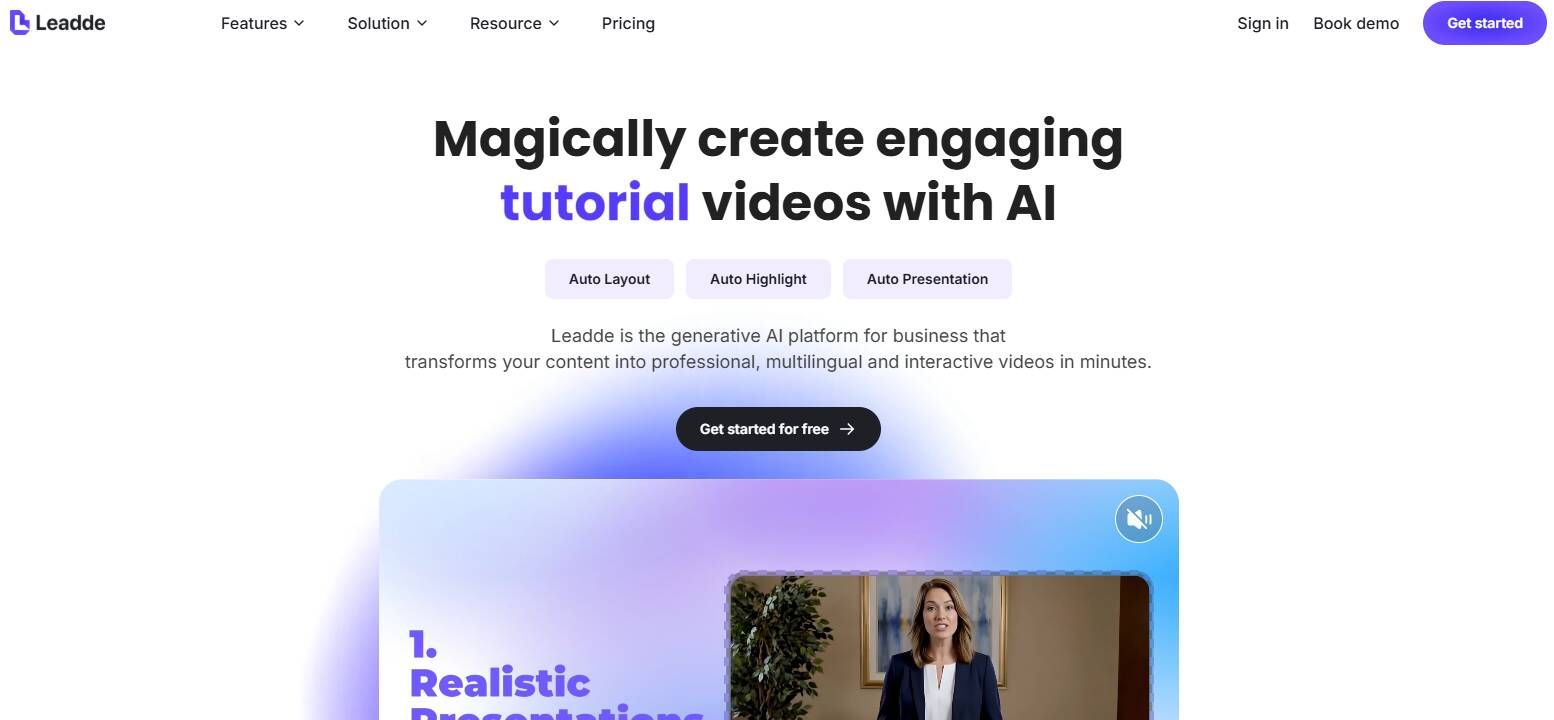
Traditional video production drains budgets and demands weeks of tedious editing. Escape this trap with Leadde. Turn any document and text into a professional business video automatically. It is super fast. Create videos in minutes. Save over 80% of production costs and 90% content creation time.
What Is an Explainer Video? (And Why Your Business Needs One)
An explainer video is a short, focused video that helps your audience understand:
- What your product or service does
- Why it matters
- What they should do next
It’s commonly used on:
- Landing pages
- Product launch pages
- SaaS homepages
- Internal training portals
- Sales presentations
- corporate training portals
In a crowded digital environment, video reduces friction. Instead of asking users to read a long page, you show them the value in 60–120 seconds.
The Core Elements of a High-Converting Explainer Video
No matter how it’s produced, strong explainer videos follow a simple structure:
1. The Problem
Start with a clear pain point your audience recognizes.
2. The Solution
Position your product or method as the logical answer.
3. The CTA (Call to Action)
Tell viewers exactly what to do next: sign up, book a demo, download, or contact sales.
Simple structure. Clear message. No fluff.
Ideal Length and Format for 2026 Audience Retention
Attention spans are shorter than ever. In 2026, the goal is clarity. Using an explainer video template can help maintain this focus and ensure your content fits the 60–90 second sweet spot for marketing.
- 60–90 seconds for marketing videos
- 2–5 minutes for product demos or training
- Vertical or square formats for social
- Horizontal format for websites and presentations
The goal is clarity, not length.
The Traditional Way: How to Make an Explainer Video (Step-by-Step)
Before AI tools became practical, this was the standard workflow.
Step 1: Audience Research and Value Proposition
You define:
- Target persona
- Core pain point
- Unique selling proposition
This stage often involves interviews, market research, and internal meetings.
Step 2: Scriptwriting and Storyboarding (The Slowest Phase)
This is where most projects stall. Writing a tight 90-second script can take days, often requiring teams to look at explainer video script examples for inspiration. It’s thorough, but slow.
- Writing a tight 90-second script can take days
- Storyboarding requires visual planning
- Revisions go back and forth between marketing and product teams
It’s thorough, but slow.
Step 3: Voiceover Recording and Visual Asset Collection
You either:
- Hire a voice actor
- Record internally
- Collect stock footage or design custom animations
Coordination alone can take a week.
Step 4: Video Editing, Animation, and Sound Design
This is the technical stage:
- Sync voice with visuals
- Add motion graphics
- Adjust pacing
- Balance audio
A single 2-minute explainer can require 20–40 hours of editing.
Traditional production still works. It’s just resource-heavy.
The 2026 AI Shortcut: Turn Any Document into a Professional Video Instantly
The biggest shift in 2026 is this: you no longer need to start from scratch.
Most companies already have:
- Sales decks
- Training PDFs
- Product documentation
- Marketing copy
AI now converts those directly into structured videos.
Why Manual Scripting and Storyboarding Is Obsolete
If your message already exists in a document, rewriting it into a script is redundant.
Modern AI tools can:
- Extract key points
- Reorganize content logically
- Generate natural voiceovers
- Build matching visual layouts
This eliminates the slowest production phase entirely.
How "Document-to-Video" Technology Replaces Traditional Editing
Instead of manually:
- Designing slides
- Timing animations
- Syncing narration
AI systems automatically:
- Generate layouts
- Add animated transitions
- Match voice pacing
- Apply consistent branding
You move from “editing” to “reviewing.”
That’s a major shift in workflow.
How to Make an Explainer Video in Minutes (The Fast Workflow)
If you want a practical example of AI-powered production, here’s what the streamlined process looks like.
Step 1: Import Your Content
Upload:
- PPT
- Word document
- Or paste plain text
The platform analyzes structure, headings, and key points automatically.
Step 2: Choose Your AI Avatar and Presentation Template
Instead of hiring a presenter, you select:
- An AI avatar
- A presentation style
- Brand color themes
This works especially well for:
- Corporate training
- Product walkthroughs
- Investor presentations
Step 3: Auto-Generate Layouts and Multilingual Voiceovers
The system:
- Generates slide layouts
- Creates synchronized narration
- Supports multiple languages
This is particularly valuable for global teams who need localized versions without re-recording everything.
Step 4: Review, Edit, and Export Your Business Video
You don’t start from zero. You refine:
- Adjust text
- Trim sections
- Modify visuals
Then export in presentation or video format.
For teams that produce content regularly, this reduces production time dramatically.
Comparing Top Explainer Video Makers: Leadde vs. Synthesia vs. HeyGen
AI video tools aren’t identical. When searching for the best SaaS explainer video creator, focus on your specific workflow needs.
Best for Document-to-Video and Enterprise Training
- Leadde: Strong in converting structured documents into presentation-style videos
- Synthesia: Popular for avatar-based training videos
- HeyGen: Known for realistic AI presenters and marketing-style clips
If your workflow starts with internal documents, document-to-video capability matters more than avatar realism.
Price and Scalability Comparison
Traditional animated explainer video companies charge high premiums, whereas AI platforms offer scalable plans. The right choice depends on your volume of videos and need for multilingual support.
In general:
- Avatar-focused platforms often charge per minute of generated video
- Document-based systems may offer scalable plans for enterprise usage
- Enterprise training teams should consider localization costs
The right choice depends on:
- Volume of videos
- Need for multilingual support
- Level of customization required
Expert Tips for Maximizing Explainer Video ROI
Creating the video is only step one. Distribution and optimization determine impact.
One-Click Multilingual Localization for Global Teams
If your product serves multiple regions:
- Localize voiceovers
- Adjust subtitles
- Adapt examples culturally
AI makes this far more affordable than hiring multiple voice actors.
Making Videos Interactive for Better Content Understanding
Instead of passive viewing, consider:
- Embedded quizzes
- Clickable sections
- Branching scenarios for training
Interactive videos increase retention and engagement, especially for onboarding and education.
Conclusion: The Future of Explainer Video Production Is Automated
Traditional explainer video production isn’t dead. It’s just no longer the default.
In 2026, the smartest teams:
- Repurpose existing content
- Use AI to eliminate repetitive tasks
- Focus human effort on messaging and strategy
The competitive advantage isn’t who can edit faster.
It’s who can communicate clearly, adapt quickly, and scale globally.
And increasingly, that means automation is not just an option. It’s the new standard.