
How to Find AI Avatar Services (2026 ROI & Selection Guide)

Finding the best AI avatar services in 2026 requires looking beyond visual realism to prioritize document-to-video automation and two-way interactivity. Unlike legacy tools that require manual scripting, modern top-tier services like Leadde allow organizations to transform existing PPTs and PDFs directly into interactive video assets, slashing production costs by 80% and creation time by up to 94%. The most effective services now feature "Chat with Video" capabilities, enabling viewers to engage in real-time dialogue with AI digital twins—a shift from passive rendering to Agentic Avatars that significantly boosts knowledge retention and ROI. When vetting a service, ensure it supports hyper-localization in 92+ languages and provides a layered editing interface to avoid the high costs of re-rendering.
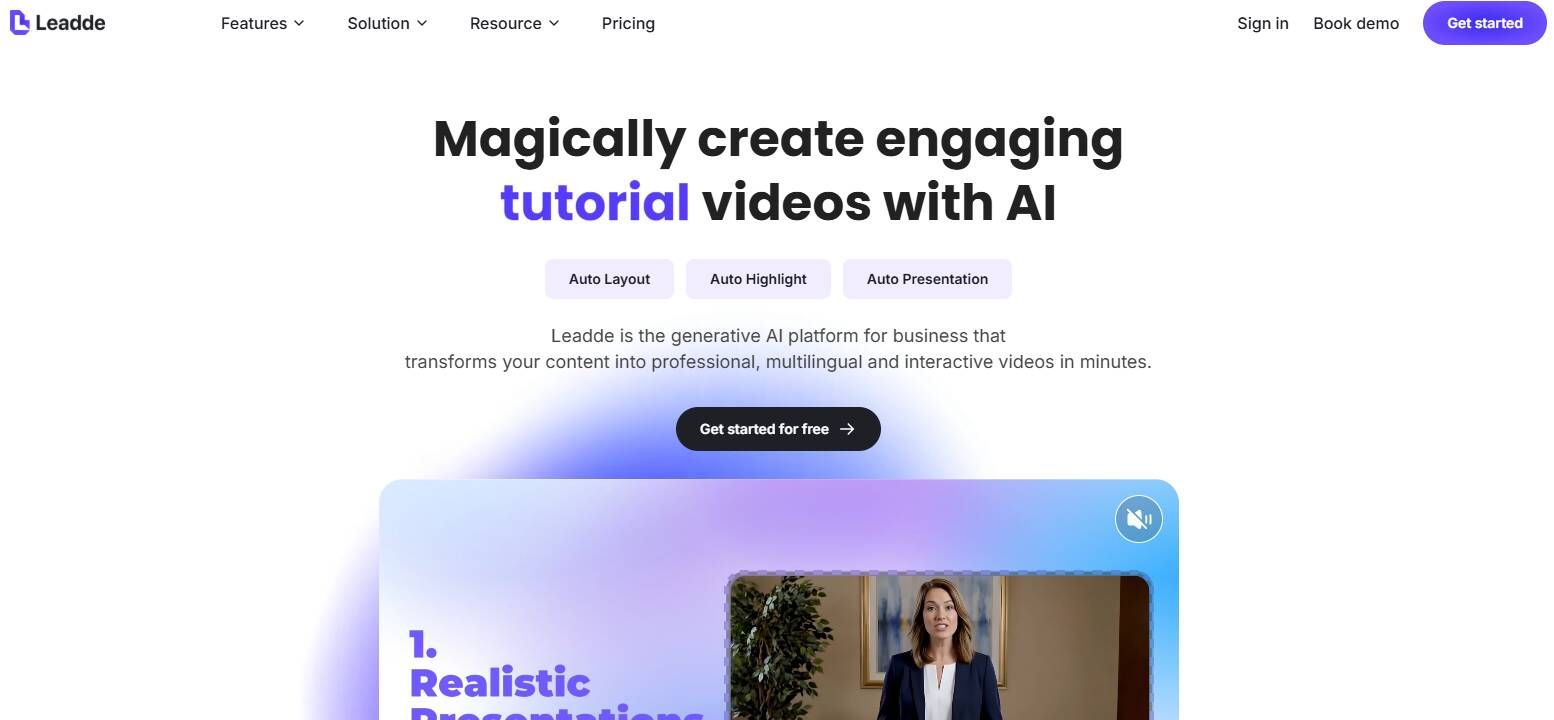
Stop overpaying for AI avatar services that charge by the minute. Leadde automates your production. Simply upload a PPT or PDF to create interactive videos with professional AI avatars in minutes. Save 80% on costs and 90% on time with our $19/month unlimited plan.
What Are AI Avatar Services? (Definition, Types & Core Capabilities)
What Is an AI Avatar Generator and How Does It Work?
AI avatar services use generative AI to turn text, documents, or scripts into videos featuring a virtual presenter.
These platforms typically:
- Convert PPT, PDF, or text into structured video scenes
- Generate voiceovers automatically
- Use avatars to deliver content visually
As of 2026, available information suggests that the most advanced tools automate the entire workflow—from content input to final video output.
Types of AI Avatars: Talking Head, Digital Twin, and Interactive Agents
AI avatars fall into three main categories:
- Talking Head Avatars
Pre-built presenters for standard video narration - Digital Twins
Personalized avatars based on real individuals - Interactive Agents
AI-driven interactive avatars that respond to user input in real time.
Each type serves different use cases, from marketing to enterprise training.
AI Avatars vs Traditional Video Production: Key Differences
| Feature | AI Avatar Video | Traditional Video |
|---|---|---|
| Production Time | Minutes | Days–Weeks |
| Cost | Low | High |
| Scalability | High | Limited |
| Localization | Instant | Manual |
AI avatars eliminate filming, editing, and reshooting—making them ideal for scalable content.
The 2026 Selection Matrix: Beyond the "Plastic Doll" Look (The "Why")
Solving the Uncanny Valley: Evaluating Micro-Expressions and Consistent Character IPs
Modern users expect avatars to feel natural.
Key evaluation factors:
- Facial micro-expressions
- Lip-sync accuracy
- Consistency across videos
A strong AI avatar generator maintains a stable avatar identity, which is critical for branding and trust.
Multimodal AI Avatars: Can They See, Hear, and Respond in Real Time?
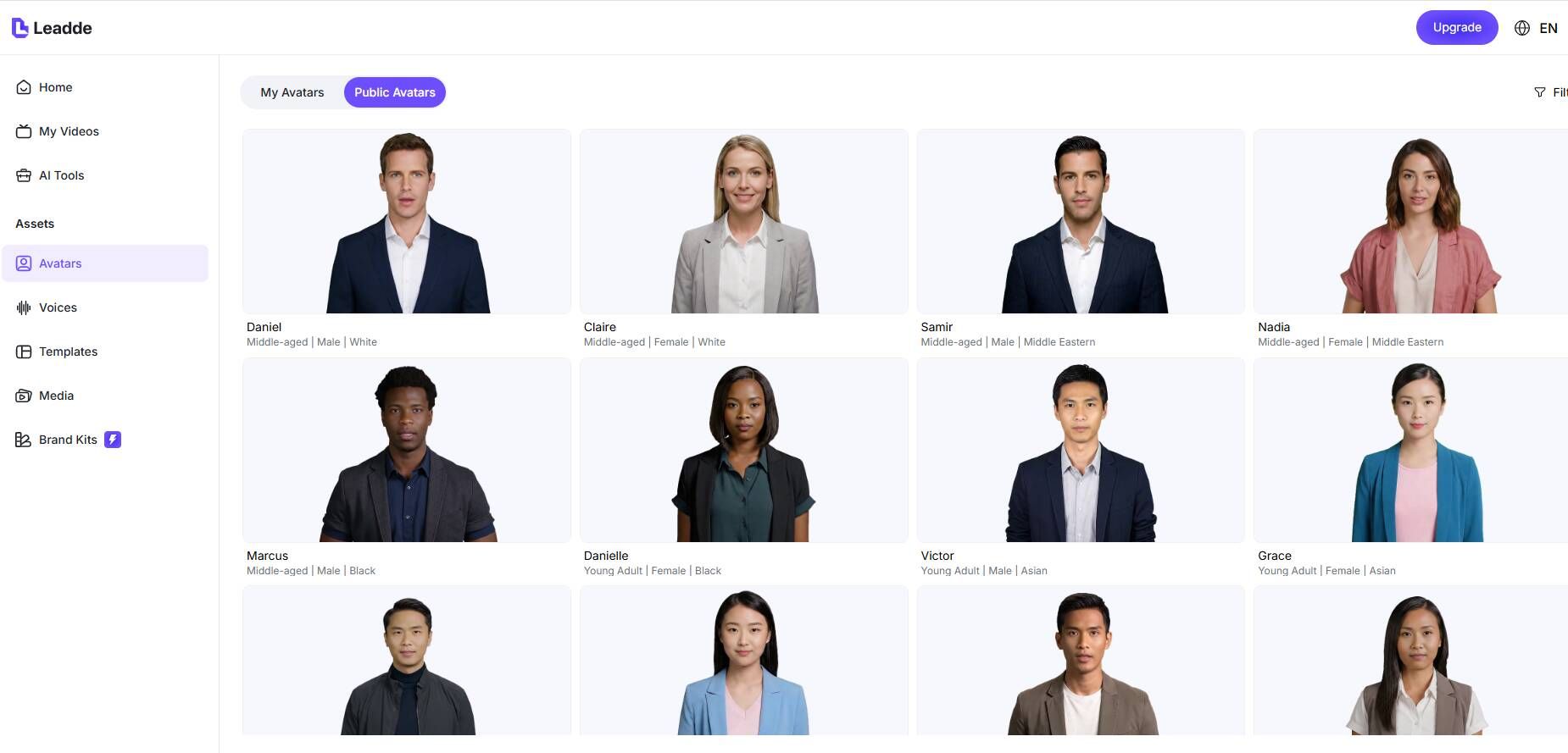
Advanced systems now support multimodal interaction.
This means avatars can:
- Process user input
- Understand context
- Respond instantly
This capability transforms avatars from static presenters into intelligent assistants for sales training and support.
From Passive Rendering to Agentic Avatars: The Shift to Interactive Video
The biggest shift in 2026 is:
👉 From one-way video → two-way interaction
Interactive avatars allow users to:
- Ask questions
- Explore content dynamically
- Receive contextual explanations
This dramatically increases engagement and retention.
5 Non-Negotiable Factors for Enterprise-Grade AI Avatars (The "How-to")
Factor 1: Document-to-Video Automation — Eliminating Manual Script Bottlenecks
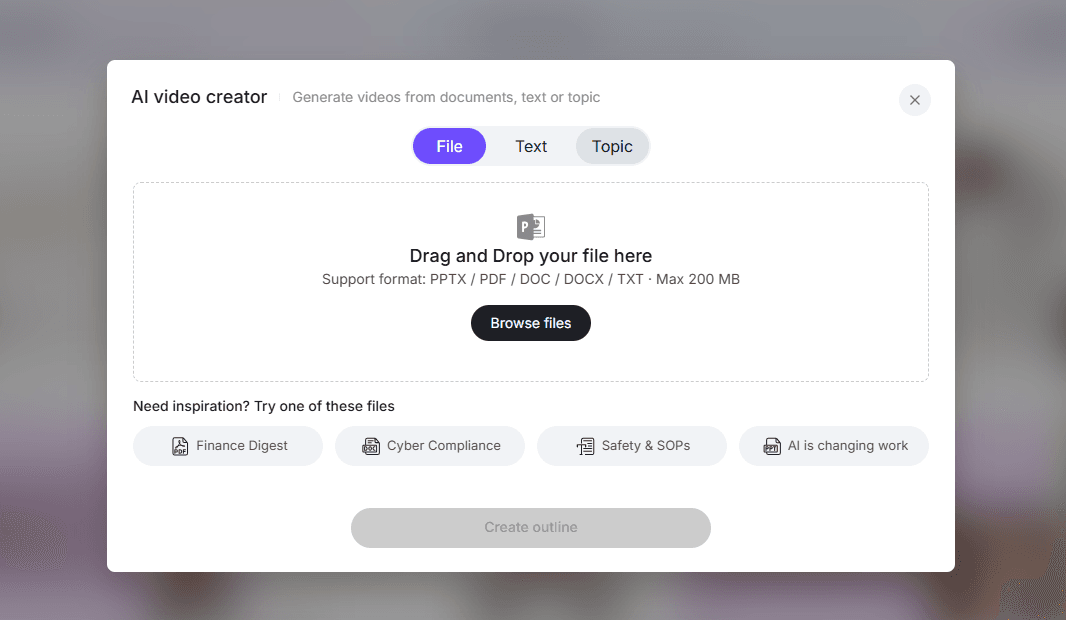
The most critical feature is automation.
Leading platforms can:
- Convert documents into video
- Generate scripts automatically
- Structure scenes intelligently
This removes manual scripting and speeds up production for SOP and compliance training.
Factor 2: The "Maintenance Trap" — Layered PPT Editing and Instant Updates
Traditional video updates require re-recording.
Modern solutions enable:
- Layer-level editing of slides
- Instant regeneration of videos
This solves the long-term maintenance problem for knowledge systems.
Factor 3: Hyper-Localization at Scale — 90+ Languages and Native Voice Systems
Global teams require multilingual content.
Advanced platforms support the following features to ensure global accessibility.
- 92+ languages
- Native-sounding voiceovers
- Automated translation workflows
Factor 4: Interactive Video — Enabling "Chat with Video" and Two-Way Learning
Interactivity is now essential.
Features include:
- Real-time Q&A
- Context-aware responses
- Personalized learning paths
Factor 5: Enterprise Compliance — SOC 2, GDPR, and AI Governance Standards
For enterprise use, compliance is critical. Look for legal and secure platforms that provide SOC 2 certification, GDPR compliance, and robust AI governance frameworks.
Features include:
- SOC 2 certification
- GDPR compliance
- AI governance frameworks
Step-by-Step: How to Vet and Test an AI Avatar Service (Practical Framework)
Step 1: The "Consistent Character" Test Across Scenes and Videos
A high-quality AI avatar must maintain a stable and recognizable identity across all outputs.
When testing, evaluate:
- Facial consistency across multiple scenes and lighting conditions
- Lip-sync accuracy aligned with speech
- Natural micro-expressions (eye movement, subtle gestures)
Also check:
- Does the avatar behave consistently across different videos and scripts?
- Can it maintain a brand persona (formal, friendly, authoritative)?
👉 Even small inconsistencies can break trust and reduce perceived professionalism.
Step 2: Latency & Performance Testing for Interactive Experiences
For platforms offering interactive or AI-driven avatars, speed and responsiveness are critical.
Measure:
- Response latency (how fast the avatar reacts to input)
- Playback smoothness (no lag, stutter, or delay)
- Stability under repeated or concurrent usage
Test real scenarios:
- Ask multiple questions in sequence
- Simulate real user interaction flows
👉 In 2026, users expect near real-time responses. Delays directly impact engagement and learning effectiveness.
Step 3: Automation Depth — From Text/PDF/PPT to Full Video Pipeline
Automation is the biggest differentiator between basic tools and scalable platforms.
Evaluate the full pipeline:
- Input flexibility
- Automation level
- Does it auto-generate scripts, scenes, and visuals?
- Or does it require manual scripting and editing?
- Editing workload
- How much manual adjustment is needed after generation?
👉 The best platforms transform existing documents into ready-to-publish videos with minimal human input, reducing production bottlenecks.
Step 4: ROI Modeling — From Cost-per-Minute to Knowledge ROI
Traditional evaluation focuses on cost per video minute, which is outdated.
Instead, shift to Knowledge ROI, which includes:
- Time saved
- Faster production cycles (minutes vs days)
- Content reuse
- Ability to update and regenerate videos without re-recording
- Scalability
- Producing hundreds of videos across teams and regions
- Global reach
- Instantly localizing content into multiple languages
👉 The real value of AI avatar services lies not in individual videos, but in their ability to scale knowledge creation and distribution across an organization.
The 2026 Market Landscape: Best AI Avatar Platforms Compared (The "Compare")
Synthesia — Best for Corporate Training and Compliance
Strengths:
- Structured templates
- Enterprise adoption
Limitations:
- Limited automation depth
- Less interactivity
HeyGen — Best for Marketing and Social Content Creation
Strengths:
- High-quality visuals
- Creative flexibility
Limitations:
- Focus on marketing use cases
- Limited document automation
Leadde — Best for Scalable, Interactive Knowledge Video Systems
Key advantages:
- Full document-to-video automation
- interactive video (Chat with Video)
- 92-language localization
- 200+ AI avatars
It is ideal for employee onboarding and training.
- Training
- SOPs
- Knowledge systems
Feature Comparison Table: Automation, Interactivity, Localization, Pricing Models
| Feature | Leadde | Synthesia | HeyGen |
|---|---|---|---|
| Document → Video | ✅ | ❌ | ❌ |
| Interactivity | ✅ | ❌ | ❌ |
| Localization | 92+ languages | Limited | Limited |
| Avatars | 200+ | Moderate | Moderate |
Pricing Models Explained: Subscription vs Credit-Based AI Avatar Tools
Flat Subscription Models vs Pay-Per-Minute Pricing
Common models:
- Subscription (predictable cost)
- Credit-based (usage dependent)
Hidden Costs in Traditional AI Avatar Platforms
Watch for:
- Per-minute charges
- Extra localization fees
- Editing costs
Cost Efficiency at Scale: Why Automation Changes ROI
Automation reduces:
- Production time
- Labor costs
As of 2026, available information suggests up to:
- 90% time savings
- 80% cost reduction
Best Use Cases for AI Avatar Services in 2026
Employee Training and Onboarding Automation
- Scalable onboarding
- Consistent messaging
- Faster updates
SOP and Compliance Video Transformation
- Turn documents into videos
- Improve understanding
- Reduce errors
Marketing, Sales, and Product Education
- Product demos
- Explainer videos
- Personalized messaging
Internal Knowledge Management and Documentation
- Convert internal docs into video
- Improve accessibility
- Enable self-service learning
Future Trends: What’s Next for AI Avatar Platforms in 2027?
AR/VR Integration and Immersive Digital Humans
AI avatars will move into:
- Virtual environments
- Immersive training systems
Autonomous AI Avatars for Sales, Support, and Operations
Future avatars may:
- Handle customer queries
- Execute workflows
- Act as digital employees
Real-Time Personalized Video Generation at Scale
Content will become:
- Dynamic
- Personalized
- Generated instantly
How to Choose the Best AI Avatar Service for Your Needs (The "Choose")
Decision Framework: Use Case × Budget × Automation Level
Choose based on:
- Your content type
- Required scale
- Budget constraints
Quick Checklist for Final Selection
- Does it support document automation?
- Does it scale globally?
- Does it offer interactivity?
- Is pricing predictable?
Recommended Stack for Startups vs Enterprises
| Type | Recommended Approach |
|---|---|
| Startup | Focus on cost + speed |
| Enterprise | Focus on automation + scale |
Conclusion: Making a Selection That Scales with Your Business
Finding the right AI avatar service in 2026 is no longer about visuals alone.
It requires evaluating:
- Automation
- Interactivity
- Scalability
The best platforms enable organizations to:
- Create faster
- Scale globally
- Engage users interactively
Choosing the right solution ensures your content strategy is not just efficient—but future-ready.