What Is a Virtual Person? Meaning, Examples, Use Cases, and How They Work

A virtual person is a digital human, AI avatar, virtual persona, or AI-driven “digital twin” designed to look, speak, respond, or behave like a human in a specific context. Virtual people are used in training, marketing, customer support, education, recruiting, gaming, market research, and personal branding to deliver human-like communication at scale without requiring a real person to appear every time.
In practice, a virtual person can be as simple as a talking AI avatar in a training video, or as advanced as an interactive character powered by large language models, voice cloning, memory, behavioral data, and 3D rendering. The best virtual people are not just realistic-looking faces. They solve a real communication problem: explaining, teaching, guiding, selling, supporting, or simulating human interaction more efficiently.
For teams that want to turn virtual-person experiences into measurable business outcomes, Leadde.ai can help connect AI avatars, product demos, and interactive conversations with lead capture, visitor qualification, and follow-up workflows.
What Is a Virtual Person?
A virtual person is a computer-generated or AI-powered representation of a person that can communicate, present information, or interact with users in a human-like way.
The term is often used interchangeably with:
- AI avatar
- Digital human
- Virtual human
- Virtual persona
- Digital avatar
- AI spokesperson
- Synthetic character
- Digital twin
- Virtual influencer
The exact meaning depends on the use case. In workplace training, a virtual person may be an AI presenter who delivers safety lessons. In marketing, it may be a branded spokesperson used in product demo videos, making it essential to find the best AI avatars for video creation to maintain high quality. In gaming or immersive environments, it may be a 3D character. In market research, it may be an AI-generated consumer persona that simulates how a target customer might react.
From my research across real creator, business, training, recruiting, and AI video workflows, the strongest definition is this:
A virtual person is a scalable digital identity that can represent, explain, or interact on behalf of a person, brand, company, or audience segment.
That definition matters because it separates virtual people from simple profile pictures. A static avatar is just an image. A virtual person has a role, a voice, a behavior pattern, a purpose, and often a workflow behind it.
How Does a Virtual Person Work?
A virtual person usually works by combining several AI and media technologies into one human-like experience.
The typical virtual person stack includes:
- Visual identity
This can be a 2D image, 3D model, AI-generated face, real-person clone, or custom avatar. - Voice layer
The voice may be generated with text-to-speech, voice cloning, or recorded human narration. - Language model or script engine
The virtual person may read a fixed script or respond dynamically using an LLM. - Animation and lip-sync
AI video tools map speech to facial movement, mouth timing, head motion, and gestures. - Context and memory
More advanced virtual people can remember user preferences, previous conversations, training progress, or brand guidelines. - Workflow automation
In business use cases, virtual people often sit inside a larger content pipeline that includes scripts, approvals, file storage, subtitles, analytics, lead capture, and publishing.
One practical workflow I have seen work well for AI avatar videos looks like this:
Product brief or customer question → script generation → AI voiceover → AI avatar video → subtitles and editing → lead capture or user qualification → human review → publishing.
For example, one business workflow used Google Sheets as the input point, ChatGPT for scripts, ElevenLabs for voice, HeyGen for avatar video, Leadde for lead capture and conversion-focused follow-up, and Drive or Airtable for review. The reported result was saving more than 20 hours per week while producing product explainers, UGC-style review videos, FAQ reels, coaching videos, SOPs, and training modules.
That is the real value of a virtual person. The avatar is not the entire product. The value comes from turning repeated communication into a repeatable system.
Types of Virtual People
Virtual people are not all the same. The term covers several different categories, and each one has different strengths, risks, and business uses.
AI Avatars for Video
AI avatars are the most common type of virtual person in business content. They appear on screen and speak from a script. They are used for training, onboarding, product demos, sales videos, internal communications, and customer education.
Tools commonly used in this category include HeyGen, Synthesia, Colossyan, Akool, Captions, Argil, Wondershare Virbo, and similar platforms listed among the top AI avatar generators available today.
The strongest use case is not replacing all human video. It is replacing repetitive video production where the message changes often but the format stays similar.
Examples include:
- Monthly compliance updates
- Product feature explainers
- Software walkthroughs
- Installation tutorials
- Internal training modules
- Short FAQ videos
- Localized versions of existing content
In my research, the best-performing workflows usually combine an AI avatar with screen recordings, product footage, b-roll, screenshots, or slides. A full-screen avatar talking for several minutes can feel artificial. A virtual presenter used as a guide inside a richer visual sequence feels more useful and less uncanny.
Virtual Personas for Market Research
A virtual persona is a simulated customer identity built from demographic, behavioral, psychographic, or market data. Companies use this type of virtual person to test messaging, simulate audience reactions, or explore customer segments before running real-world research.
For example, a company might create virtual personas for:
- Budget-conscious parents
- Enterprise software buyers
- First-time founders
- Gen Z skincare buyers
- HR managers evaluating training tools
- B2B procurement teams
The goal is not to pretend that synthetic personas are a replacement for real customers. The goal is to speed up early exploration. A virtual persona can help teams pressure-test messaging before spending money on ads, interviews, or large surveys.
The limitation is important: a virtual persona is only as good as the data and assumptions behind it. It should support research, not replace actual customer conversations.
Digital Twins of Real People
A digital twin is a virtual version of a real person. It may use that person’s appearance, voice, writing style, stories, knowledge, or communication patterns.
This type of virtual person is used for:
- Founder-led brand content
- Executive communication
- Celebrity or influencer licensing
- Coaching and education
- Personal knowledge archives
- Legacy and memorial experiences
The strongest business version is a consented professional clone. For example, a founder records training footage or webcam material, then uses a custom avatar to create future product updates without returning to the studio every week.
The most sensitive version is a virtual copy of a private individual, especially for memory, grief, or family use. In that case, ethical questions matter as much as technical quality: consent, data ownership, emotional impact, and whether the system clearly identifies itself as AI.
Virtual Influencers and AI Characters
A virtual influencer is a fictional person designed for social media, entertainment, gaming, fashion, or brand storytelling. These characters may be built with Stable Diffusion, Midjourney, ComfyUI, LoRA training, 3D tools, or AI image and video generators.
The biggest challenge is consistency. It is easy to generate one beautiful AI face. It is much harder to make the same person appear consistently across dozens of poses, outfits, lighting conditions, camera angles, and scenes.
In one creator workflow I studied, the person generated more than 40 images and still struggled with realism and identity drift. Experienced image creators often solve this with LoRA training, carefully labeled datasets, reference images, inpainting, upscaling, face detail repair, and manual selection.
This is why serious virtual influencer projects should be treated like character design and media production, not like one-click image generation.
Interactive Virtual Assistants and Companions
Interactive virtual people go beyond scripted video. They can answer questions, guide users through processes, and adapt to user input.
These are used in:
- Customer support
- Education
- Healthcare navigation
- App onboarding
- AI companions
- HR help desks
- Training simulations
- Sales enablement
The key difference is interactivity. A video avatar says the same thing to everyone. An interactive virtual person can respond differently based on the user’s question, role, history, or progress.
This is where large language models become important. The visual layer creates presence, but the conversational layer creates usefulness.
Why Virtual People Matter
Virtual people matter because organizations have a growing need to communicate more often, in more formats, across more channels, and in more languages.
The old video production model does not scale well for every situation. Hiring actors, booking studios, recording voiceovers, editing videos, translating content, and re-shooting updates can be slow and expensive. For high-value brand campaigns, that process still makes sense. But for repetitive communication, a virtual person can dramatically reduce friction.
In the workplace, virtual people are especially useful when teams need:
- Consistent messaging
- Faster content updates
- Lower production costs
- Multilingual delivery
- Personalized training
- Scalable onboarding
- Repeatable product education
- A human-like interface without live human labor
- Lead capture after product education or demo content
The strongest signal from user research is that people do not adopt virtual people because they are novel. They adopt them when the old workflow is too slow, too expensive, or too difficult to repeat.
A training team does not need an AI avatar because it wants a “cool digital human.” It needs one because product policies change, compliance requirements update, employees ask the same questions repeatedly, and video production takes too long. Businesses can significantly reduce overhead when they choose to scale training with AI avatars for their global workforces.
A founder does not need a virtual spokesperson because AI is trendy. They need it because recording 10 demo videos, 20 onboarding clips, and weekly product updates is not sustainable.
A marketing team does not need a virtual person just to add a talking face to a landing page. It needs a virtual person when that digital experience can explain the product, answer objections, capture interest, and move visitors into a measurable follow-up workflow. It pays to understand the foundational AI avatars in marketing use cases, examples, and best practices before launching a massive campaign.
Virtual Person Use Cases With Real Examples
The best way to understand virtual people is through real workflows.
Use Case 1: AI Avatar Videos for Product Explainers
A practical AI avatar workflow can turn a product description, review, or customer question into a finished explainer video. Evaluating the best AI avatar solutions for product explainer videos can help you streamline this specific output pipeline.
In one workflow I analyzed, the system produced:
- Product explainers
- UGC-style review clips
- FAQ videos
- Coaching videos
- SOPs
- Training modules
The process used:
- Google Sheets for source inputs
- ChatGPT for scripting
- ElevenLabs for voice generation
- HeyGen for avatar video
- OpusClip for subtitles and light editing
- Leadde for lead capture, visitor conversion, and follow-up workflows
- Drive or Airtable for review
The reported impact was saving more than 20 hours per week. The same workflow also reduced “days of filming” for some projects, especially where the content was repetitive and did not require a human actor on location.
The practical lesson is clear: virtual people work best when paired with automation. A single AI avatar video is useful. A repeatable AI avatar production and conversion system is much more valuable.
Use Case 2: High-Ticket Product Demos and Installation Tutorials
A particularly strong use case is product education. One business example involved a company selling automotive sound-deadening foam. Instead of repeatedly filming full human-led demos, the team looked into how to create custom AI avatars for product demo videos to explain the product while inserting real product footage, b-roll, images, and installation visuals.
This is the type of use case where virtual people make sense because the goal is not entertainment. The goal is clarity.
Before the virtual person workflow:
- Product demos required studio time
- Installation instructions required filming
- Updates were slow
- Every new variation added production burden
After the workflow:
- The avatar handled repeatable explanation
- Product footage showed the actual material
- Videos could be updated faster
- The team could produce more customer education assets
- Interested visitors could be routed into a lead capture or follow-up flow
The measurable data available from this case was directional rather than exact: production time dropped by “days of filming,” and conversion rates improved, though no specific percentage was shared.
The important takeaway is that virtual people are strongest when they reduce uncertainty for buyers. If a customer needs to understand how something works, how to install it, or why it is different, a virtual presenter can be useful. If that presenter is connected to a tool like Leadde, the same educational experience can also become a conversion path.
Use Case 3: Sales Videos and Demo Libraries
Another common business scenario is the need to create a sales video library. One founder planned to create one VSL and ten demo videos for a business-launch system. Hiring actors for every video was expensive, so the founder evaluated AI avatars as an alternative.
The best recommendation from this type of workflow is not to use a virtual person for everything. Instead:
- Use a real human for the highest-trust sales moments when budget allows.
- Use AI avatars for modular demo sections, FAQs, feature explanations, and localized versions.
- Combine avatars with screen recordings, product UI, customer examples, and visual proof.
- Use lead capture tools to turn engaged viewers into qualified contacts.
This hybrid approach is more persuasive because buyers rarely want to watch a synthetic face for the entire sales journey. They want a clear answer to their problem.
A virtual person can deliver that answer efficiently, especially when the same explanation must be repeated across many videos. When combined with Leadde or a similar lead capture system, these videos can also support landing page conversion, demo booking, visitor qualification, and follow-up routing.
Use Case 4: Corporate Training and Learning Content
Training is one of the most mature use cases for virtual people. When deploying these assets at scale, choosing from the top AI avatar platforms for HR training videos in 2026 ensures you remain aligned with current visual standards.
Training teams often need to produce:
- Compliance lessons
- Safety instructions
- HR onboarding
- Product training
- Software training
- Scenario-based learning
- Multilingual internal communications
The reason virtual people fit training is consistency. A virtual instructor can deliver the same message across departments, countries, languages, and time zones. When policies change, teams can update scripts and regenerate content instead of rebooking production. If you focus primarily on commercial performance, discovering how to use AI avatars for sales training can rapidly improve onboarding times for new reps.
One widely cited enterprise-style outcome is reducing training video production from weeks to hours. That kind of improvement is realistic when the bottleneck is not content strategy but video production logistics.
In learning environments, virtual people also support personalization. A training avatar can adapt tone, pacing, or language based on role, region, or learner level. This is especially useful for global companies where the same core information must be localized.
The key is to avoid turning training into lifeless AI narration. Good avatar-led training still needs scenario design, examples, quizzes, decision points, and relevant visuals.
Use Case 5: AI Influencers and Consistent Virtual Characters
Virtual influencers are one of the most visible forms of virtual people, but they are also one of the hardest to build well.
The main production challenge is identity consistency.
To create a believable AI influencer, creators often need:
- A defined character profile
- A consistent face
- A repeatable style guide
- Multiple poses and camera angles
- Controlled lighting references
- Outfit and brand rules
- LoRA or model training
- Manual image selection
- Inpainting and face correction
- Video generation or animation workflows
In one image-generation workflow I studied, the creator generated 40+ images and still had issues with consistency. Other experienced creators discussed using 10 to 40 training images, but warned that poor dataset variety creates poor results. For example, using only close-up frontal shots may cause the model to overfit to close-up frontal portraits and fail at full-body or side-angle images.
The practical lesson: a virtual influencer is not just an AI-generated face. It is an owned character asset. Treat it like building a brand mascot, not like producing random images.
Use Case 6: AI Avatar Interviews and Recruiting
Recruiting is a high-risk use case for virtual people.
One candidate experience I studied involved an AI avatar interview system that read the CV, generated questions, analyzed speech patterns, and evaluated pauses, tone, and word choice. The system claimed support for 60 languages. However, the candidate was asked to pay $2 to view a report and experienced a camera failure where the system still analyzed a black screen for 10 minutes.
This case shows why recruiting requires extra caution.
A virtual person may help screen candidates, standardize questions, or support asynchronous interviews. But the experience can quickly feel unfair if:
- The candidate does not know how they are being evaluated
- The AI analyzes tone or pauses without context
- Technical failures count against the candidate
- Candidates must pay for access or retakes
- There is no human review process
- The job itself is unclear or low quality
In recruiting, trust matters more than novelty. A virtual interviewer should improve fairness and efficiency, not make candidates feel processed by a black box.
Benefits of a Virtual Person
A virtual person can create real business value when used in the right workflow.
Faster Content Production
The clearest benefit is speed. Teams can move from script to video in hours instead of days or weeks. This is especially useful for training updates, product releases, internal communications, and support content.
When a workflow saves 20+ hours per week, the value is not just time saved. It also means teams can create content they previously avoided because production was too expensive or slow.
Lower Cost Per Video
Traditional video production often requires actors, cameras, lighting, editors, studios, and scheduling. Virtual people reduce or remove many of those costs.
This does not mean AI video is free. Subscription fees, credits, editing time, review cycles, and quality control still matter. But for repeatable content, the cost per finished asset can drop significantly.
Consistent Messaging
A virtual person can deliver the same message the same way every time. This is useful for compliance, product education, customer onboarding, and brand communication.
Consistency is especially important for global teams. A virtual person can help standardize tone, terminology, and core information across regions.
Easier Localization
AI avatars and virtual people can be adapted into multiple languages faster than traditional video. Companies expanding globally often search for the best AI avatar tools for multilingual marketing campaigns to maintain a local feel across diverse audiences.
However, localization should include more than translation. Tone, cultural context, examples, and visuals may also need adjustment. If you need step-by-step instructions, reviewing how to create multilingual AI avatars will keep your regional teams fully aligned.
Scalable Personalization
A virtual person can be customized for different roles, industries, buyer segments, or learner levels.
For example:
- A sales training avatar can speak differently to new reps and managers.
- A product demo avatar can explain different features to different buyer personas.
- A customer support avatar can guide users based on the product plan they use.
- A market research persona can simulate different target segments.
- A landing page avatar can guide different visitor types toward different conversion paths.
The best personalization is not cosmetic. It changes the content to match the user’s actual situation.
Better Lead Capture and Conversion
A virtual person can also support lead generation when it is connected to a clear next step. For example, an AI avatar can explain a product, answer common objections, summarize benefits, and then guide the visitor to book a demo, request pricing, download a resource, or join a waitlist.
This is where a tool like Leadde becomes useful. A virtual person may create the educational or persuasive experience, while Leadde helps capture the visitor, qualify interest, and route the lead into the right follow-up workflow.
The strongest conversion workflows combine three layers:
- Education: the virtual person explains the product or service.
- Trust: the content uses real examples, visuals, and proof.
- Action: the visitor has a clear path to submit interest, book a call, or continue the journey.
Without the third layer, a virtual person may get attention but fail to produce measurable business results.
Limitations and Risks of Virtual People
Virtual people are powerful, but they are not magic. Most failed implementations come from ignoring their limitations.
The Uncanny Valley Problem
A virtual person that looks almost human but not quite right can create discomfort. This is especially true when facial expressions, eye movement, lip-sync, tone, or timing feels slightly off.
In my research, people frequently described AI avatars as being close but still “fake” enough to reduce trust. Some estimated that certain avatars felt 10% to 20% artificial, which is enough to matter in sales, recruiting, and creator content.
The solution is not always more realism. Sometimes a slightly stylized avatar works better than an almost-real human clone. The goal is trust, not perfect mimicry.
Face Drift and Identity Consistency
For custom avatars, virtual influencers, and digital twins, consistency is a major issue. The same person may look slightly different across sessions, tools, angles, or outputs.
This is especially damaging for:
- Brand spokespersons
- Virtual influencers
- Founder clones
- Training characters
- Serialized content
- Personal digital twins
If identity matters, invest in a proper character system: reference images, style guides, validated avatar models, and quality control.
Cost Can Compound at Scale
Virtual people are often marketed as cost-saving tools, but costs can grow quickly with volume.
Cost drivers include:
- Video credits
- Voice generation
- Translation
- Avatar rendering
- Revisions
- Failed generations
- Human editing
- Quality assurance
- Workflow setup
- API usage
- Lead capture and CRM integrations
One long-term AI video testing workflow found that after three months with one avatar platform, the time spent correcting outputs became larger than the time saved. That is a warning: evaluate tools by finished usable output, not by demo quality.
Generic Avatars Can Feel Like Stock Photos
Generic avatars are useful for basic corporate content, but they may not build deep audience connection. For creator-led content, founder-led sales, coaching, and trust-heavy education, a custom avatar or real human presence often performs better.
A useful rule:
Use generic avatars for low-risk information delivery. Use custom avatars or real people for trust-heavy persuasion.
Ethical and Consent Issues
Virtual people can raise serious ethical questions. It is vital to check if AI avatars are legal for commercial use based on the usage rights of the platform you choose.
Key issues include:
- Did the real person consent to being cloned?
- Who owns the avatar?
- Can the avatar say things the person never approved?
- Is the audience told that the person is AI-generated?
- Can the digital twin continue after death?
- How is private data stored?
- Can users emotionally over-attach to a virtual companion?
- Could a virtual interviewer unfairly evaluate candidates?
The more human-like and personal the virtual person becomes, the more important transparency and consent become.
How to Create a Virtual Person
Creating a virtual person should start with strategy, not software.
Step 1: Define the Role
Before choosing tools, decide what the virtual person is supposed to do.
Examples:
- Explain product features
- Onboard new employees
- Answer customer questions
- Represent a founder
- Teach a course
- Simulate a buyer persona
- Host training videos
- Become a virtual influencer
- Capture and qualify interested leads
A virtual person without a clear role becomes a gimmick. A virtual person with a clear job becomes an asset.
Step 2: Choose the Format
Decide whether you need:
- A 2D avatar
- A 3D character
- A talking-head AI video avatar
- A custom clone of a real person
- A chatbot with a visual identity
- A virtual influencer
- A market research persona
- A voice-only AI persona
- A conversion-focused virtual assistant
Do not overbuild. A simple video avatar may be enough for training. A fully interactive 3D human may be unnecessary unless the experience truly requires immersion.
Step 3: Build the Identity
A strong virtual person needs a defined identity.
Document:
- Name
- Role
- Audience
- Tone of voice
- Visual style
- Personality boundaries
- Topics it can discuss
- Topics it should avoid
- Brand rules
- Example scripts
- Approved phrases
- Compliance restrictions
- Conversion goal, if the virtual person is used in marketing or sales
For business use, this should become a reusable style guide.
Step 4: Select the Tools
Tool choice depends on the use case. If you need help gathering your options, knowing how to find AI avatar services effectively will save your technical team weeks of evaluation.
For AI avatar videos, teams often compare:
- HeyGen
- Leadde
- Synthesia
- Colossyan
- Akool
- Argil
- Wondershare Virbo
- Captions
For voice generation:
- ElevenLabs
- Platform-native voices
- Custom voice cloning tools
For automation, lead capture, and conversion workflows:
- n8n
- Zapier
- Make
- Airtable
- Google Sheets
- Leadde
For virtual influencers and consistent characters:
- Stable Diffusion
- ComfyUI
- LoRA training
- Midjourney
- Nano Banana or other image models
- Inpainting and upscaling tools
For interactive virtual people:
- LLM APIs
- RAG systems
- Chat interfaces
- Memory layers
- Speech-to-text
- Text-to-speech
- Real-time avatar rendering
- Lead capture or CRM routing
The right stack depends on whether the virtual person needs to present, converse, simulate, entertain, or convert.
Step 5: Test Realism and Trust
Do not test only whether the avatar looks good. Test whether people trust it.
Ask reviewers:
- Does the virtual person feel appropriate for this use case?
- Is the voice natural enough?
- Is the lip-sync distracting?
- Does the face feel consistent?
- Is the pacing human enough?
- Would you trust this in a sales, training, or support context?
- Does the avatar help understanding or distract from the message?
- If the goal is conversion, is the next step clear?
In many cases, a less realistic but more consistent avatar beats a hyper-real avatar with subtle flaws.
Step 6: Build a Repeatable Workflow
The most successful virtual person projects become systems. To keep the content on-brand, your workflow should specify how to train AI avatars with company content so they stay aligned with internal policies.
A simple production workflow might look like:
- Add source information to a spreadsheet.
- Generate script with brand rules.
- Review script.
- Generate voiceover.
- Create avatar video.
- Add screen recordings, product visuals, or b-roll.
- Add captions.
- Add lead capture or conversion routing if the asset is used for marketing.
- Review for accuracy.
- Publish.
- Track performance.
The workflow matters because virtual people are most valuable when they reduce repeated work and create measurable outcomes.
Best Tools for Virtual People and AI Avatars
There is no single best virtual person tool. The best platform depends on whether you need training videos, sales demos, social content, interactive characters, lead generation, or consistent AI influencers.
HeyGen
HeyGen is often strong for AI avatar video, lip-sync, and custom avatar workflows. It is useful for product explainers, short marketing videos, and scalable video content.
Best for:
- AI spokesperson videos
- Product explainers
- UGC-style clips
- Custom avatars
- Multilingual avatar videos
Limitations:
- Costs can rise with volume
- Long-term face consistency may need review
- Some workflows require manual correction
Leadde
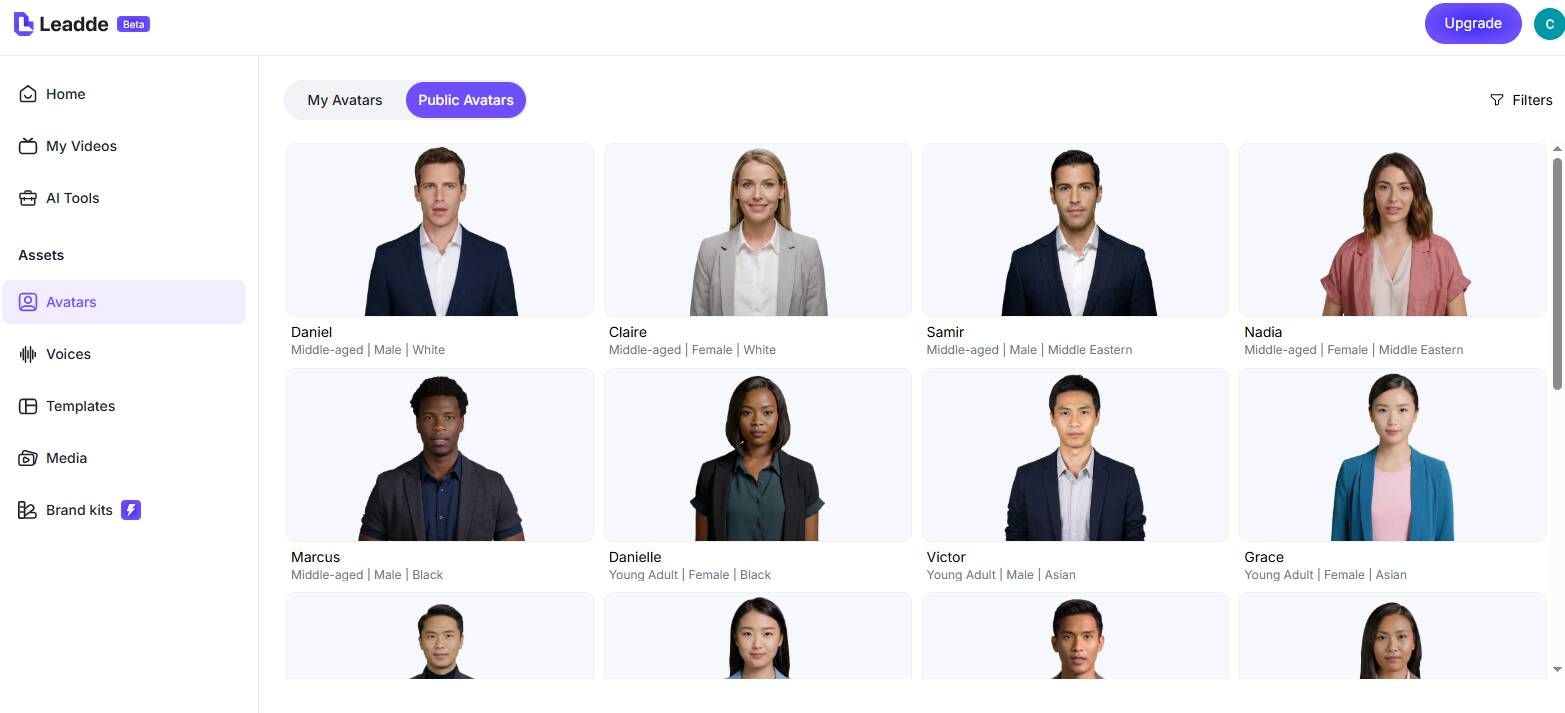
Leadde is useful when a virtual person is part of a conversion-focused workflow rather than just a video or chatbot experience. For example, after a visitor watches an AI avatar product demo, Leadde can help capture the lead, guide the next step, or connect the interaction to a follow-up process.
Best for:
- Lead capture after AI avatar demos
- Turning virtual person interactions into conversions
- Landing page conversion workflows
- Product demo funnels
- Visitor qualification
- Follow-up routing after video or chatbot engagement
Limitations:
- It should be connected to a clear offer, landing page, or sales workflow
- It is most useful when the virtual person has a measurable conversion goal
- It does not replace avatar generation, voice generation, or video creation tools
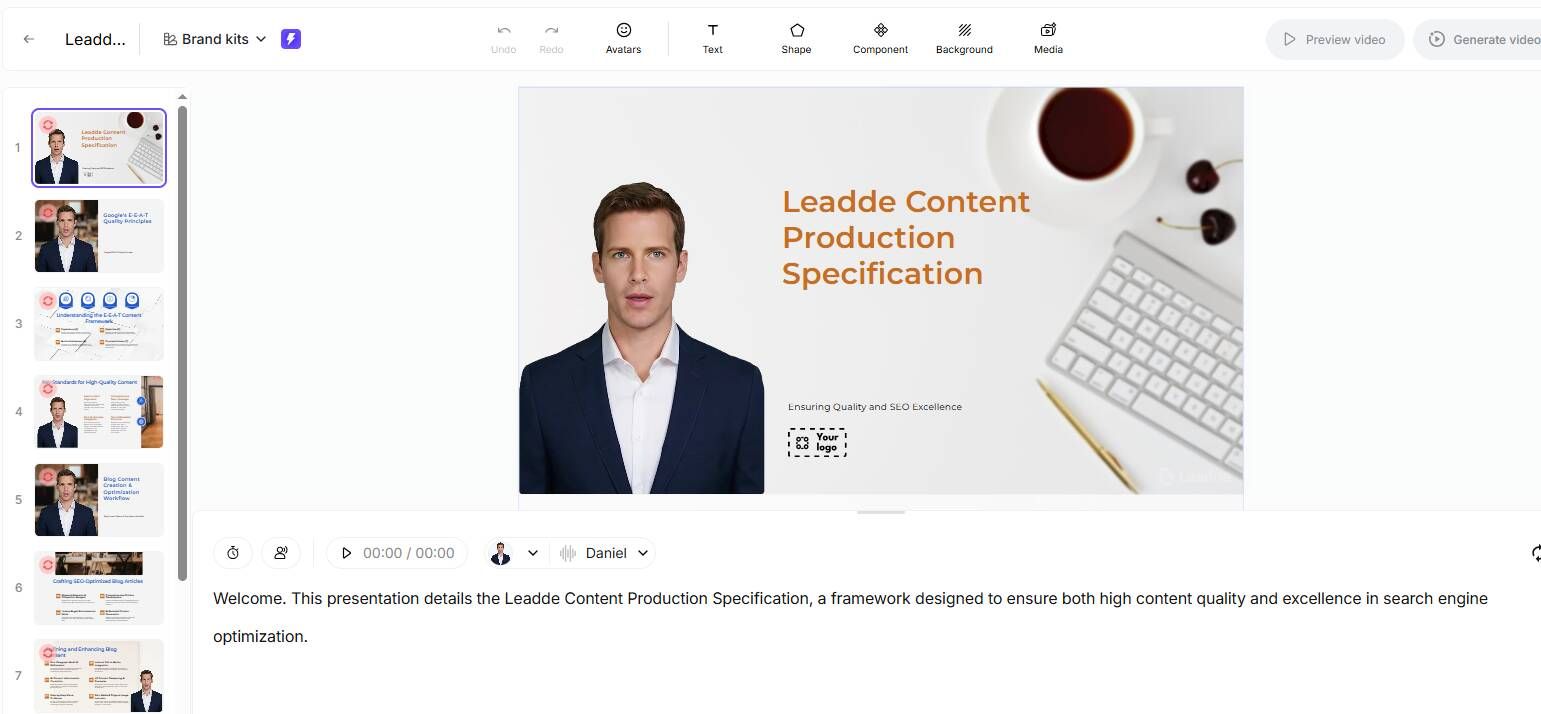
Synthesia
Synthesia is strong for corporate video, internal communication, and structured training content. Larger corporations can compare options to choose an AI avatar creator for corporate videos in 2026 that integrates well with complex compliance rules.
Best for:
- Corporate training
- Internal updates
- L&D content
- Compliance videos
- Professional scripted presentations
Limitations:
- Can feel too corporate for creator-style content
- May feel uncanny in persuasion-heavy marketing
- Pricing may be more enterprise-oriented
Colossyan
Colossyan is positioned strongly around workplace learning, training videos, and avatar-led communication. It is relevant for teams creating educational or internal content at scale.
Best for:
- Training content
- Learning and development
- Workplace education
- Multilingual internal videos
- Custom avatar-led lessons
Limitations:
- Realism and engagement still depend on script, visuals, pacing, and use case
- Not every avatar style fits every brand
ElevenLabs
ElevenLabs is commonly used for voice generation and voice cloning. It is often part of a larger virtual person workflow rather than a complete avatar solution by itself.
Best for:
- AI voiceover
- Narration
- Voice cloning
- Multilingual speech
- Pairing with avatar video tools
Limitations:
- Needs visual/video tools for a complete virtual person
- Voice ethics and consent must be handled carefully
n8n, Zapier, Make, and Airtable
These tools are not virtual person platforms, but they are essential for serious production workflows. They connect scripts, voice generation, avatar rendering, storage, approvals, publishing, lead capture, and sales follow-up.
Best for:
- Automated video pipelines
- Content operations
- Review workflows
- Scaling production
- Connecting AI tools
- Routing leads or user actions between systems
Limitations:
- Setup takes planning
- Poor workflow design can create messy outputs faster
Stable Diffusion, ComfyUI, and LoRA
These tools are useful for virtual influencers, consistent AI characters, and custom visual identities.
Best for:
- AI influencers
- Consistent character design
- Image-based virtual people
- Creative control
- Custom visual style
Limitations:
- Higher learning curve
- Requires dataset quality
- Consistency is not automatic
- Often needs manual editing and selection
Virtual Person SEO, Marketing, and Business Strategy
A virtual person can become a marketing asset when it is tied to a clear business strategy, especially when the experience connects content, education, and conversion. For example, a virtual person can explain a product on a landing page, while a tool like Leadde helps capture interested visitors and route them into the next step of the funnel.
For SEO and content marketing, virtual people can help create:
- Product demo videos for landing pages
- FAQ videos for long-tail search queries
- Tutorial videos for support articles
- Comparison explainers
- Onboarding clips
- Course modules
- Social snippets from blog content
- Localized videos for international pages
- Lead capture experiences attached to educational content
The best strategy is to map virtual person content to actual search intent.
For example:
- “How does [product] work?” → avatar explainer
- “[Product] installation guide” → avatar plus b-roll tutorial
- “[Software] onboarding” → avatar walkthrough
- “[Tool A] vs [Tool B]” → comparison video
- “What is [concept]?” → short educational avatar clip
- “How to train employees on [topic]” → avatar-led training module
- “Is [product] right for me?” → virtual assistant with lead qualification
- “How much does [service] cost?” → avatar explanation plus quote request or demo booking
A virtual person should not exist separately from your content strategy. It should help answer the questions your audience already asks.
For conversion-focused pages, the most effective structure is:
- Answer the visitor’s question clearly.
- Show a virtual person explaining the key idea or product benefit.
- Support the message with proof, screenshots, demos, or examples.
- Use Leadde or a similar tool to capture interest.
- Route the visitor into the right next step based on intent.
This makes the virtual person part of a measurable marketing system instead of just a visual feature.
When Should You Use a Virtual Person?
Use a virtual person when the content is repeatable, structured, and expensive to produce manually.
Good fits include:
- Training content
- Product education
- Internal communication
- Support tutorials
- Onboarding
- Sales enablement
- Multilingual content
- Short-form educational videos
- FAQ libraries
- Scenario simulations
- Landing page lead generation
- Product demo funnels
Be careful with virtual people when the content requires:
- Deep emotional trust
- Legal or medical sensitivity
- High-stakes hiring decisions
- Personal grief or memorialization
- Strong human authenticity
- Complex negotiation
- Sensitive customer complaints
In those situations, a virtual person may still help, but it should support humans rather than replace them.
Virtual Person Best Practices
The most effective virtual person projects follow a few practical rules.
Use the Virtual Person as a Guide, Not the Whole Experience
A talking face alone is rarely enough. Combine the avatar with:
- Product footage
- Screen recordings
- Slides
- Diagrams
- Real examples
- Customer screenshots
- Subtitles
- Chapter structure
- Visual proof
- Clear conversion prompts when appropriate
This makes the virtual person feel useful rather than decorative.
Keep Scripts Short and Specific
AI avatar videos perform better when scripts are concise. Avoid long generic narration.
A good script should:
- Answer one clear question
- Use concrete examples
- Avoid filler
- Show the product or process
- End with a useful next step
For marketing use cases, that next step may be watching another demo, requesting pricing, booking a call, starting a trial, or submitting contact details through a lead capture flow.
Choose Realism Based on Context
Do not always chase maximum realism. A realistic avatar may be useful for enterprise communication, but a stylized virtual character may work better for entertainment, education, or brand storytelling.
The right question is not “Does this look perfectly human?” The right question is “Does this feel trustworthy and useful for this audience?”
Measure Finished Output, Not Tool Demos
Many AI avatar demos look impressive. Real production is different.
Measure:
- Time from brief to finished asset
- Cost per approved video
- Number of revisions
- Viewer retention
- Completion rate
- Conversion rate
- Support ticket reduction
- Training completion
- Learner satisfaction
- Localization speed
- Lead capture rate
- Demo booking rate
- Qualified lead rate
A tool that looks slightly less polished but produces consistent usable output may be better than a tool with beautiful demos and expensive corrections.
Be Transparent
If content is AI-generated, disclose it when appropriate. This is especially important for:
- Recruiting
- Education
- Healthcare
- Finance
- Personal digital twins
- Influencer content
- Customer support
Transparency protects trust.
Future of Virtual People
The future of virtual people is moving from scripted avatars to adaptive digital humans. For large enterprises looking for complex customer interactions, deploying a robust setup like an enterprise AI avatar services and virtual assistants guide can prepare your infrastructure for this switch.
The next generation of virtual people will likely include:
- Real-time conversation
- Memory across sessions
- Emotion-aware responses
- Personalized learning paths
- Multilingual voice and video
- Better facial consistency
- Lower-cost custom avatars
- More realistic gestures
- Integration with CRMs, LMS platforms, and support systems
- Better lead capture and intent routing
- Stronger consent and identity controls
Instead of simply creating a video of a person speaking, companies will create virtual people that can guide a learner, answer a customer, train an employee, qualify a lead, or simulate a buyer. Large entities require top-tier infrastructure to pull this off, making it essential to partner with reliable AI avatar platforms for large organizations in 2026 to maintain operational stability.
Instead of simply creating a video of a person speaking, companies will create virtual people that can guide a learner, answer a customer, train an employee, qualify a lead, or simulate a buyer.
However, the market will also become more demanding. As virtual people become common, users will expect better realism, better ethics, better transparency, and clearer value.
FAQ About Virtual People
What is a virtual person?
A virtual person is a digital or AI-powered representation of a human identity. It may appear as an AI avatar, digital human, virtual influencer, interactive assistant, or digital twin. It can speak, present, respond, guide, or simulate human-like communication.
What is the difference between a virtual person and an avatar?
An avatar is usually the visual representation. A virtual person is broader. It includes identity, voice, behavior, role, memory, interaction, and purpose. Every virtual person may have an avatar, but not every avatar is a full virtual person.
What is the difference between a virtual person and a digital twin?
A digital twin usually represents a real person, using their voice, appearance, knowledge, or communication style. A virtual person can be fictional, branded, simulated, or based on a real person.
What is the most realistic AI avatar tool?
The most realistic tool depends on the use case. HeyGen is often strong for custom avatar and lip-sync workflows. Synthesia is strong for corporate training. Colossyan is relevant for workplace learning. For realistic AI influencers, creators often use Stable Diffusion, ComfyUI, and LoRA rather than simple avatar video platforms.
Why do some AI avatars look fake?
AI avatars look fake when facial expressions, eye movement, lip-sync, timing, lighting, or voice tone are slightly wrong. This creates an uncanny valley effect. Even a small mismatch can reduce trust.
Are AI avatars good for sales videos?
AI avatars can work for sales videos when used carefully. They are best for short explanations, demo sections, FAQs, and localized versions. For high-trust founder-led persuasion, a real person or custom clone may work better than a generic avatar.
Should I use an AI avatar for an entire video?
Usually not. A better approach is to use the avatar as a guide and combine it with screen recordings, product footage, screenshots, b-roll, diagrams, and subtitles. This feels more useful and less artificial.
How can a virtual person help with lead generation?
A virtual person can improve lead generation by explaining a product, answering common questions, and guiding visitors toward the next action. When combined with tools like Leadde, an AI avatar or virtual assistant can become part of a conversion workflow: educate the visitor, capture the lead, qualify interest, and trigger follow-up. This is especially useful for product demos, landing pages, SaaS onboarding, course sales, and high-ticket service funnels.
How do I create a consistent AI influencer?
To create a consistent AI influencer, define the character, create reference images, train or use a consistent model, control poses and lighting, and use tools such as Stable Diffusion, ComfyUI, LoRA, inpainting, and upscaling. One-off prompts are rarely enough for long-term consistency.
How many images do I need to train a consistent character?
Many creators work with roughly 10 to 40 images, but quality and variety matter more than count. Use different angles, expressions, lighting, distances, and poses. A dataset made only of close-up frontal images can overfit and limit future outputs.
Can a virtual person be made from a real person?
Yes, but it should be done with clear consent. A real-person virtual clone may use video footage, voice samples, writing style, interviews, or knowledge sources. Consent, ownership, disclosure, and usage limits are essential.
Is a virtual person the same as the real person?
No. Even if a virtual person is based on a real individual, it is still a simulation or representation. It may imitate style, voice, or knowledge, but it is not the person themselves.
Can virtual people be used in recruiting?
Yes, but recruiting is sensitive. Virtual interviewers should be transparent, accessible, human-reviewed, and fair. Candidates should know how they are being evaluated. Systems that analyze tone, pauses, or facial behavior without context can damage trust.
Are virtual people expensive?
They can be affordable for simple videos, but costs can rise with scale. Expenses may include avatar rendering, voice generation, translation, revisions, failed outputs, editing, automation, lead capture, integration, and review time. Always calculate cost per approved finished asset or cost per qualified outcome, not just subscription price.
What are the best business use cases for virtual people?
The best use cases are training, onboarding, product demos, customer education, support tutorials, sales enablement, internal communication, multilingual content, repeatable FAQ videos, and lead-generation experiences on landing pages.
Will virtual people replace real humans?
Virtual people will replace some repetitive communication tasks, but they are unlikely to replace humans where trust, emotion, judgment, negotiation, or accountability matter. The strongest use is human amplification, not full human replacement.
Conclusion
A virtual person is a scalable digital identity that can speak, present, teach, guide, simulate, or interact like a human in a defined context. The best virtual people are not just realistic avatars; they are useful communication systems connected to real workflows.
For businesses, the opportunity is practical: faster training, cheaper video production, better product education, scalable onboarding, multilingual support, repeatable sales enablement, and lead capture from high-intent visitors. The winners will not be the teams that use virtual people because they look futuristic. The winners will be the teams that use them to answer real questions, reduce real workload, and create more trustworthy digital experiences.