HeyGen Review 2026: Is It Still Worth It for Business Video Creation?
If your goal is business communication, multilingual marketing, sales enablement, or training content, HeyGen is still one of the strongest AI video platforms in 2026.
It is not the best tool for cinematic storytelling, viral short-form entertainment, or highly dynamic scene generation. But for scalable talking-head videos, AI avatars, video localization, and replacing expensive filming workflows, HeyGen delivers real ROI.
After analyzing real-world usage patterns across agencies, SaaS teams, training departments, and content operators, one conclusion is clear: the strongest value of HeyGen is not “AI video generation.” It is removing the entire production bottleneck of filming.
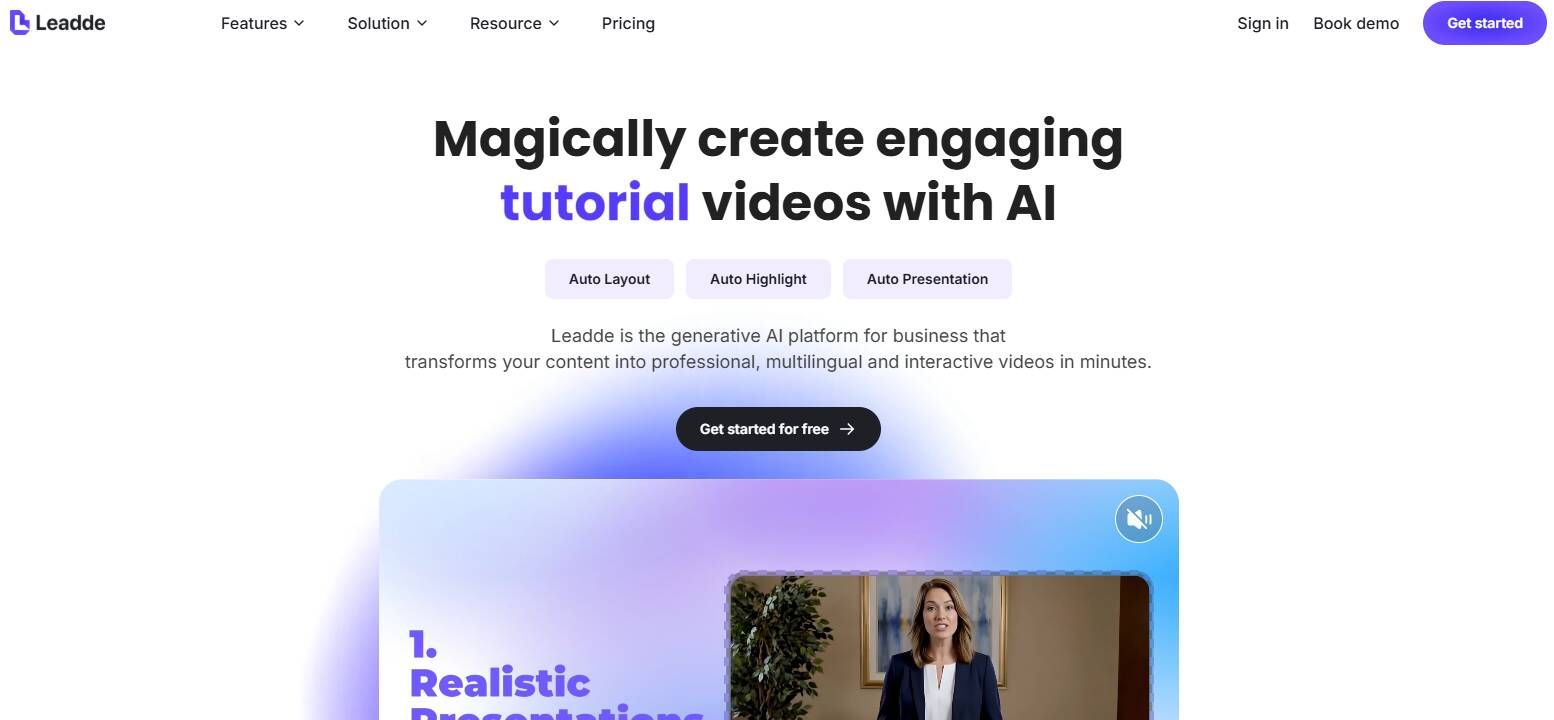
If your company needs to produce more videos faster—especially across multiple languages—HeyGen is often worth the investment. For teams that need stronger document-to-video automation from PowerPoint, PDFs, SOPs, onboarding guides, and training materials, platforms like Leadde.ai are also becoming an important part of the evaluation process.
Unlike HeyGen, which is strongest for avatar-led communication and multilingual localization, Leadde.ai focuses more on turning existing business documents into structured, presentation-ready AI videos automatically.
What HeyGen Actually Does Best
Most people evaluate HeyGen the wrong way.
They compare it to tools like Runway, Pika, or Kling and ask:
“Can it create cinematic AI videos?”
That is the wrong question.
HeyGen is built for business video infrastructure, not visual experimentation.
Its strongest use cases are:
- Sales presentations
- Product explainers
- Corporate training videos
- Customer onboarding
- B2B content marketing
- Founder-led thought leadership videos
- YouTube educational channels
- Multilingual video localization
In all of these scenarios, message clarity matters more than flashy visuals.
This is where HeyGen consistently outperforms.
Instead of asking “Can it make amazing visuals?”, the better question is:
“Can it replace filming, editing, voiceover, and localization at scale?”
For most companies, the answer is yes.
HeyGen AI Avatars Review: How Realistic Are They in 2026?
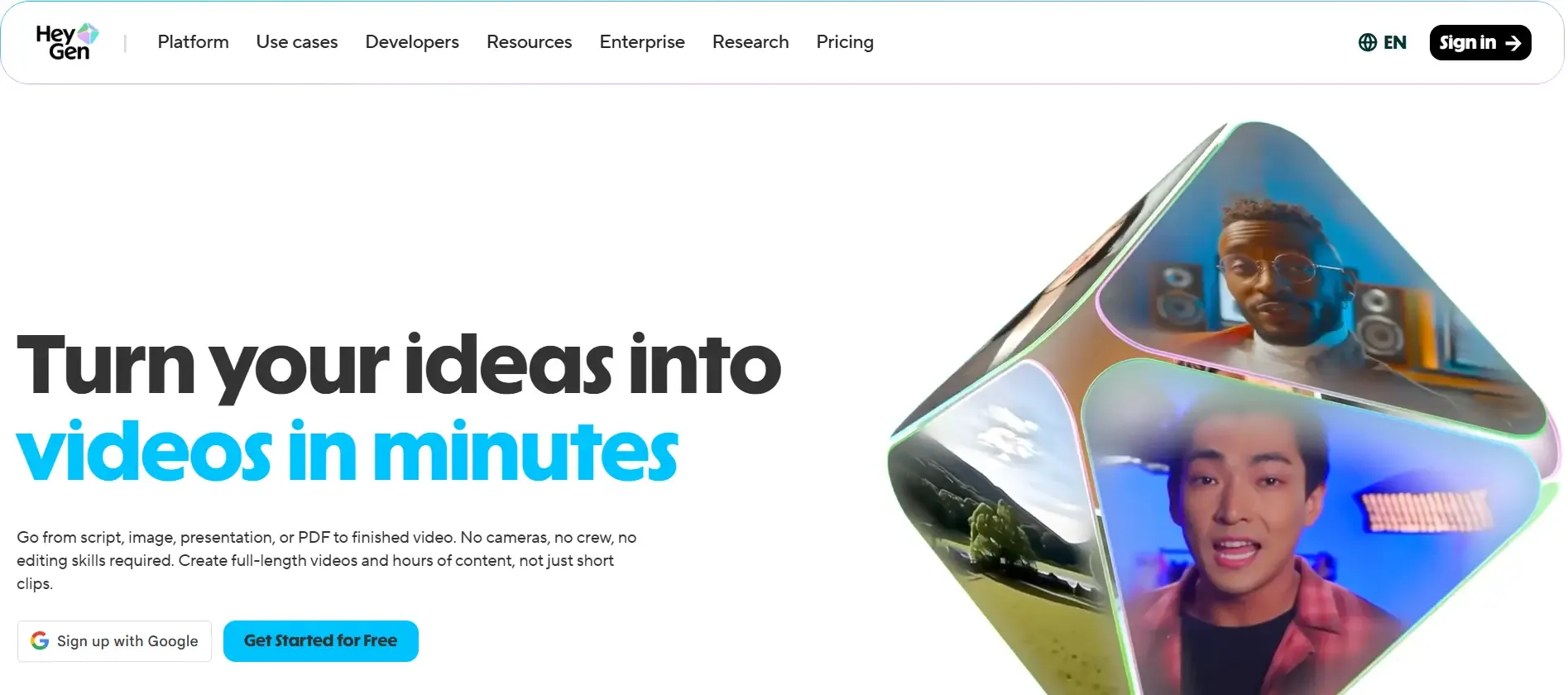
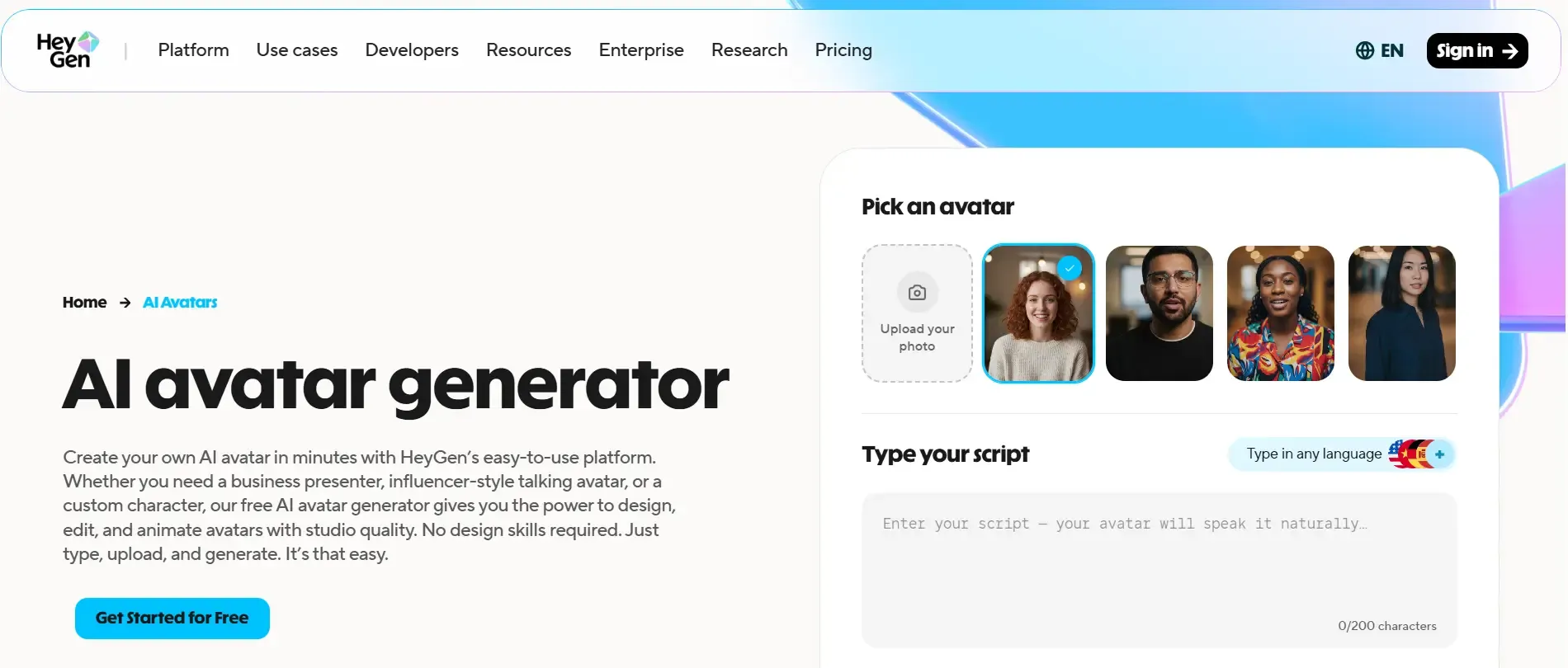
The AI avatar quality is the main reason companies choose HeyGen over competitors.
In 2026, the platform performs especially well in three areas:
- Facial realism
- Lip-sync accuracy
- Professional presentation quality
For talking-head videos, the avatars feel significantly more natural than many competitors in the same category.
This is why marketing teams often prefer HeyGen over more “corporate-looking” platforms.
However, one major lesson from implementation is this:
Generic voices reduce trust immediately.
Using default text-to-speech voices often creates a robotic and artificial result, which hurts:
- Sales conversions
- Viewer retention
- Brand authority
- Executive communication credibility
The highest-performing teams almost always pair HeyGen with voice cloning.
In my own research, teams frequently combine:
- HeyGen for avatar generation
- ElevenLabs for premium voice cloning
This creates a major quality jump.
The difference between default voice and cloned voice is often the difference between:
“this looks like AI”
and
“this feels like a real company video.”
That gap matters.
Especially in B2B sales, trust is everything.
HeyGen Video Translation Review: The Strongest Feature for Global Marketing
If there is one feature that creates the clearest business ROI, it is video translation with lip-sync preservation.
HeyGen supports localization across 175+ languages, which fundamentally changes how companies approach global content distribution.
Instead of rebuilding videos from scratch for every market, teams can now scale one original asset worldwide.
Case Study: Multilingual Marketing Localization
Use Case
A content marketing team needed to distribute product videos across multiple international markets.
Goal
Reduce the cost and delay of producing localized versions for sales and paid acquisition.
Before HeyGen
The workflow looked like this:
- External translation vendors
- Native voiceover contractors
- Re-recording presenters
- Additional editing cycles
- Multi-week delivery timelines
This created major operational friction and high production costs.
After HeyGen
The workflow became:
- Upload original video
- Auto-translate script
- Generate localized voice
- Preserve lip sync automatically
- Publish globally from one source asset
Business Impact
This eliminated the need for repeated production cycles and dramatically reduced localization costs.
Instead of “new production per country,” the company shifted to “one asset, global distribution.”
This is one of the strongest reasons enterprise teams adopt HeyGen.
It is not just saving editing time.
It is changing the economics of international marketing.
For teams managing large-scale multilingual training and document-heavy localization workflows, some companies also compare this with platforms like Leadde.ai, especially when PPT-to-video and internal knowledge delivery are part of the workflow.
HeyGen for Corporate Training: Replacing Traditional Filming Workflows
Training content is one of the most overlooked high-ROI use cases.
Many companies still produce internal training videos using:
- Instructors on camera
- Studio recording sessions
- Scheduling logistics
- Manual editing
- Version-control problems when processes change
This is expensive and slow.
HeyGen removes that bottleneck.
Case Study: L&D Team Automating Training Content
Use Case
An internal Learning & Development team needed to produce repeatable onboarding and process training videos.
Goal
Replace traditional filming with a scalable text-to-video workflow.
Before HeyGen
The process required:
- Booking subject-matter experts
- Coordinating filming schedules
- Re-recording when policies changed
- Editing every revision manually
Even small updates became operationally expensive.
After HeyGen
The process shifted to:
- Script updates
- AI avatar generation
- Immediate publishing
No cameras. No scheduling. No reshoots.
Result
Although no formal ROI numbers were published, the operational efficiency gain was obvious:
the team stopped buying “video production” and started buying “repeatable knowledge delivery.”
This is a major strategic shift.
For enterprise training, that matters far more than visual creativity.
If your workflow starts from existing SOPs, onboarding documents, PowerPoint decks, or PDFs, document-first platforms like Leadde.ai may offer a faster path than script-first tools, which is why many enterprise buyers compare both during vendor selection.
HeyGen Pricing Review 2026: Is the Cost Actually Worth It?
One of the biggest questions buyers ask is not whether HeyGen works—but whether it is worth paying for.
This is where opinions split sharply.
For solo creators testing AI video, HeyGen feels affordable.
For agencies, SaaS teams, and operations-heavy businesses using API workflows, pricing becomes a serious strategic decision.
The reason is simple: HeyGen is not just a video tool. It often replaces filming, editing, voiceover, localization, and even parts of internal training production.
That means the real pricing question is not:
“Is $79/month expensive?”
It is:
“Does this remove enough manual work to justify the cost?”
For many teams, the answer is yes.
Especially when compared against:
- freelance video editors
- voiceover contractors
- multilingual localization vendors
- internal training production costs
- agency delivery bottlenecks
The strongest ROI usually appears in three scenarios:
1. Multilingual Video Localization
Instead of recreating the same video for multiple countries, teams can localize one master asset across 175+ languages using translation + lip sync.
This removes repeated production costs market by market.
2. Corporate Training Automation
L&D teams stop scheduling instructors, filming updates, and editing revisions manually.
Scripts become videos directly.
This dramatically reduces internal production overhead.
3. API-Based Content Automation
For agencies and automation operators, the Scale/API plan becomes infrastructure.
When workflows move from:
Research → Script → Record → Edit
to:
Research → Script → Avatar → Distribution
the economics change completely.
This is where the commonly discussed ~$330/month API cost starts making sense.
However, pricing frustration also becomes strongest here.
If enterprise users pay for API access but face weak support or unstable service quality, the perceived value drops fast. At that point, buyers are not comparing software—they are evaluating operational risk.
That is why many companies also evaluate alternatives like Leadde.ai for document-to-video automation, especially when the goal is training delivery rather than avatar-led marketing.
In short:
HeyGen is cheap for creators.
It is expensive for businesses.
But for teams replacing real production workflows, it is often far cheaper than the old way.
HeyGen Pricing Plans 2026
| Plan | Price | Best For | Key Features |
|---|---|---|---|
| Free | $0/month | Beginners testing AI video tools | 3 videos/month, videos up to 1 minute, 1 Custom Digital Twin, standard video processing, 500+ stock photo avatars |
| Creator | $24/month | Solo creators, marketers, freelancers | Videos up to 30 minutes, 1 Custom Digital Twin, unlimited photo avatars, 700+ stock video avatars, voice cloning |
| Pro | $79/month | Advanced creators, premium content production | Everything in Creator, 10x more premium usage, faster processing, translation script editing, 4K export |
| Scale / API Plan | ~ $300+ / month | Agencies, SaaS teams, automation operators | API access, high-volume production workflows, automation integrations, enterprise-scale video generation |
My Recommendation by Use Case
Choose Free If
You are only testing avatar quality or trying simple social content.
It is enough for validation, not serious production.
Choose Creator If
You are a solo founder, marketer, or YouTube operator creating repeatable business videos.
This is the best value-for-money plan for most users.
Choose Pro If
You need premium exports, faster delivery, and stronger multilingual workflows.
This is usually the best choice for agencies and high-output creators.
Choose Scale/API If
Video production is part of your revenue engine.
If your workflow depends on automation, the API plan is not optional—it becomes infrastructure.
HeyGen API Review: Is the $300+ Monthly Cost Worth It?
This is where opinions become divided.
For creators making occasional videos, the answer is often no.
For automation-first businesses, the answer can be absolutely yes.
The Scale/API plan is commonly priced around $300+ per month, which makes it a serious operational decision rather than a casual software subscription.
The question is not whether it is expensive.
It is whether it replaces enough manual work.
Case Study: Automated Video Production System
Use Case
An agency owner built an automated content production pipeline for high-volume video creation.
Goal
Produce videos continuously without manual recording bottlenecks.
Tool Stack
- Research automation
- Script generation workflows
- HeyGen for avatar delivery
- ElevenLabs for voice quality
- n8n for workflow orchestration
- Auto-distribution systems
Before
The manual workflow was:
Research → Script → Record → Edit → Publish
This often meant hours spent on a single asset.
After
The automated workflow became:
Research → Script → Avatar → Distribution
with minimal human intervention.
One operator summarized the productivity gap as:
while manual creators spend four hours producing one video, automated systems can produce 20.
Even if that number varies by workflow maturity, the strategic insight is correct:
HeyGen becomes significantly more valuable when it is treated as infrastructure, not as a standalone editing tool.
When the Price Feels Wrong
The strongest frustration appears when businesses pay enterprise pricing but receive poor API support or unstable service quality.
At that point, the problem is not price.
It is trust.
For teams depending on video automation for revenue operations, reliability matters more than features.
HeyGen vs Synthesia in 2026: Which Is Better?
This is the most common comparison buyers make.
The answer depends entirely on your business model.
Choose HeyGen If You Need
- Marketing videos
- Sales enablement content
- Creator-led brand content
- Founder videos
- Product explainers
- Agency client delivery
- More natural-looking talking heads
HeyGen generally feels more flexible and visually modern.
It performs better when persuasion matters.
Choose Synthesia If You Need
- HR onboarding
- Compliance training
- Internal enterprise education
- Traditional L&D workflows
- Highly structured corporate communication
Synthesia is often stronger in highly formal enterprise environments.
It feels more like an HR/L&D platform than a marketing tool.
My Strategic Recommendation
For revenue-generating content:
choose HeyGen.
For internal documentation-heavy training:
Synthesia may be enough.
The mistake is assuming these tools solve the same problem.
They do not.
They serve different departments.
HeyGen Limitations: Where It Performs Poorly
This is where many buyers make expensive mistakes.
HeyGen is not ideal for:
- Cinematic storytelling
- Action-heavy scenes
- Viral short-form entertainment
- Dynamic motion graphics
- Emotional narrative filmmaking
- Visual-first creator content
If your goal is:
“Make this look like a Netflix trailer”
you need tools like:
- Runway
- Pika
- Kling
- Veo-class generation tools
not HeyGen.
HeyGen is excellent at “a person speaking clearly.”
It is weak at “a visually complex story unfolding.”
Understanding this prevents major disappointment.
The best companies do not replace one tool with another.
They build a stack.
For example:
- HeyGen for presenter videos
- Runway for cinematic B-roll
- ElevenLabs for voice cloning
- n8n for automation
That is usually the winning architecture.
Is HeyGen Worth It in 2026?
Yes—if you evaluate it correctly.
No—if you buy it for the wrong reason.
HeyGen is worth it when:
- you need repeatable business videos
- you operate across multiple languages
- filming is your bottleneck
- training content must scale
- sales teams need constant content output
- automation creates competitive advantage
It is not worth it when:
- you want visual art generation
- your content depends on cinematic storytelling
- you only make occasional one-off videos
- your workflow does not justify enterprise pricing
The strongest users do not buy HeyGen to make better videos.
They buy it to remove production friction.
That is the real value.
And in 2026, that is still a very strong reason to use it.
FAQ: Real Questions Buyers Ask About HeyGen
Is HeyGen better than Synthesia for content marketing?
Yes. For marketing, sales videos, and founder-led content, HeyGen is usually the stronger choice because avatars feel more natural and the platform is less rigid.
Synthesia is stronger for internal training and formal enterprise education.
Is HeyGen worth the $300+ monthly API cost?
It depends on volume.
If you are producing videos manually at scale, the API plan can easily justify itself.
If you only need occasional videos, it is probably too expensive.
Is HeyGen too much for simple training videos?
Not always.
If training content changes frequently and updates are expensive, HeyGen becomes highly cost-effective.
If your training is static and rarely updated, lighter tools may be enough.
Are HeyGen avatars realistic enough for professional sales videos?
Yes, especially when paired with voice cloning.
Avatar quality is strong, but default voices often reduce credibility.
For sales use cases, premium voice cloning is strongly recommended.
Should I use ElevenLabs with HeyGen?
Usually yes.
The improvement in voice quality is significant and often directly impacts trust and conversions.
Many high-performing teams use this combination.
Is HeyGen the best tool for multilingual YouTube channels?
For localization workflows, yes.
Its translation plus lip-sync system is one of the strongest advantages for global distribution.
Can HeyGen replace sales demo videos recorded by real people?
In many cases, yes.
Especially for repeatable demos, outbound sales content, and onboarding sequences.
For highly relationship-driven enterprise sales, human video may still perform better.
Is HeyGen good for cinematic videos?
No.
It is built for talking-head and presentation-style content, not cinematic storytelling.
Use visual generation platforms for that.
Is HeyGen API reliable enough for agency delivery?
It depends on support quality and workflow maturity.
For agencies, service reliability matters more than features, so testing API stability before scaling is critical.
Should I use HeyGen together with Runway or Pika?
Yes.
That is often the best setup.
Use HeyGen for avatars and business communication, and use Runway or Pika for cinematic visual storytelling.